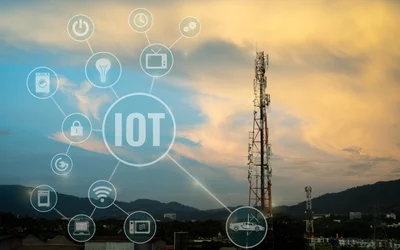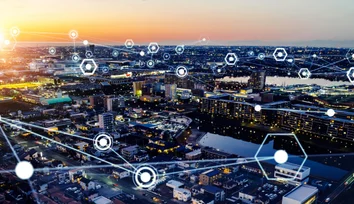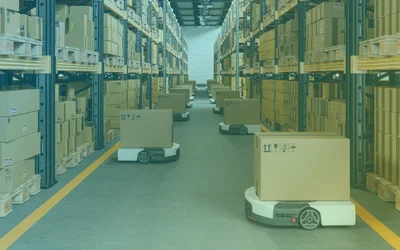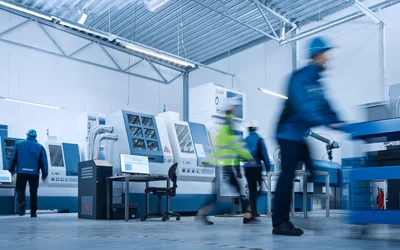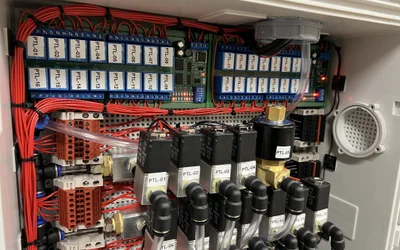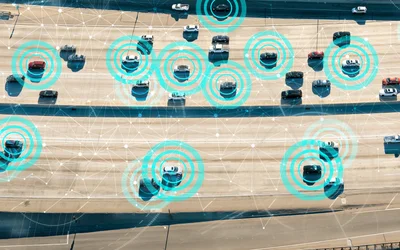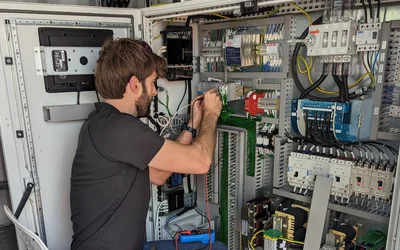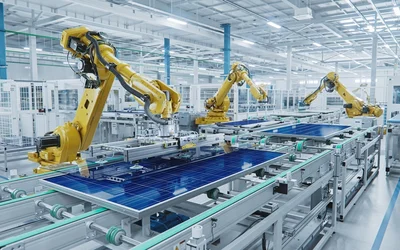
Enterprise IoT is another direction of IoT industry development, which businesses are actively adopting. Embedded technologies for large organizations bring new challenges in terms of connectivity, network stability, and data security.
Ultra-Wideband (UWB) has moved from niche industrial RTLS to mainstream, with easier deployment via enterprise access points and standards. Discover how UWB is transforming asset tracking, logistics, and manufacturing with cost-effective, sub-meter accuracy.
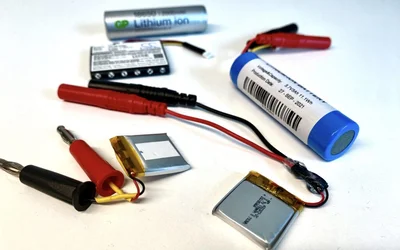
Explore the top 5 use cases of Software-Defined Connectivity (SDC) and learn how SDC reduces costs, improves compliance, and accelerates IoT innovation.
Today almost 30 percent of embedded projects have over 100,000 lines of code, and this increasing complexity is now the number one driver of project delays, and the reason 60 percent of an embedded development project's cost is software.
Integrating Non-Terrestrial Networks (NTN) with cellular IoT delivers seamless global connectivity, powered by the nRF9151 module for hybrid GEO, LEO, and terrestrial communication.
The purpose of decarbonization for the manufacturing industry since 2021 onward has changed from social contribution to achieving profits by observing conditions in transactions with customers and enhancing cost competitiveness.
Electronic shelf labels (ESL) are connected, low-power ‘e-paper’ display devices that can replace traditional paper labels and can display text, numbers, icons, lines, barcodes and pictures. They enable retailers to automatically update individual shelf price labels from a central point across multiple stores and branches—or in certain geographic locations—at the touch of a button.
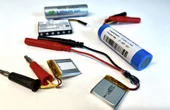
In the rapidly evolving landscape of IoT, battery life is paramount for device sustainability. We dissect the challenges and strategies for battery longevity of LPWAN IoT devices. Explore battery profiling and optimization for extended device life and reduced costs.
Knowing the distance between two short-range transceivers is useful for many applications. Examples include proximity measurement for making sure people maintain a set distance apart for safety reasons, indoor navigation, and tracking items in a warehouse.
Smart lighting company Signify reports that replacing conventional street lighting with energy-efficient LEDs is an effective way to reduce energy consumption and associated emissions.
Despite an enormous effort and a significant reduction in fatality rates, mining remains one of the most hazardous industries for workers. However, new technologies are starting a safety revolution, while simultaneously fueling the mining industry’s digital transformation.
A positive shift is taking place towards more advanced and specific digital healthcare for women. The so-called ‘femtech’ (female technology) industry has belatedly begun to deliver on the promise of solutions using wireless connectivity to help address women’s health issues.
In this episode, we explore the dynamic landscape of retail transformation in the digital age. Learn how the integration of cutting-edge technology is reshaping shopping experiences and customer engagement. From real-time supply monitoring to digital shelves enabling dynamic pricing based on demand, discover how retailers adapt to changing consumer behaviors and preferences.
Sensor and actuator networks are systems that collect and transmit data from a physical environment for digital processing. Data is collected at sensors and actuators in the field, then digitized at the sensor or actuator. The digitized data can be used for a variety of applications, and the method for data processing depends on the application