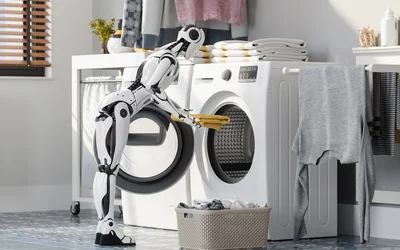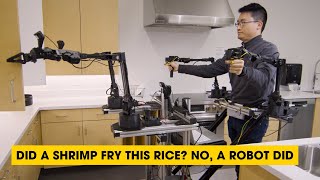
Stanford engineers created a low-cost, mobile robot that quickly learned to sautée shrimp, put away dishes, and clean up spills. Other tasks aren't far behind.
This article explores TPU vs GPU differences in architecture, performance, energy efficiency, cost, and practical implementation, helping engineers and designers choose the right accelerator for AI workloads today!
Training AI models is costly, forcing a trade-off between compressing large models or accepting weaker performance from smaller ones trained from scratch.
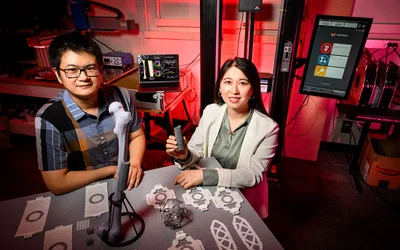
A team that included Chongzie Zhang from McKelvey Engineering developed a method that allows robots to teach other robots with different features to perform the same task.
Stanford engineers created a low-cost, mobile robot that quickly learned to sautée shrimp, put away dishes, and clean up spills. Other tasks aren't far behind.
A four-legged robot trained with machine learning by EPFL researchers has learned to avoid falls by spontaneously switching between walking, trotting, and pronking – a milestone for roboticists as well as biologists interested in animal locomotion.
NXP Semiconductors' new MCX N Series advanced processor engines are general-purpose and application-specific microcontrollers based on Arm® Cortex®-M33 CPUs.
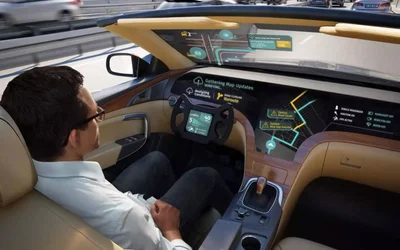
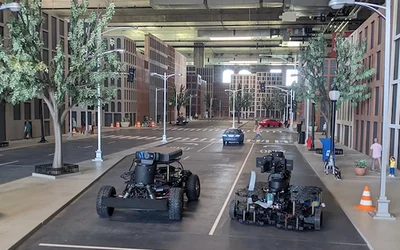
In his doctoral research, Daan de Geus worked on advanced image processing methods that allow robots and cars to better recognize what they see around them.
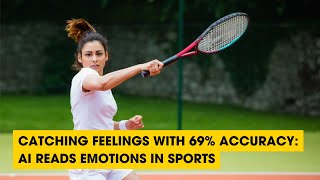
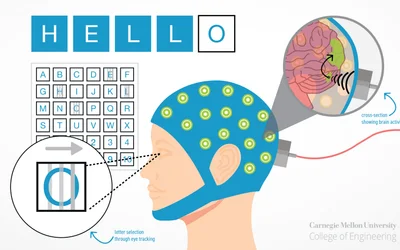
In this episode, we discuss research coming out of Columbia University to better connect humans with robots by having them detect, process, and respond to facial expressions!
Low-cost, wearable sensors could increase access to care for patients with Parkinson’s disease. New machine-learning approaches and a baseline of data from healthy older adults improve the accuracy of the results from such sensors
Researchers at Georgia Tech have teamed up with NASA and five peer institutions to teach dog-like robots to navigate craters of the moon and other challenging planetary surfaces.