Featured
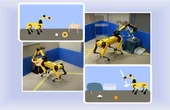
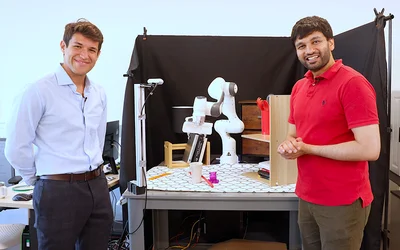
The phrase “practice makes perfect” is usually reserved for humans, but it’s also a great maxim for robots newly deployed in unfamiliar environments.
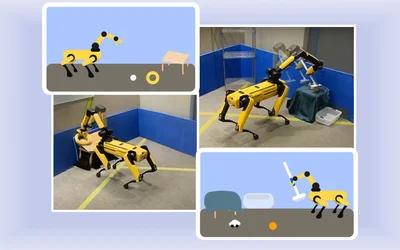
The phrase “practice makes perfect” is usually reserved for humans, but it’s also a great maxim for robots newly deployed in unfamiliar environments.
The phrase “practice makes perfect” is usually reserved for humans, but it’s also a great maxim for robots newly deployed in unfamiliar environments.
Researchers have developed a platform for the interactive evaluation of AI-powered chatbots such as ChatGPT.
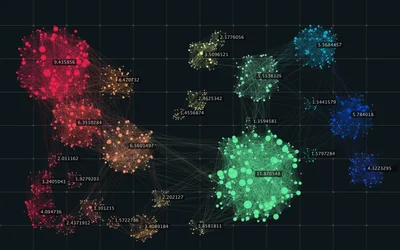
Unsupervised learning is a machine learning approach that finds patterns, structure, or useful representations in unlabeled data. It groups similar observations, compresses high-dimensional features, detects outliers, discovers item relationships, and supports modern representation learning.
13 minutes read.
17 minutes read.
11 minutes read.
16 minutes read.
14 minutes read.
14 minutes read.
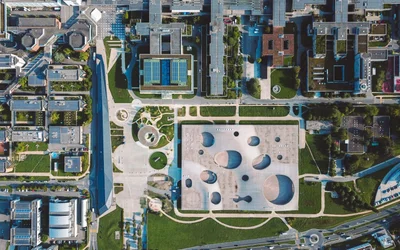


High Tech
High Tech Campus Eindhoven is Europe's smartest square km and has the ultim...
49 Posts

University for science and technology
Freedom and individual responsibility, entrepreneurial spirit and open-min...
43 Posts
From leading experts at the CDFAM Computational Design Symposium
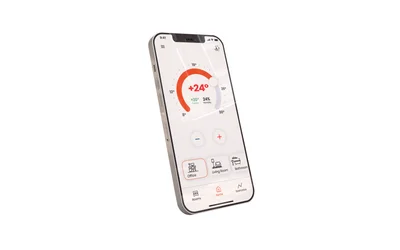
eCozy 2.0 system addresses the limitations of traditional thermostats for water heating radiators, delivering efficiency, convenience and sustainability benefits to households
Protect the cloud by securing the edge with hardware-based security, TPMs, HSMs, and resilient edge computing architectures.
Explore the rise of intelligent EV hardware and how real-time processing, ML acceleration, and hardware virtualization are enabling safer, smarter, software-defined electric vehicles.
With MVN Analyze
how Last Praetorian Interactive made Project Vesperi with one Xsens suit
With Xsens Motion Capture
The phrase “practice makes perfect” is usually reserved for humans, but it’s also a great maxim for robots newly deployed in unfamiliar environments.
Researchers have developed a platform for the interactive evaluation of AI-powered chatbots such as ChatGPT.

4 minutes read
with Xsens motion capture

3 minutes read
The moonshot of many roboticists is cooking up the proper hardware and software combination so that a machine can learn “generalist” policies (the rules and strategies that guide robot behavior) that work everywhere, under all conditions.
Even if you’re not very familiar with deep learning, you’ve probably heard about it and how it can, among other things, help automate the driving experience, increase manufacturing efficiency and change the consumer shopping experience.
MAIA is a multimodal agent that can iteratively design experiments to better understand various components of AI systems.
Integrating AI and Digital Tools Beyond Digital Transformation.

6 minutes read
CUDA Cores and Tensor Cores are specialized units within NVIDIA GPUs; the former are designed for a wide range of general GPU tasks, while the latter are specifically optimized to accelerate AI and deep learning through efficient matrix operations.
Neural network controllers provide complex robots with stability guarantees, paving the way for the safer deployment of autonomous vehicles and industrial machines.
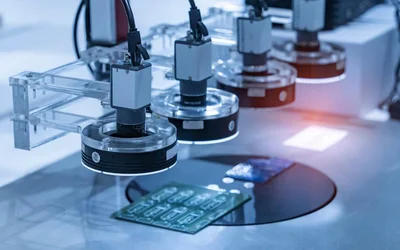
In a broad sense, "machine vision" refers to the utilization of visual information and optical information using digital technologies.
6 minutes read
Researchers at EPFL have made a breakthrough in understanding how neural network-based generative models perform against traditional data sampling techniques in complex systems, unveiling both challenges and opportunities for AI's future in data generation.

3 minutes read
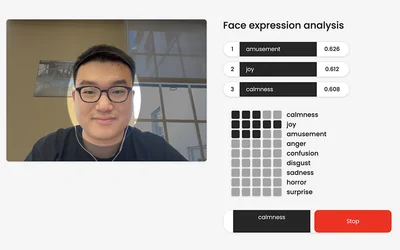
In this episode, we discuss how 2 Carnegie Mellon University graduate students developed an AI system capable of giving you feedback on your interview performance in real time!

14 minutes read
The method, which combines a ChatGPT-like large language model with information about a protein’s 3D shape, could make it easier and faster to develop better medicines for infectious diseases, cancer, and other conditions.

4 minutes read
Silicon Valley students use AI to help job seekers improve performance and build confidence.

3 minutes read
The upcoming "Machine Learning for Safety Experts" training by SAE and Fraunhofer IKS in Munich on October 22-23, 2024 is a timely initiative. It will address this crucial skill gap and ensure engineers are well-equipped to handle the intricacies of safe Machine Learning applications.