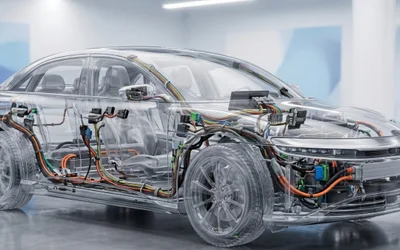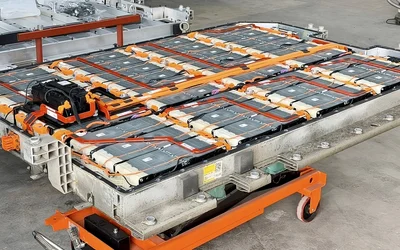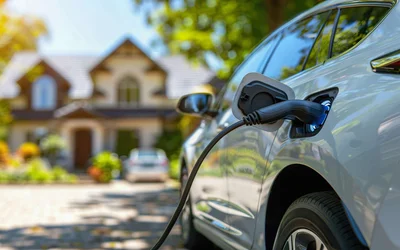
The global transition to electrified personal transport is gaining momentum, with consumer electric vehicles (EVs) leading the way. According to the International Energy Agency (IEA), EV sales exceeded 10 million units in 2022.
With the U.S. government’s goal to reduce emissions from transportation as part of a net-zero climate goal by 2050, efficient and reliable batteries are a necessity.
According to the Global EV Outlook from IEA, the EV stock reaches 145 million in 2030, accounting for 7% of the road vehicle fleet. However, one of the main challenges facing EVs is the battery, which determines the performance, range, safety, and cost of the vehicle.
This article explains what is LiFePO4, how lithium iron phosphate batteries work, their safety benefits, cycle life, BMS requirements, applications, and key differences from lead-acid and other lithium-ion chemistries.
One of the goals of building the Mars Rover is to demonstrate SPARK. As an early step, Fabien introduced a new hardware abstraction layer (HAL) on top of the existing HALs that had been developed for the various pieces of hardware that make up the Mars Rover.
Explore the rise of intelligent EV hardware and how real-time processing, ML acceleration, and hardware virtualization are enabling safer, smarter, software-defined electric vehicles.
EBV Elektronik's leaders share how emerging technologies will shape the future All-Electric Society and outline the supply-chain strength and engineering support innovators will rely on to turn long-term electrification ambitions into scalable, production-ready solutions.
Discover how radar sensors enhance building safety, traffic control, and asset management with reliable vehicle detection solutions for docks, parking, drive-thrus, and toll applications.
Modular high-voltage PDU architectures enable scalable power
distribution using standardized components. This approach
reduces tooling requirements, supports platform reuse, improves
serviceability, and accelerates integration in EV systems.
The global transition to electrified personal transport is gaining momentum, with consumer electric vehicles (EVs) leading the way. According to the International Energy Agency (IEA), EV sales exceeded 10 million units in 2022.
With the U.S. government’s goal to reduce emissions from transportation as part of a net-zero climate goal by 2050, efficient and reliable batteries are a necessity.
According to the Global EV Outlook from IEA, the EV stock reaches 145 million in 2030, accounting for 7% of the road vehicle fleet. However, one of the main challenges facing EVs is the battery, which determines the performance, range, safety, and cost of the vehicle.
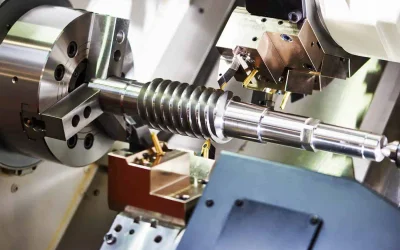
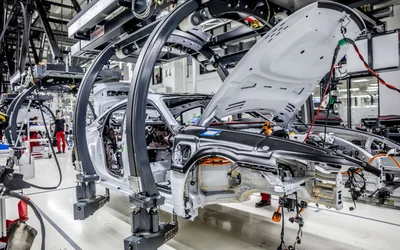
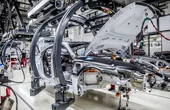
Manufacturing sheet metal is far from a simple task. It requires rigorous inspection, primarily due to the high quality and stringent safety standards required in the automotive industry.
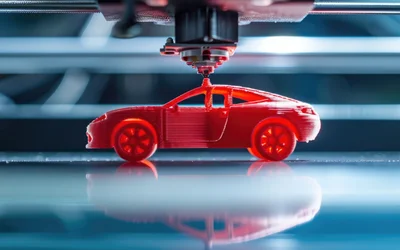
At a Polish branch of TI Fluid Systems, functional prototypes and spare parts for the automotive industry are selectively laser sintered. Using a Sintratec S2, Paweł Pułtorak’s team prints precise and complex parts to validate their designs.

In the automotive industry, the focus is on seamlessly integrating advanced technologies such as touchscreens, digital dashboards and driver assistance systems into the interior without compromising driving comfort or aesthetics.

In the in-depth interview, PI Vice President of Marketing Doug Bailey explains GaN technology and the new possibilities it brings to the power conversion industry.
Governments around the world and companies in all industries and businesses are coming together to engage in efforts to achieve carbon neutrality. Every conceivable multifaceted decarbonization measure is being taken.
At recent 2023 Consumer Electronics Show (CES), Sony and Honda revealed their first electric vehicle prototype, which is equipped with 45 cameras and sensors, as well as Electric Rearview Mirrors.
As cars shift to automated driving, In-Cabin Monitoring Systems (ICMS) are vital for passenger safety and comfort. Incorporating Time-of-Flight cameras and radar sensors enables ICMS to detect occupants and their behaviors promising a safe and personalized automotive experience.
Working on custom car projects Caracol has seen how large 3D printed mock-ups can help accelerate product development in the automotive industry, from concept design to fitting and production.
From space robots to self-driving cars, Stanford’s Autonomous Systems Lab looks to push the boundaries of exploration and boost the safety and efficiency of everyday tasks.