Artificial intelligence (AI) is a wide-ranging tool that enables people to rethink how we integrate information, analyze data, and use the resulting insights to improve decision making
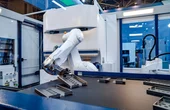
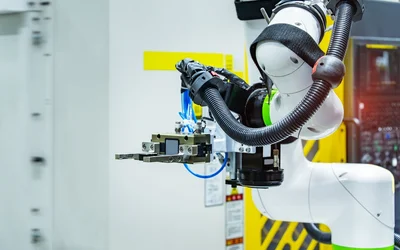
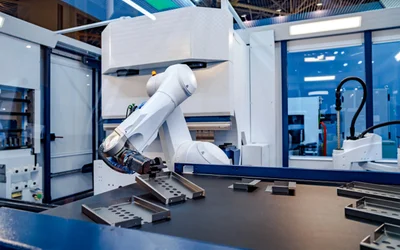
In large-scale warehousing and distribution operations, conveyor belts are an essential infrastructure that must operate with near-zero downtime to ensure the timely delivery of products. The presence of loose or foreign items on a conveyor belt can pose a serious risk to these operations.
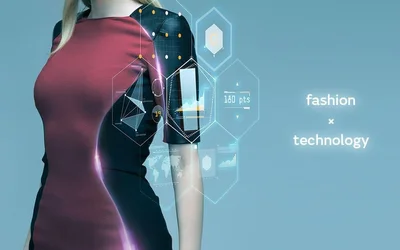
To reduce waste, the Refashion program helps users create outlines for adaptable clothing, such as pants that can be reconfigured into a dress. Each component of these pieces can be replaced, rearranged, or restyled.
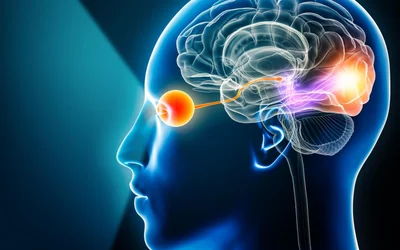
Smart eyewear promises to transform how we see and interact with the world. Among its many potential advantages, the technology offers hands-free access to information, vision enhancement, and accessibility tools.
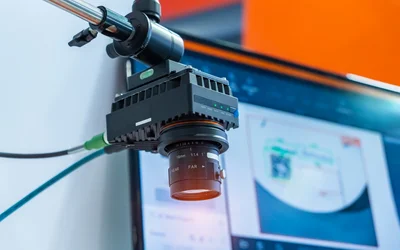
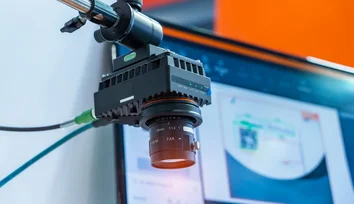
Matroid builds no-code computer-vision detectors that can spot everything from microscopic material defects to real-time safety hazards on a factory floor.
In large-scale warehousing and distribution operations, conveyor belts are an essential infrastructure that must operate with near-zero downtime to ensure the timely delivery of products. The presence of loose or foreign items on a conveyor belt can pose a serious risk to these operations.
In this post, we'll walk through how to evaluate that progress using the same metrics our platform provides automatically, so you can build detectors that get smarter, sharper, and more reliable over time.
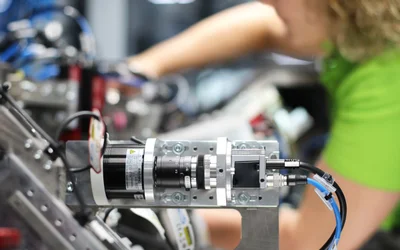
The no-code platform from Matroid trains ordinary cameras to act like expert inspectors, turning simple footage into a pixel-level defect checklist. Even a handheld GoPro can spot issues human eyes miss—using remarkably small datasets.
Article #2 of Engineering the Quantum Future Series: Recent breakthroughs in quantum computing made substantial strides, driving closer to practical applications that could revolutionize industries by solving complex computational problems more efficiently.
Introducing the Engineering the Quantum Future Series: Quantum computing redefines our approach to complex challenges, expanding the scope of what's possible across multiple disciplines.

Even if you’re not very familiar with deep learning, you’ve probably heard about it and how it can, among
other things, help automate the driving experience, increase manufacturing efficiency and change the consumer
shopping experience.
CUDA Cores and Tensor Cores are specialized units within NVIDIA GPUs; the former are designed for a wide range of general GPU tasks, while the latter are specifically optimized to accelerate AI and deep learning through efficient matrix operations.
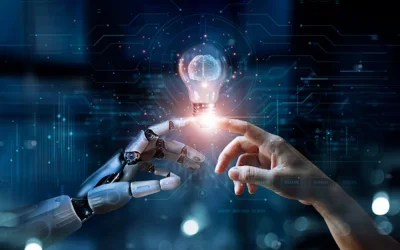
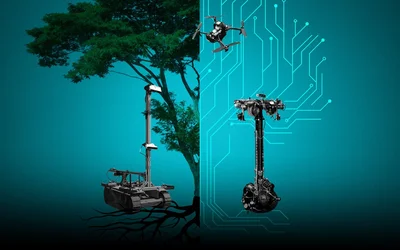
Neural network controllers provide complex robots with stability guarantees, paving the way for the safer deployment of autonomous vehicles and industrial machines.
Explore the future of connected communities in intelligent cities and underserved regions, highlighting the role of technologies like 5G, AI, and blockchain in enhancing connectivity and promoting inclusive development.
LLMs and GenAI lower barriers to accessing intelligence, shifting AI systems to be built and controlled by domain experts. In the future, organizations can use large scale LLM models instead of building custom machine learning models, impacting sectors like manufacturing and supply chain partners.
Researchers at EPFL have made a breakthrough in understanding how neural network-based generative models perform against traditional data sampling techniques in complex systems, unveiling both challenges and opportunities for AI's future in data generation.
In this episode, we discuss how 2 Carnegie Mellon University graduate students developed an AI system capable of giving you feedback on your interview performance in real time!
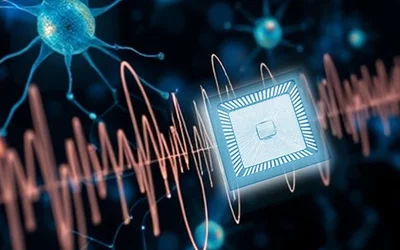
In this podcast, Sean Hehir, CEO of BrainChip, chats with Dr. Jason K. Eshraghian about neuromorphic computing benefits over traditional AI and its potential to revolutionize the future of computing. Listen in to learn how this emerging technology is shaping the world of AI.
The method, which combines a ChatGPT-like large language model with information about a protein’s 3D shape, could make it easier and faster to develop better medicines for infectious diseases, cancer, and other conditions.