Protect sensitive electronics by understanding the current limiting resistor, learning how to calculate appropriate values, and applying them in LEDs, transistors, microcontroller inputs and other circuits.
Be the first to know.
Get our LED weekly email digest.
Tagged with
LED
Latest Posts

A new OLED approach to night vision may lead to cheaper, compact, and lightweight glasses.

Researchers at NC State University have unveiled Rainbow, a first-of-its-kind multi-robot self-driving laboratory that autonomously discovers high-performance quantum dots – semiconductor nanoparticles critical for next-generation displays, solar cells, LEDs and quantum-engineering technologies.

3 minutes read


TU/e chemist unveils groundbreaking closed-loop recycling technology powered by LED light.

3 minutes read

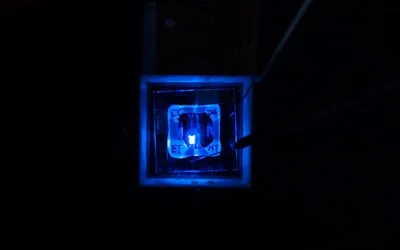
Commercial devices currently settle for less efficient blue OLEDs, but a set of design innovations has made an efficient blue that is as durable as efficient green OLEDs.

5 minutes read
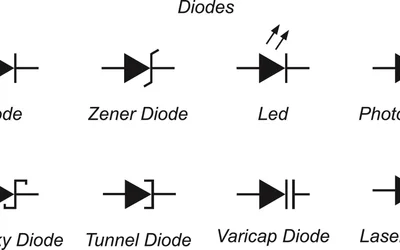
Diode Symbols: A Comprehensive Guide to Understanding Circuit Diagrams
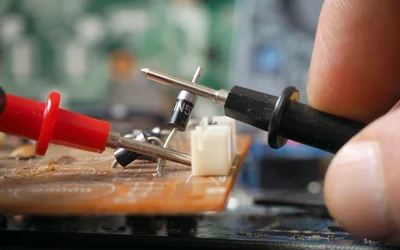
This article delves into the intricacies of diode, anode, cathode, and polarity, exploring the fundamental principles that drive countless electronic devices and systems, shaping the technological landscape we navigate daily.
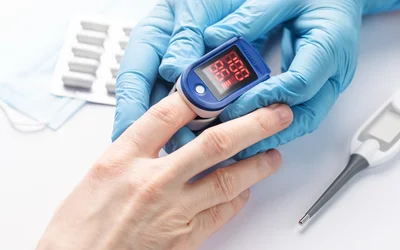
With an increased focus on home health, wellness, and prevention, a new market has been born around smart devices for tracking several vital parameters.

10 minutes read
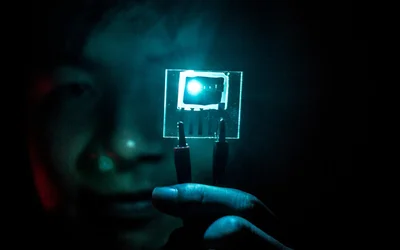
Lights could soon use the full color suite of perfectly efficient organic light-emitting diodes, or OLEDs, that last tens of thousands of hours, thanks to an innovation from physicists and engineers at the University of Michigan.
3 minutes read

In the dynamic landscape of retail stores, bars, clubs, and seasonal markets, the need for effective product visibility becomes even more evident. Illumination technologies are amongst the highly effective means for brand distinction and impactful visual communication.

7 minutes read


Smart lighting company Signify reports that replacing conventional street lighting with energy-efficient LEDs is an effective way to reduce energy consumption and associated emissions.

5 minutes read


Lighting is as essential to civilized society as clear air and clean water. In the absence of sunlight, artificial light allows us to carry on doing everything we’d do during the day - even things like motor racing, skiing, and golf. But not without some impact.
3 minutes read


Researchers have developed new technology that could usher in the "next-generation" of thinner, higher-resolution and more energy efficient screens and electronic devices.

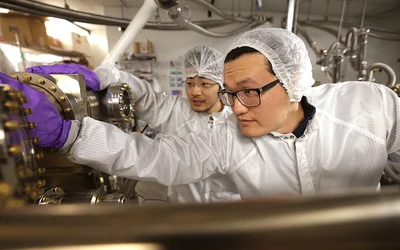
Prof. Zetian Mi’s team are the first to achieve high-performance, highly stable green micro-LEDs with dimensions less than 1 micrometer on silicon, which can support ultrahigh-resolution full-color displays and other applications.
3 minutes read

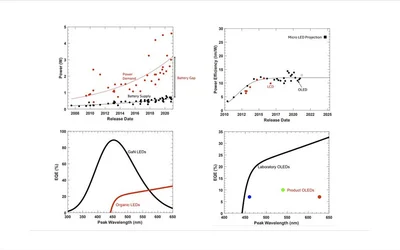
Why can microLED technology can help narrow the energy gap in electronic devices? The first slide shows the battery gap- Ahmed (Intel) has collected data by year showing that power demand of phones far exceeds the power supply level of batteries, creating a "battery gap" which ...