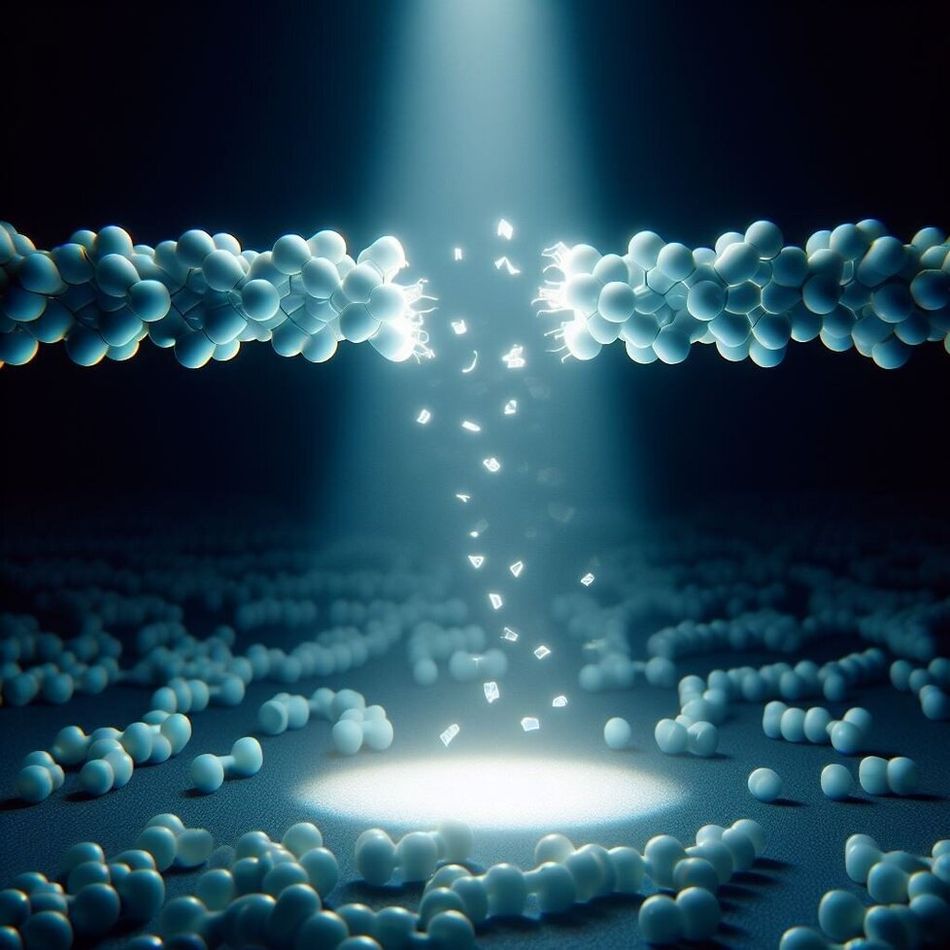
Building and breaking plastics with light: Fabian Eisenreich rethinks plastic recycling
TU/e chemist unveils groundbreaking closed-loop recycling technology powered by LED light.

16 Aug, 2025. 3 minutes read
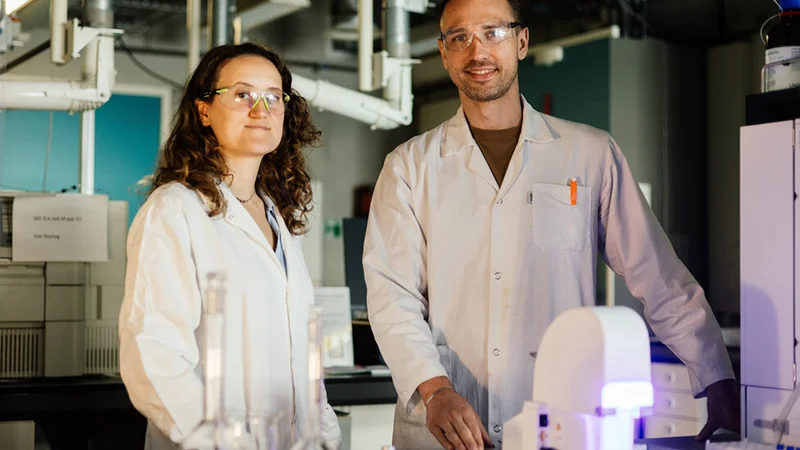
PhD student Ahsen Sare Yalin (left) and Assistant Professor Fabian Eisenreich worked together on closed-loop recycling technology using a photoreactor. Photo: Roegaya Sabera
This article was first published on
www.tue.nlWhat if recycling plastics were as simple as flicking a switch? At TU/e, Assistant Professor Fabian Eisenreich is making that vision a reality by using LED light to both create and break down a new class of high-performance plastics. This innovative material enables truly circular recycling, as this process can be repeated over and over again, without any loss in quality. Published in the Rising Stars edition of Advanced Materials, this research marks a breakthrough in sustainable chemistry and could reshape how we treat plastic waste in the future.
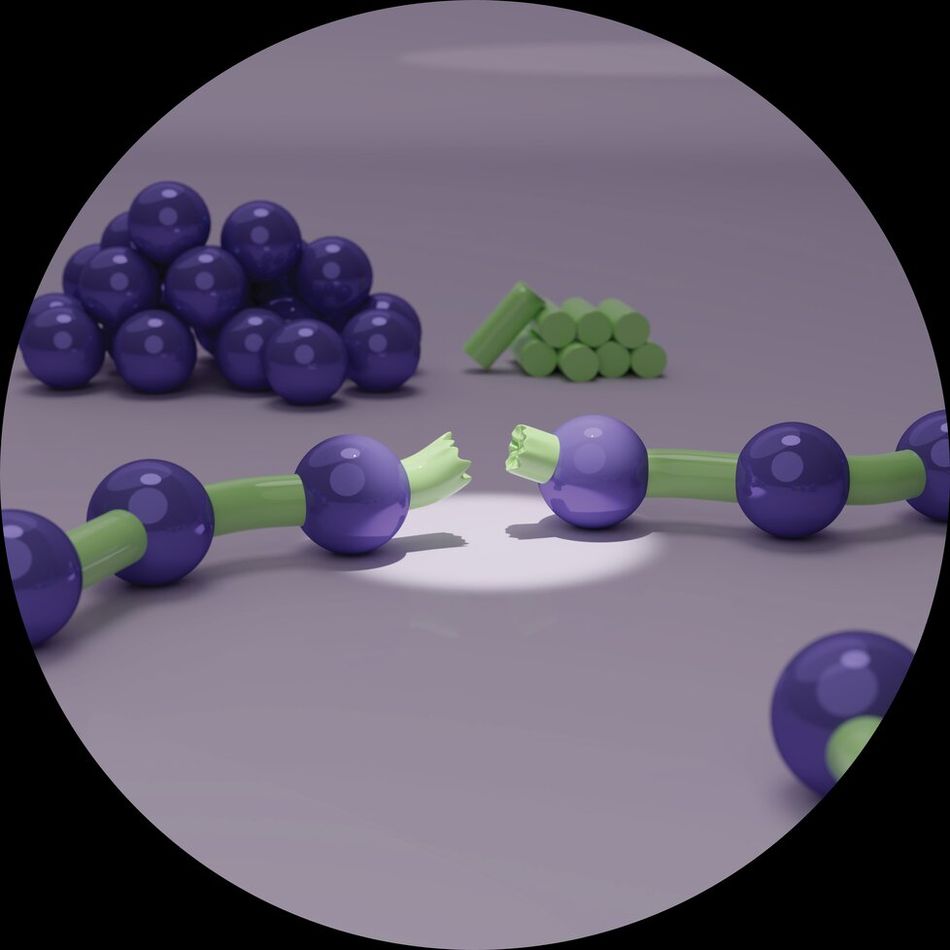
“In fact, we are molecular designers," is how Eisenreich describes himself and his fellow scientists from the Polymer Performance Materials research group. In their labs at the Department of Chemical Engineering and Chemistry, that is what the focus is on: "Our line of research centers on 'design for recycling'. We create new polymers to enable innovative recycling strategies for plastics. At the same time, we use organic (bio-based) materials, avoid toxic substances, and minimize waste to keep the entire process as sustainable as possible."
Quality of polymer chains deteriorates
These polymers are developed to enable chemical closed-loop recycling, the ultimate goal of the research group. “Plastics typically consist of moldable polymer chains. Due to the current way in which plastics are usually recycled – in a nutshell: heating, melting, and reshaping – the quality of those polymer chains deteriorates over time. So you can't keep doing that indefinitely, which means that new plastic will eventually have to be made anyway."
With the right chemical reaction, a polymer chain can be selectively broken down into its original building blocks.
Assistant Professor Fabian Eisenreich
Chemical closed-loop recycling is therefore the ideal alternative, according to Eisenreich: “With the right chemical reaction, a polymer chain can be selectively broken down into its original building blocks. These can then be reused to make exactly the same polymer again, with identical properties and quality." Achieving this requires polymers designed to undergo that precise reaction—hence the focus of the Polymer Performance Materials group’s research.
Selectively splitting a polymer with light
Within that context, Eisenreich specifies his own research on photochemical recycling, powered by LED light. "Making polymers by means of light is relatively simple. But breaking and making them again in the same way, aka recycling, is much more complicated and therefore a whole new line of research. The challenge lies in using light to selectively split stable chemical bonds within the polymer, so the original building blocks can be recovered."
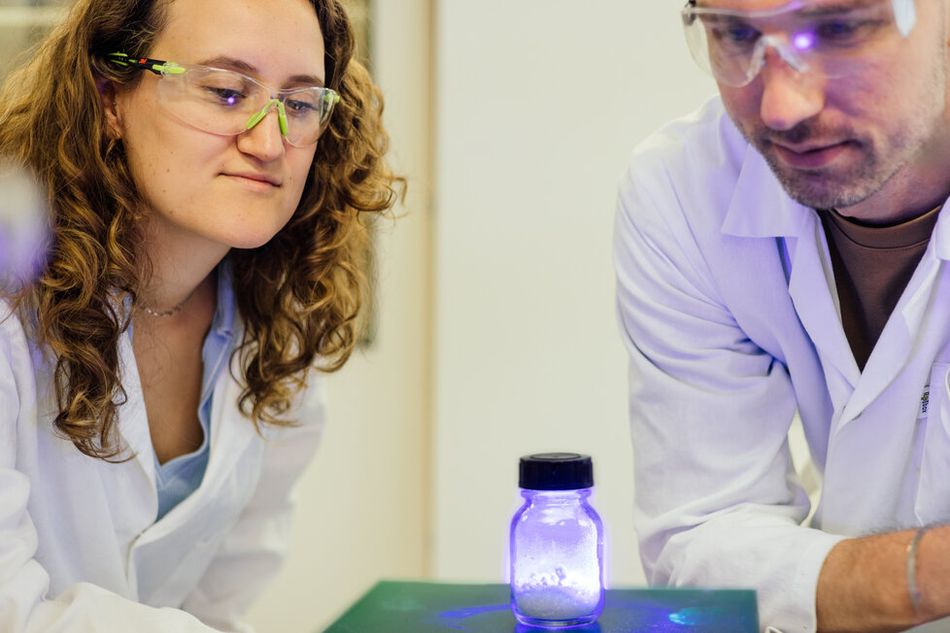
Recently, Eisenreich and Ahsen Sare Yalin, a third-year PhD candidate in his group, became the first to successfully pull off this trick in his lab. This is rightfully a first and therefore worthy of publication in the Rising Stars edition of the leading scientific journal Advanced Materials. Two great achievements to be proud of, but which are also a prelude to the further benefits of this new recycling technology.