




Electroforming is an additive manufacturing process specialized for the production of high precision metal parts. Its uniqueness is that you can grow metal parts atom by atom, providing extreme accuracy and high aspect ratios. Typical precision of a electroformed part goes down to 1 to 2 μm, which is beyond what most other manufacturing technologies can reach.
Be the first to know.
Get our digital manufacturing weekly email digest.
Tagged with
digital manufacturing
ORGANIZATIONS. SHAPING THE INDUSTRY.
Latest Posts


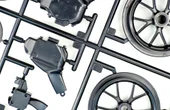
The automotive industry has always been an outstanding representative of high-end manufacturing, thanks to its high degree of technical complexity and integrated project management. RPWORLD is a reliable supplier/subcontractor for Tier I and Tier II projects.


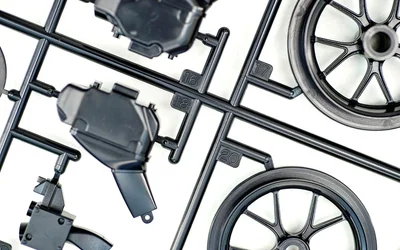
The sprues, runners, and gates of an injection mold are like the corridors and doorways between nozzle and mold cavity. So how exactly do they work?
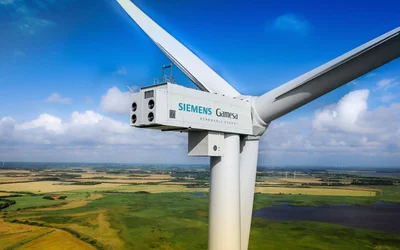
Siemens Gamesa was looking for a 3D scanning system to take exact, agile measurements of wind turbines and their components so that they could be analyzed and processed using CAD software. The main goal was to dispense with traditional and inaccurate measuring tools such as tape measures and gauges, in favor of a more agile and precise method.


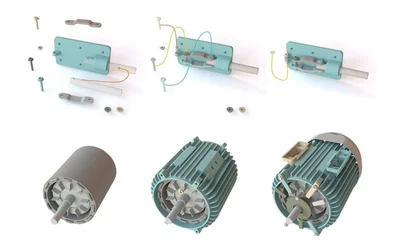
The manufacturing industry (largely) welcomed artificial intelligence with open arms. Less of the dull, dirty, and dangerous? Say no more. Planning for mechanical assemblies still requires more than scratching out some sketches, of course — it’s a complex conundrum that means dealing with arbitrary 3D shapes and highly constrained motion required for real-world assemblies.
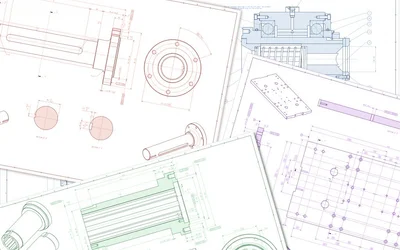
This blog post aims to guide you through the basic concepts and definitions of geometric dimensioning and tolerancing (GD&T); more precisely, this includes what GD&T is, how it works, and why it is important to implement GD&T processes. Furthermore, it emphasizes that all of the geometric characteristics and tolerances written on a technical drawing are there for a specific purpose of functionality.
8 minutes read

A company well-known for superior analytical instruments and laboratory equipment opted for RPWORLD to produce 100 units assembly parts of a Spectrometer per order, the total demand is 400 sets per year.

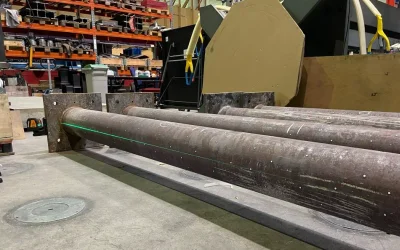
The Chair of Metal Structures at the Technical University of Munich has been contributing to the development of steel and light metal structures within the construction industry for many decades. There is a long-standing tradition in the areas of bridge design, stability, construction, composite structures, fatigue and glass works.
3 minutes read
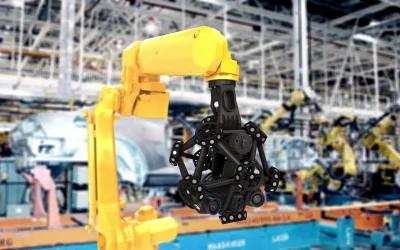
This article highlights the challenges that led the company to look for an automated measuring system to inspect their cockpits inline, their customer’s requirements for initiating production for new car models, and their discovery of Creaform’s technology, the MetraSCAN 3D-R.
6 minutes read

The focus on design engineering is shifting with a huge demand from customers for more sustainable products. Protolabs believe that experts from both industry and academia can be brought together to share their expertise with others - the online knowledge sharing InspirON series meets this need.

2 minutes read

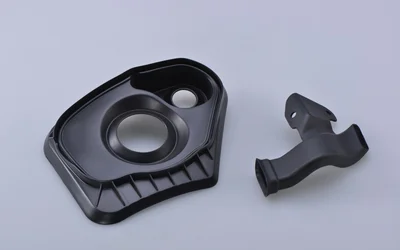
Here are topics about how to avoid sink marks on plastic injection molded parts from the beginning such as selecting proper materials, improving product design, etc.
3 minutes read

4 ways to improve part design through customisation, material considerations, iterative prototyping with multi-cavity tooling, and the use of digital manufacturing resources
8 minutes read

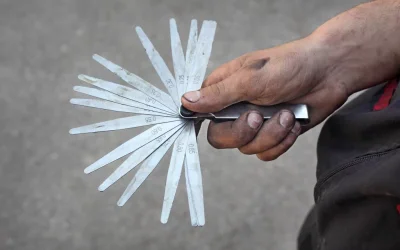
Flatness is a measure of a surface’s form that indicates whether all of the points along that surface lie in the same plane. Symbolized in Geometric Dimensioning and Tolerancing by a parallelogram, flatness is particularly useful when two surfaces must be assembled together to form a tight seal.
5 minutes read


Bringing a product to market late has a real and negative impact on profits and brand reputation. In this blog, we go through the types of documentation your project requires and ways to streamline processes.

3 minutes read

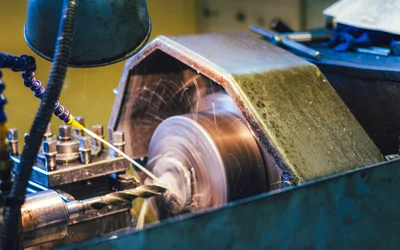
This article explores the requirements of CNC machining process for part design and talks about 5 tips to machine parts with lower cost, high efficiency, high quality, under the conditions of meeting needs of product functions, appearance and reliability.
3 minutes read