




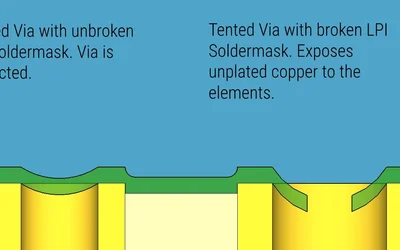
Learn the pros and cons of leaving vias exposed or covered.

4 minutes read
Tagged with
Learn the pros and cons of leaving vias exposed or covered.
4 minutes read
In this episode, we talk about how a boutique custom motorcycle company is leveraging 3D printing to create desired components at a fraction of the cost and time required by conventional manufacturing techniques.

Unlike the traditional production, the on-demand and customized high-mix, low-volume manufacturing services of RPWORLD allows for the design flexibility that mass manufacturing cannot offer. Moreover, the process, tooling and materials being used for low-volume parts sometimes are not as certain as those of mass production parts. That’s why quality assurance is paramount at RPWORLD and it’s one of the core benefits for our customers.

3 minutes read
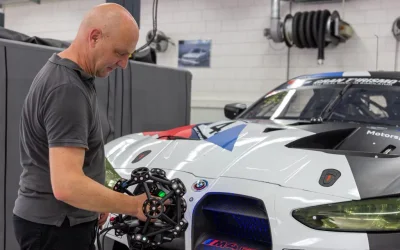
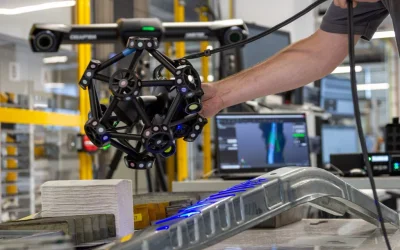
In motorsports, a measurement system must be able to provide accurate information about the condition of a race vehicle very quickly so that engineering teams can optimize both their designs and assemblies.

2 minutes read
With the high degree of technical complexity and integrated project management, the automotive industry has always been an outstanding representative of high-end manufacturing.
Following the example set by the FIA, M-Sport saw the need to introduce 3D scanning to control the body shell’s accuracy and ensure that the car met regulatory requirements. After all, winning performances often occur by pushing as close to the limit as practical while remaining compliant with regulations. 3D scanning proved to be the technology required to reach this balance.
3 minutes read
Before sending your final design files to your CM for manufacturing, check out these useful tips and final steps.
4 minutes read
Everyone wants to save money on manufactured parts, so in this video we list ways in which injection moulding costs can be reduced, whether it be cutting unnecessary features or incorporating undercuts.

4 minutes read
When digitization meets connectivity, you enter the smart factory. As an essential part of the fourth industrial revolution (Industry 4.0), it aims to optimize smart manufacturing processes. The fully digitized manufacturing facility of the smart factory uses devices, sensors, machinery, and production systems to continuously collect and share data.

5 minutes read
A company well-known for superior analytical instruments and laboratory equipment opted for RPWORLD to produce 100 units assembly parts of a Spectrometer per order, the total demand is 400 sets per year.
High-precision measurements, shorter surveying times and the rapid further processing of the data obtained convinced voestalpine Stahl.
3 minutes read
Multi Jet Fusion makes it possible to produce functional nylon prototypes and end-use parts in as fast as 1 day. This video looks at the process and what it can offer you.
4 minutes read
There’s a lot to think about when it comes to plastics for medical parts. At the top of the list are safety and, for parts going inside the body, longevity. So, which is the best to choose for your application?
5 minutes read
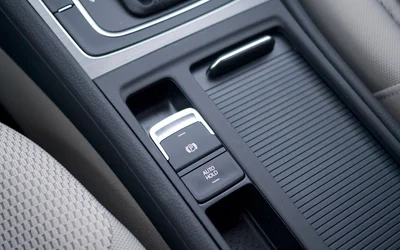
EPB, short for Electric Parking Brake, is an electric parking system, which replaces the traditional handbrake lever and cables, but safer, as the braking effect will not be affected by the force of drivers.
6 minutes read
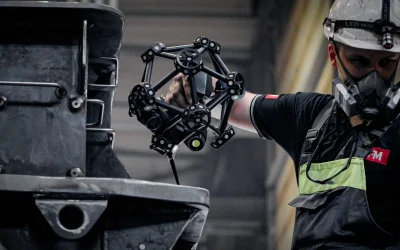
Latvian company SFM, a provider of transformer tanks, has been using Creaform MetraSCAN BLACK 3D scanner with VXelements software for 2 years, to provide high-quality 3D measurement reports for its products.
2 minutes read