



Be the first to know.
Get our 3d printing  weekly email digest.

Tagged with

3D Printing

ORGANIZATIONS.

SHAPING THE INDUSTRY.

The Next Byte

Entertainment

The Next Byte Podcast is hosted by two young engineers - Daniel and Farbod - who select the most interesting tech/engineering cont...

165 Posts

Creaform

3D Engineering Services

Founded in 2002 in Lévis (Québec, Canada), Creaform is a world-class leader...

160 Posts

UltiMaker

Manufacturing

Since 2011, Ultimaker has built an open and easy-to-use solution of 3D prin...

105 Posts

Protolabs

Manufacturing

Manufacturing. Accelerated.

101 Posts

nTopology

Design & Engineering Software

nTopology is a software company building the next generation of engineering...

63 Posts

View more

Latest Posts

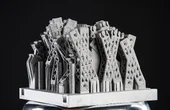
Electroforming and 3D Printing are both additive manufacturing processes. Whereas Electroforming builds up precision metal parts atom by atom, 3D Printing works by applying materials in droplets through a small diameter nozzle and “print” layer by layer to build up the product.

Electroforming vs. 3D Printing: What's the Difference?

Studio Artefact specializes in “themed immersive experiences” uses 3D printing to create awe-inspiring structures and decorations. At present, Studio Artefact operates a fleet of six BigRep large-format 3D printers. The team works mainly with PETG, and has seen its horizons widen exponentially with each additional 3D printer installed. Prior to 3D printing, it would make most of its large structures with styrofoam sculpting, welding, and woodworking technique, which was painstaking and took much longer than 3D printing, placing a limit on productivity and profitability.

3D PRINTED MAGICAL WORLDS AND DECORATIONS AT STUDIO ARTEFACT

Read how Kawasaki Motors Corp.’s Lincoln, USA manufacturing facility saved up to 85% of costs on production tooling by optimizing automotive and aerospace production with BigRep’s large-format additive manufacturing systems. Kawasaki wasn’t a stranger to 3D printing before diving into large-format with their BigRep. By opting to invest in their own facility instead of depending on outsourcing, Kawasaki brought supply chains in house, streamlined engineering and logistical workflows, and returned their investment in just 6 months.

How Kawasaki Optimized Production with 3D Printed Tooling

Countries have been gathering at the COP26 climate change summit in Glasgow to agree how to slow the global rise in temperatures. 45% of global greenhouse gas emissions come from the ways that we produce and consume our products and food.

3D printing and the circular economy