Featured
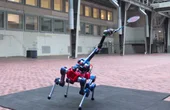
A research team from ETH Zurich has taught the four-legged robot ANYmal to play badminton – including precise arm movements, quick reflexes and nimble footwork.
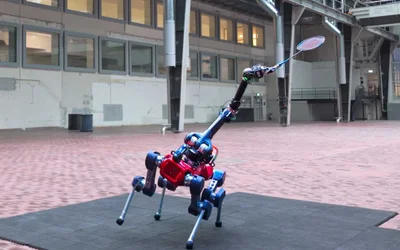
A research team from ETH Zurich has taught the four-legged robot ANYmal to play badminton – including precise arm movements, quick reflexes and nimble footwork.
A research team from ETH Zurich has taught the four-legged robot ANYmal to play badminton – including precise arm movements, quick reflexes and nimble footwork.
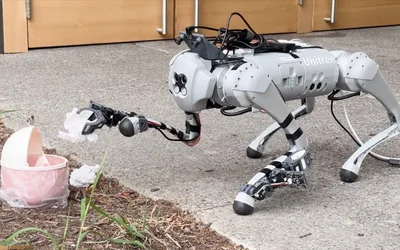
New machine learning framework bridges the embodiment gap between robots and humans and enables quadrupedal robots to perform versatile movements like pouring soda, organizing shoes, and even cleaning up cat litter.
A new machine learning model can save engineers time and computation resources by using AI to quickly and accurately predict simulation results.
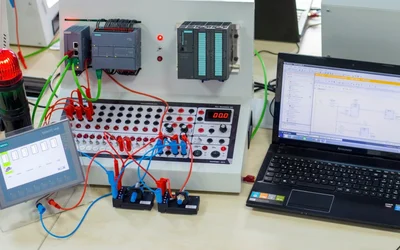
In this article, we'll see how PLC and SCADA systems differ, how they work together, and which protocols, scan times and security controls matter in industrial automation.
18 minutes read.
17 minutes read.
23 minutes read.
18 minutes read.
18 minutes read.
15 minutes read.


Semiconductors
Nordic Semiconductor is a fabless semiconductor company specializing in wireless technology that powers the IoT.
181 Posts

High Tech
High Tech Campus Eindhoven is Europe's smartest square km and has the ultim...
49 Posts

University for science and technology
Freedom and individual responsibility, entrepreneurial spirit and open-min...
43 Posts

Higher Education
Work together. Create smart machines. Serve society. University of Michiga...
40 Posts
A modern vehicle's competitive advantage lies in compiled firmware. Binary-level protection secures that code without source access, hardware changes, or a heavy memory budget.
AI-ready tools for embedded development evolve how engineers address real-world challenges.
Mario Mauerer, maxon's Global Business Development Manager, Robotics, discusses what it takes for robotic deployments to be successful in complex real-world environments.
Join Prof. Fei Chen as he explores advanced bimanual manipulation and teleoperation techniques shaping the future of intelligent human-like robots in this expert-led robotics session.
'Link-bots' can move, explore, cooperate without sensing or computation
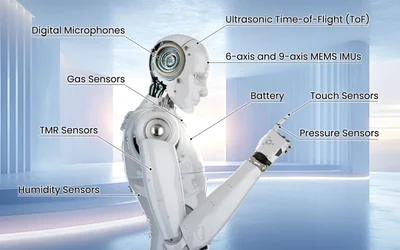
This article is part 4 of a 4-part article series on TDK's advanced robotics.
A research team from ETH Zurich has taught the four-legged robot ANYmal to play badminton – including precise arm movements, quick reflexes and nimble footwork.

New machine learning framework bridges the embodiment gap between robots and humans and enables quadrupedal robots to perform versatile movements like pouring soda, organizing shoes, and even cleaning up cat litter.

A new machine learning model can save engineers time and computation resources by using AI to quickly and accurately predict simulation results.
3 minutes read
Wearables have enjoyed a meteoric rise in popularity in recent years to the point that one in four of us now wear a smart connected device. Fifteen years ago, it was one in 100 people. This growth in ownership has been driven to an extent by convenience and integration.

4 minutes read
New control algorithm personalizes user experience for stroke, ALS patients

5 minutes read
MIT engineers used a machine-learning model to design nanoparticles that can deliver RNA to cells more efficiently.
High frequency radio waves can wirelessly carry the vast amount of data demanded by emerging technology like virtual reality, but as engineers push into the upper reaches of the radio spectrum, they are hitting walls. Literally.

4 minutes read
While outdoor navigation using GPS technology is seamlessly integrated into everyday life, effective indoor navigation still presents a challenge. GPS signals are typically weaker or even non-existent inside large buildings, shopping malls, hospitals, airports, and industrial complexes.
3 minutes read
Join industry leaders to discover the latest in Edge, IoT, LoRaWAN, Cellular IoT, AI at the edge, and energy harvesting.
Agricultural technology is now part of clean technology. As global demand for food continues to rise, farmers need to maximize agricultural productivity while ensuring environmental sustainability. This article examines advances in agritech within the context of cleantech.
Storage systems from Cloudian, co-founded by an MIT alumnus, are helping businesses feed data-hungry AI models and agents at scale.
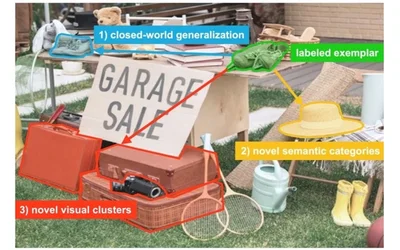
Open ad-hoc categorization approach combines language guidance with visual clustering to learn contextualized features for flexible image interpretation.

4 minutes read
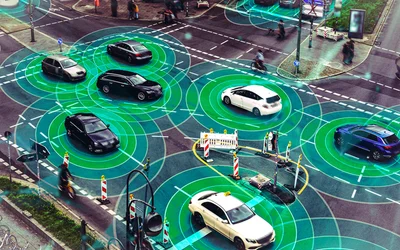
New research shows automatically controlling vehicle speeds to mitigate traffic at intersections can cut carbon emissions between 11 and 22 percent.
Artificial intelligence shows researchers that pollution increases may be more likely following natural hazards.

3 minutes read
Article #6 of Confronting AI Series: AI's rapid evolution has outpaced regulation. In this Q&A, Jared Bowns explores how adaptive frameworks, accountability, and ethical oversight can help engineers manage the risks and responsibilities of building trustworthy AI systems.