Featured
New technique could improve the scalability of trapped-ion quantum computers, an essential step toward making them practically useful.

New technique could improve the scalability of trapped-ion quantum computers, an essential step toward making them practically useful.
New technique could improve the scalability of trapped-ion quantum computers, an essential step toward making them practically useful.
The 2G and 3G switch-off is reshaping IoT connectivity worldwide, making migration to 4G, 5G, LTE-M, or NB-IoT essential to avoid outages and ensure future-ready devices.
Nanoparticles coated with molecular sensors could be used to develop at-home tests for many types of cancer.
Explore AMD's Zynq UltraScale+ MPSoC and RFSoC for 5G, ADAS, and embedded applications.
16 minutes read.
12 minutes read.

Additive Manufacturing
The ever growing need for precise micro-parts is restricted by current tech...
1 Post

Machinery Manufacturing
We Are Giving Human Materials the Superpowers of Nature Using Lasers
1 Post

Explore AMD's Zynq UltraScale+ MPSoC and RFSoC for 5G, ADAS, and embedded applications.
Discover how wireless technologies like 5G, LoRa, Wi-Fi, and Zigbee are transforming industrial automation by enabling flexible, scalable, and cost-efficient connectivity.
Discover how 5G RedCap enables cost-efficient, low-power connectivity for industrial gateways and rugged IoT, bridging the gap between LTE and full 5G performance.
New System Strengthens Security for the Biotech Industry
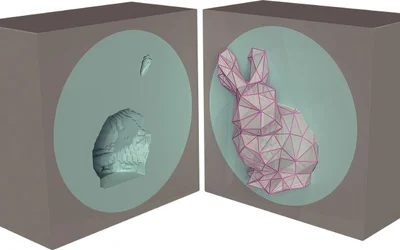
Whether designing a window in an airliner or a cable conduit for an engine, manufacturers devote a lot of effort to reinforcing openings for structural integrity. But the reinforcement is rarely perfect and often creates structural weaknesses elsewhere.
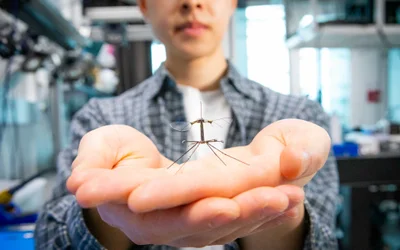
Microrobot gets crane fly-inspired legs for soft touchdowns
New technique could improve the scalability of trapped-ion quantum computers, an essential step toward making them practically useful.
The 2G and 3G switch-off is reshaping IoT connectivity worldwide, making migration to 4G, 5G, LTE-M, or NB-IoT essential to avoid outages and ensure future-ready devices.
Nanoparticles coated with molecular sensors could be used to develop at-home tests for many types of cancer.
NR+ is the first non-cellular 5G standard enabling massive IoT with low latency, long range, and operator-free private networks — powered by Nordic and Wirepas for scalable, resilient deployments.
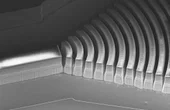
Researchers from ETH Zurich have manufactured organic light-emitting diodes (OLEDs) on a nanoscale – that's around a hundred times smaller than a human cell.

5 minutes read
Article #2 of Mastering RF Engineering: RF signal chains are key to wireless systems. Learn how components like amplifiers, filters, and mixers help plan RF designs, balance performance needs, and decide between custom-built or pre-made modules.
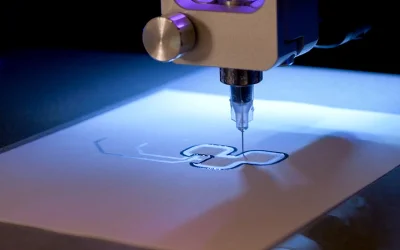
The NOVA platform by Voltera is a versatile tool that can empower defence organizations in the integration of increasingly sophisticated electronics in combat equipment.
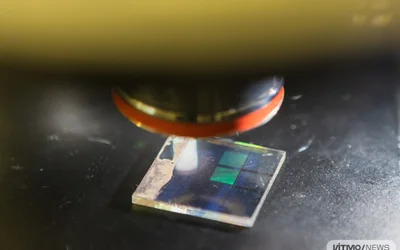
Scientists from ITMO have developed a new method for creating colorful structured semiconductor perovskite films without the risk of defects or contamination.

4 minutes read
In the future, drones will take off automatically and head to an emergency scene immediately after the emergency call, transmitting initial aerial images to the emergency services control centre – even before the relevant personnel arrive.

4 minutes read
Enterprise IoT is another direction of IoT industry development, which businesses are actively adopting. Embedded technologies for large organizations bring new challenges in terms of connectivity, network stability, and data security.

8 minutes read
This article examines whether we met the hype of 5G and where we are today with technology deployments.

5 minutes read
The ultrabroadband infrared frequency comb could be used for chemical detection in portable spectrometers or high-resolution remote sensors.
Researchers can now observe the phonon dynamics and wave propagation in self-assembly of nanomaterials with unusual properties that rarely exist in nature.

3 minutes read
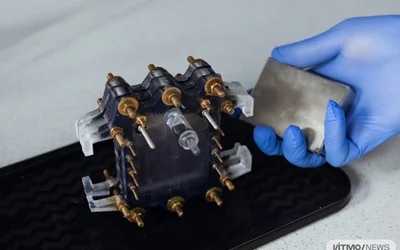
The technology uses magnets and nanoparticles to accelerate sixfold the process of water decomposition into hydrogen and oxygen, all while requiring 15% less energy than conventional methods.
3 minutes read
A team of researchers from ITMO University, Tel Aviv University, and University of Aveiro have come up with a new way to improve the mechanical properties of spider webs.
3 minutes read