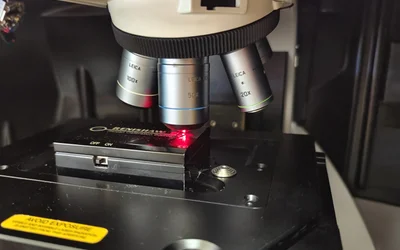
The future of data, Edge Data Center, is equivalent to a mini data centre. Its proximity to enterprises eliminates latency and other limitations, giving access to real-time data. In this article, we will delve into its core concepts, advancements, operational challenges, and real-time applications.
In the future, drones will take off automatically and head to an emergency scene immediately after the emergency call, transmitting initial aerial images to the emergency services control centre – even before the relevant personnel arrive.
Enterprise IoT is another direction of IoT industry development, which businesses are actively adopting. Embedded technologies for large organizations bring new challenges in terms of connectivity, network stability, and data security.
Ada is a state-of-the-art programming language development teams use worldwide for critical software. It is unique among languages in that it helps detect and eliminate bugs early in the software life cycle when they are the least expensive to correct.
Researchers at the Technical University of Munich (TUM) have invented an entirely new field of microscopy, nuclear spin microscopy. The team can visualize magnetic signals of nuclear magnetic resonance with a microscope.
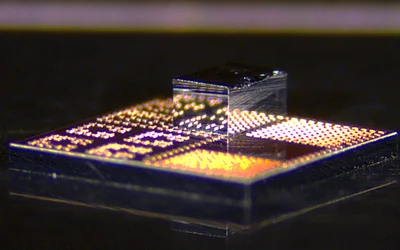
As the demand for smarter, faster, and more efficient electronic devices grows, the development of advanced circuits is becoming central to the evolution of next-generation technologies.
Scientists at ITMO University have developed multiple-use sensor substrates coated with gold nanoparticles for use in gauging the precise ratio of chlorogenic acid in natural and manufactured raw material.
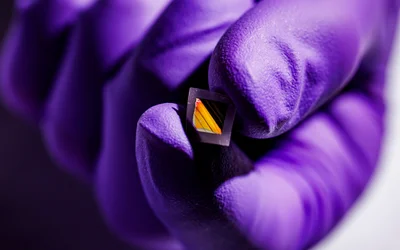
Researchers have developed a drastically smaller and more energy efficient method of creating coveted photon pairs that influence each other from any distance. The technology could transform computing, telecommunications, and sensing.
A tiny, four-fingered “hand” folded from a single piece of DNA can pick up the virus that causes COVID-19 for highly sensitive rapid detection and can even block viral particles from entering cells to infect them, University of Illinois Urbana-Champaign researchers report.
DECT NR+ (NR+) is a wireless connectivity standard and the world's first operator-free 5G technology specifically engineered from the ground up to address the previously unmet needs of the industrial IoT.
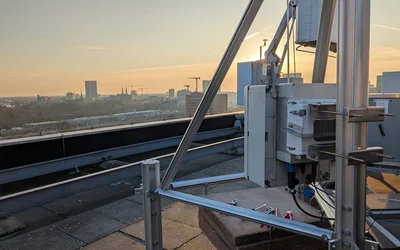
This article highlights non-terrestrial networks at high altitudes, focusing on R&D and testing efforts to support next-generation telecommunications standards, Beyond 5G and 6G.
The 23rd Precision Fair showcased innovations like Hexagon's MarvellScan and Maxon's SCARA robots, with Aero Delft winning the Young Talent Pitch for their hydrogen aircraft.
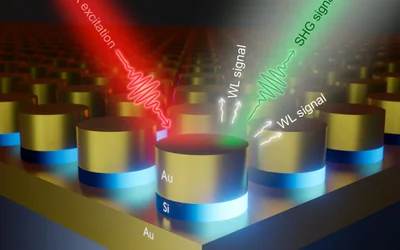
Semiconductor nanodevices are tiny electronic components crucial in modern electronics due to their smaller size and improved performance. These devices enable faster processors, higher-density memory, and more efficient energy consumption.
Beyond 5G (5th generation and later mobile communications system: hereinafter “B5G”) / 6G (6th generation mobile communications system) is expected to be applied and spread in popularity as a new form of information communications infrastructure from the 2030s.
Lightwave electronics aim to integrate optical and electronic systems at incredibly high speeds, leveraging the ultrafast oscillations of light fields.