Design the next generation application with Photonic Chips
Be the first to know.
Get our Integrated Photonics weekly email digest.
Integrated Photonics
challenge
Design the next generation application with Photonic Chips

Featured

The tiny device uses a tightly focused beam of light to capture and manipulate cells.

Featured

Important breakthrough for the development of diamond-based quantum computers

Engineers Wiki. Most Asked Questions.
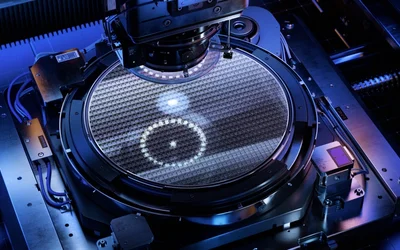
Photoresist, a light-sensitive material, is essential in photolithography for transferring intricate circuit patterns onto semiconductor wafers. This article explores positive vs. negative photoresists, detailing their chemical mechanisms, processing parameters, and performance traits.
ORGANIZATIONS. SHAPING THE INDUSTRY.


ITMO University
Higher Education
ITMO University is one of Russia's leading higher education and research institutions, specializing in Information Technology, Opt...
17 Posts


Fusion Bionic GmbH
Machinery Manufacturing
We Are Giving Human Materials the Superpowers of Nature Using Lasers
1 Post

TAGGED WITH photonics

PICs are unlocking faster wireless technologies like FSO, 6G, and ISAC, with real solutions already emerging for today's biggest challenges.

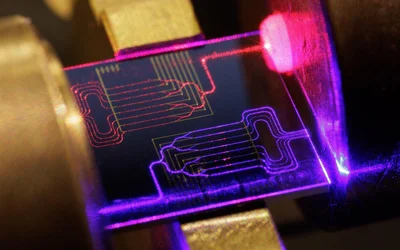
Aluminum oxide PICs are gaining attention for their broad wavelength coverage, low optical losses, and support for on-chip optical amplification. In this discussion, Steve Stoffels, the CEO of Aluvia Photonics, explains where the platform fits and how teams can design with it.
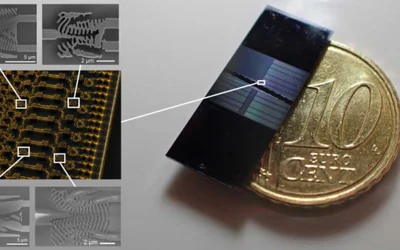
Inverse design enables compact, foundry-ready silicon nitride photonic components
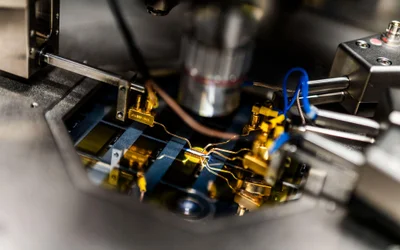
XIVER's Sreekanth Chirayath on why photonic innovations fail on the production line and how designing for manufacturing from the start changes the outcome.
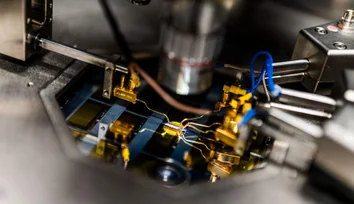
TAGGED WITH photonic chips
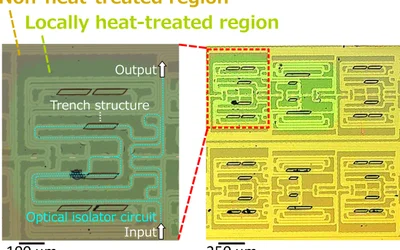
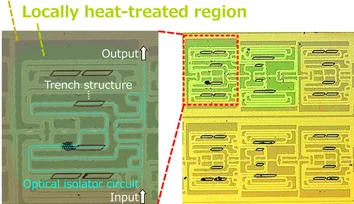
A laboratory device reaches 13.6 dB of isolation at 1540 nm, with heat confined to a window 700 micrometres across instead of the whole wafer going through a furnace.
PICs are unlocking faster wireless technologies like FSO, 6G, and ISAC, with real solutions already emerging for today's biggest challenges.
Aluminum oxide PICs are gaining attention for their broad wavelength coverage, low optical losses, and support for on-chip optical amplification. In this discussion, Steve Stoffels, the CEO of Aluvia Photonics, explains where the platform fits and how teams can design with it.
Inverse design enables compact, foundry-ready silicon nitride photonic components
Latest Posts
The tiny device uses a tightly focused beam of light to capture and manipulate cells.
Important breakthrough for the development of diamond-based quantum computers

3 minutes read
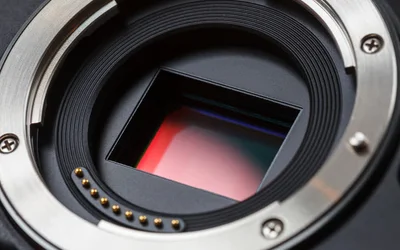
CMOS and CCD sensors both convert light into electronic signals, with CMOS using pixel-level transistors for faster, energy-efficient processing, while CCD transfers charge across the chip for superior image quality but with slower speed and higher power consumption.
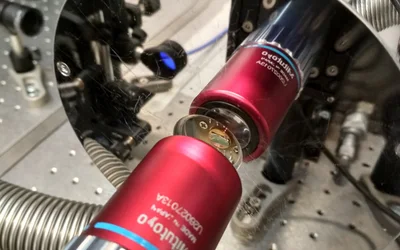
Researchers from ITMO University have developed a system that can bind and control particles of light and matter.

3 minutes read


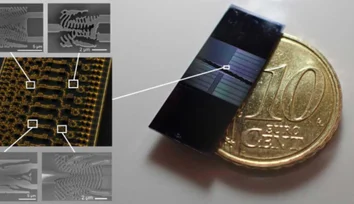
Smaller than a coin, this optical device could enable rapid prototyping on the go.

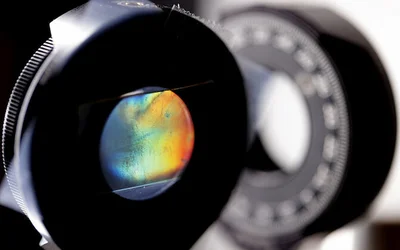
New manufacturing method builds tougher materials that were previously considered useless for twisting light into more robust optical devices.

4 minutes read

A new quantum-system-on-chip enables the efficient control of a large array of qubits, moving toward practical quantum computing.


In this episode, discuss how big of a problem lead contaminated water still is across the world and how a collaboration between MIT & Nanyang University plans to tackle it with a highly accurate and inexpensive water pollution sensor.

16 minutes read
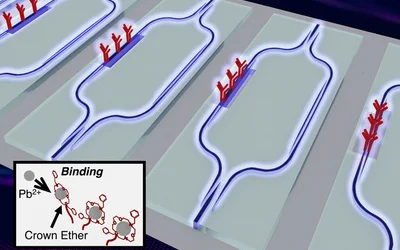
The chip-scale device could provide sensitive detection of lead levels in drinking water, whose toxicity affects 240 million people worldwide.


Using an ultrasensitive photonic crystal, TU/e researchers were able to detect single particles down to 50 nanometers in diameter. The new research has just been published in the journal Optica.

4 minutes read


Physicists from ITMO University have created an AI-based solution to make quantum states remain stable for longer for the processing, reliable recording, and storage of information. This study, described in a recent article in Applied Physics Letters, may help pave the way to quantum computers.
2 minutes read

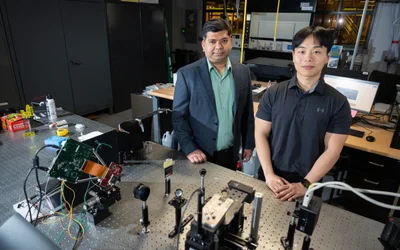
The researchers developed a light-based means of printing nano-sized metal structures that is 480 times faster and 35 times cheaper than the current conventional method.

3 minutes read
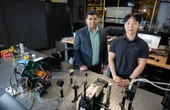
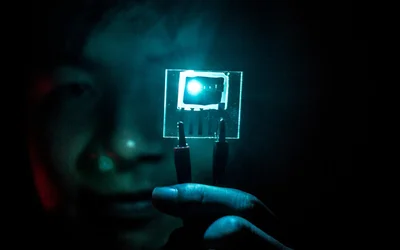
Lights could soon use the full color suite of perfectly efficient organic light-emitting diodes, or OLEDs, that last tens of thousands of hours, thanks to an innovation from physicists and engineers at the University of Michigan.
3 minutes read

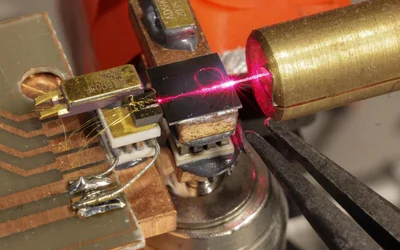
EPFL researchers have developed a hybrid device that significantly improves existing, ubiquitous laser technology.