Featured
Hitting 2 petawatts, the NSF-funded ZEUS facility at U-M enables research that could improve medicine, national security, materials science and more.
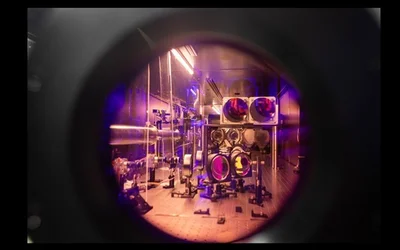
Hitting 2 petawatts, the NSF-funded ZEUS facility at U-M enables research that could improve medicine, national security, materials science and more.
Hitting 2 petawatts, the NSF-funded ZEUS facility at U-M enables research that could improve medicine, national security, materials science and more.
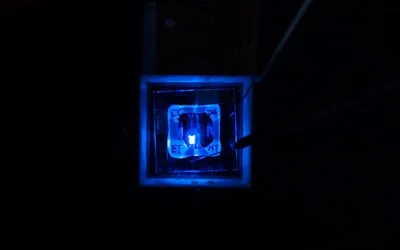
Commercial devices currently settle for less efficient blue OLEDs, but a set of design innovations has made an efficient blue that is as durable as efficient green OLEDs.
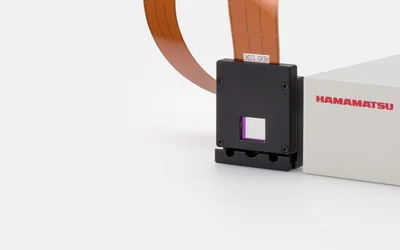
Hamamatsu Photonics has developed a new product that addresses the growing need for precise beam-shaping solutions in the - nm spectral range.
Photoresist, a light-sensitive material, is essential in photolithography for transferring intricate circuit patterns onto semiconductor wafers. This article explores positive vs. negative photoresists, detailing their chemical mechanisms, processing parameters, and performance traits.


Higher Education
ITMO University is one of Russia's leading higher education and research institutions, specializing in Information Technology, Opt...
17 Posts

Machinery Manufacturing
We Are Giving Human Materials the Superpowers of Nature Using Lasers
1 Post

PICs are unlocking faster wireless technologies like FSO, 6G, and ISAC, with real solutions already emerging for today's biggest challenges.
Aluminum oxide PICs are gaining attention for their broad wavelength coverage, low optical losses, and support for on-chip optical amplification. In this discussion, Steve Stoffels, the CEO of Aluvia Photonics, explains where the platform fits and how teams can design with it.
Inverse design enables compact, foundry-ready silicon nitride photonic components
XIVER's Sreekanth Chirayath on why photonic innovations fail on the production line and how designing for manufacturing from the start changes the outcome.
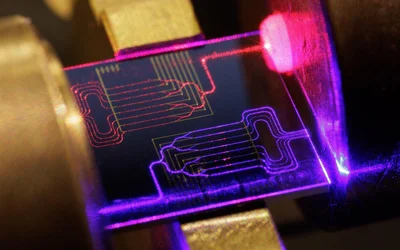
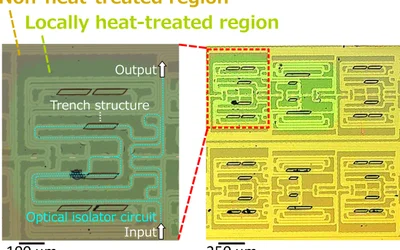
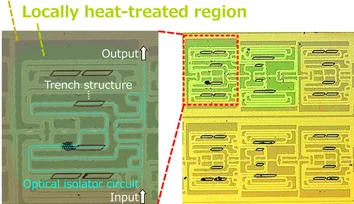
A laboratory device reaches 13.6 dB of isolation at 1540 nm, with heat confined to a window 700 micrometres across instead of the whole wafer going through a furnace.
PICs are unlocking faster wireless technologies like FSO, 6G, and ISAC, with real solutions already emerging for today's biggest challenges.
Aluminum oxide PICs are gaining attention for their broad wavelength coverage, low optical losses, and support for on-chip optical amplification. In this discussion, Steve Stoffels, the CEO of Aluvia Photonics, explains where the platform fits and how teams can design with it.
Inverse design enables compact, foundry-ready silicon nitride photonic components
Hitting 2 petawatts, the NSF-funded ZEUS facility at U-M enables research that could improve medicine, national security, materials science and more.

5 minutes read
Commercial devices currently settle for less efficient blue OLEDs, but a set of design innovations has made an efficient blue that is as durable as efficient green OLEDs.
5 minutes read
Hamamatsu Photonics has developed a new product that addresses the growing need for precise beam-shaping solutions in the - nm spectral range.
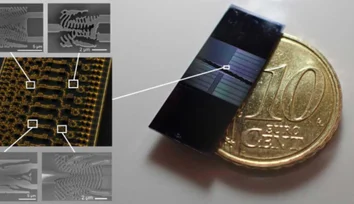
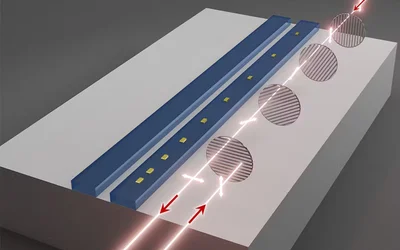
Researchers at Washington University in St. Louis have developed a simple, efficient way to enable one-way light transmission in photonic chips

3 minutes read
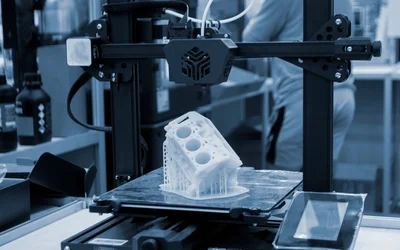
Photonics is advancing 3D printing by enabling ultra-precise, high-speed manufacturing.
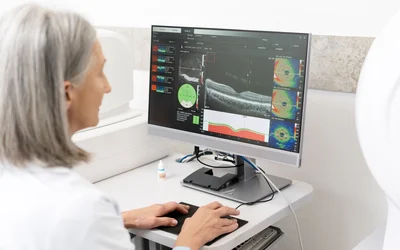
The increasing use of digital screens has heightened the importance of eye health globally. Optical Coherence Tomography (OCT) offers a non-invasive method to monitor eye conditions.
Advanced Infrared Technologies Enable Accurate Emission Monitoring and Support Industrial Climate Compliance
Single chip generates short bursts of light for sensing, spectroscopy

5 minutes read
The Silicon Photomultiplier (SiPM) is transforming optical sensing and LiDAR technology by providing high photon detection efficiency, low noise, and fast response times, enabling greater accuracy and resolution in applications such as autonomous navigation, environmental mapping, and 3D imaging.
Scientists at EPFL and IBM Research have developed a compact optical amplifier based on a photonic chip that vastly outperforms traditional optical amplifiers in both bandwidth and efficiency. This breakthrough could reshape data center interconnects, AI accelerators, and high-performance computing.

3 minutes read
In the following interview, Luigi Ghezzi, Technical Marketing Engineer at Hamamatsu, offers a detailed look into the establishment of their innovation awards and the company's aspirations, objectives, and future plans for this significant industry honor.
The Photonics Innovation Awards 2025 invites a diverse group of participants ranging from nimble startups and original equipment manufacturers (OEMs) to established industry leaders.
In this episode, we explore how porous plastic sheets are being used to cool buildings by radiating heat into space and how this could reduce global energy consumption by 10% and CO2 emission by 7%.

12 minutes read
The future is being built with light, and engineers around the world are leading the change.
An international team of researchers co-led by Akhlesh Lakhtakia, Penn State Evan Pugh University Professor of Engineering Science and Mechanics, developed porous plastic sheets that can lower building temperatures through radiative cooling.

3 minutes read