Featured
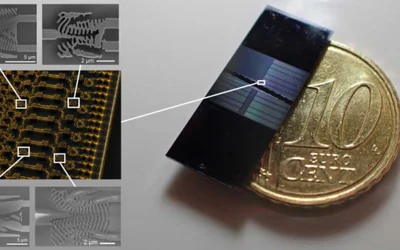
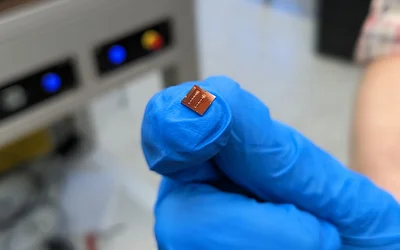
In this episode, we explore how tiny wireless antennas use light to monitor cellular communication with groundbreaking precision.

In this episode, we explore how tiny wireless antennas use light to monitor cellular communication with groundbreaking precision.
In this episode, we explore how tiny wireless antennas use light to monitor cellular communication with groundbreaking precision.
Combining insights from two ancient art forms, Princeton engineers used a single sheet of material to create 3D structures with adjustable flexibility that could guide sound and light to perform complex tasks.
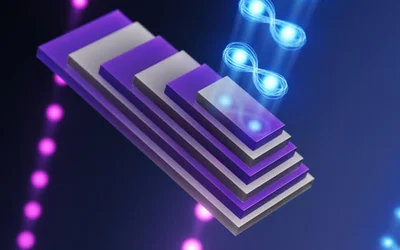
Researchers have developed a drastically smaller and more energy efficient method of creating coveted photon pairs that influence each other from any distance. The technology could transform computing, telecommunications, and sensing.
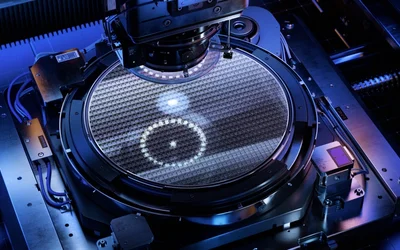
Photoresist, a light-sensitive material, is essential in photolithography for transferring intricate circuit patterns onto semiconductor wafers. This article explores positive vs. negative photoresists, detailing their chemical mechanisms, processing parameters, and performance traits.


Higher Education
ITMO University is one of Russia's leading higher education and research institutions, specializing in Information Technology, Opt...
17 Posts

Machinery Manufacturing
We Are Giving Human Materials the Superpowers of Nature Using Lasers
1 Post

PICs are unlocking faster wireless technologies like FSO, 6G, and ISAC, with real solutions already emerging for today's biggest challenges.
Aluminum oxide PICs are gaining attention for their broad wavelength coverage, low optical losses, and support for on-chip optical amplification. In this discussion, Steve Stoffels, the CEO of Aluvia Photonics, explains where the platform fits and how teams can design with it.
Inverse design enables compact, foundry-ready silicon nitride photonic components
XIVER's Sreekanth Chirayath on why photonic innovations fail on the production line and how designing for manufacturing from the start changes the outcome.
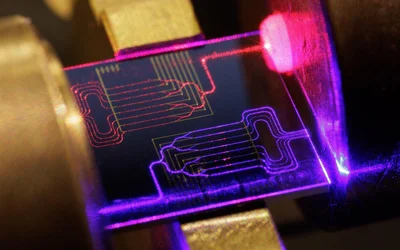
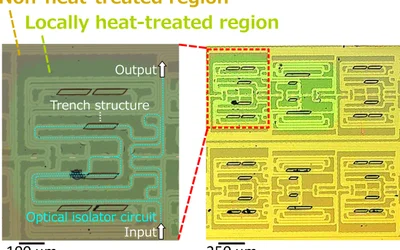
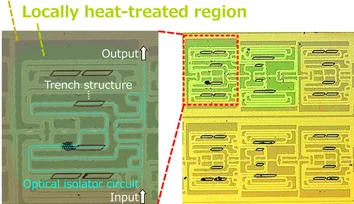
A laboratory device reaches 13.6 dB of isolation at 1540 nm, with heat confined to a window 700 micrometres across instead of the whole wafer going through a furnace.
PICs are unlocking faster wireless technologies like FSO, 6G, and ISAC, with real solutions already emerging for today's biggest challenges.
Aluminum oxide PICs are gaining attention for their broad wavelength coverage, low optical losses, and support for on-chip optical amplification. In this discussion, Steve Stoffels, the CEO of Aluvia Photonics, explains where the platform fits and how teams can design with it.
Inverse design enables compact, foundry-ready silicon nitride photonic components
In this episode, we explore how tiny wireless antennas use light to monitor cellular communication with groundbreaking precision.

12 minutes read
Combining insights from two ancient art forms, Princeton engineers used a single sheet of material to create 3D structures with adjustable flexibility that could guide sound and light to perform complex tasks.

3 minutes read
Researchers have developed a drastically smaller and more energy efficient method of creating coveted photon pairs that influence each other from any distance. The technology could transform computing, telecommunications, and sensing.

3 minutes read
Agriculture must feed 10 billion people by 2050 while cutting emissions and waste. Integrated photonics offers a solution with advanced sensors for efficient, high-yield farming.
As part of a high-resolution biosensing device without wires, the antennas could help researchers decode intricate electrical signals sent by cells.
A Short Guide to Key PIC Industry Design Guidelines for Optimizing Performance and Scalability
As part of our spotlight on the contest’s jury members, we had the privilege of speaking with Jörn Epping, Epiphany's co-founder and an integrated photonics expert.
Twan Korthorst, CEO of New Origin, highlights their transformative potential in a conversation with Wevolver about the Global Photonics Engineering Contest, hosted in collaboration with PhotonDelta.
Explore pathways to a career in Photonic Integrated Circuits (PICs) for both students and engineers looking to reskill.
There has been a growing interest in research and commercial applications for PICs for various markets, including medical technology (MedTech), as they offer compact optical solutions at a low cost when mass-produced.
This new device uses light to perform the key operations of a deep neural network on a chip, opening the door to high-speed processors that can learn in real-time.
The first project is developing light-based chips to bridge the gap between photonics and electronics. The second project plans to make blood cells using blood stem cells. The two projects are the first ERC Synergy grants for TU/e.

3 minutes read
The startup SiPhox, founded by two former MIT researchers, has developed an integrated photonic chip for high-quality, home-based blood testing.
Photoresist, a light-sensitive material, is essential in photolithography for transferring intricate circuit patterns onto semiconductor wafers. This article explores positive vs. negative photoresists, detailing their chemical mechanisms, processing parameters, and performance traits.
Industry Leaders Emphasize the Role of Innovation and Cooperation in Developing Integrated Photonic Applications to Address Societal Challenges.