The applications of 3D printing span many industries, from aircraft fuel nozzles to dental aligners. Here we look at some of the most important uses of the technology.
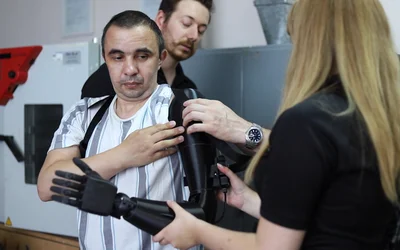
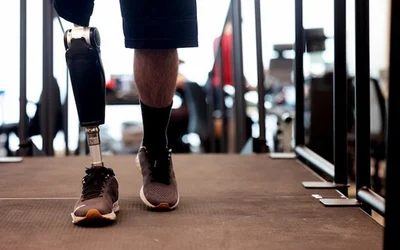
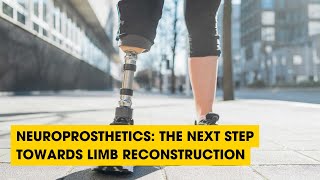
AI-powered artificial muscles made from pliable materials are reshaping recovery, from stroke rehabilitation to prosthetic design. These machines help people regain motion, strength, and confidence.
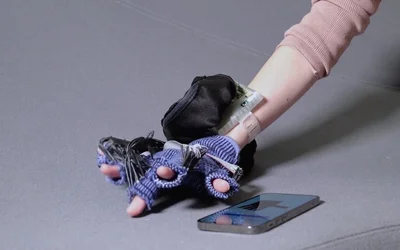
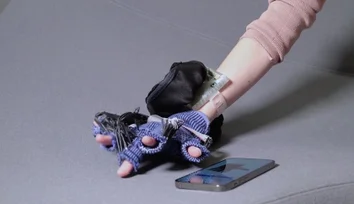
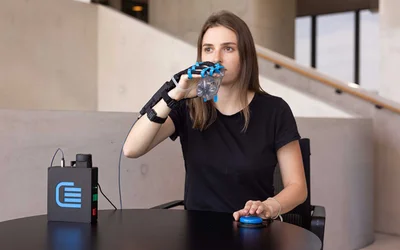
Researchers at ETH Zurich have developed an innovative hand exoskeleton that helps persons after stroke re-learn how to grasp. Its accordion-like structure makes it light, robust and easy to integrate into everyday life.
In this episode, we cover Harvard's soft wearable robot that learns a patient's intent and provides just-enough support, helping stroke and ALS patients regain independence in everyday tasks.
AI-powered artificial muscles made from pliable materials are reshaping recovery, from stroke rehabilitation to prosthetic design. These machines help people regain motion, strength, and confidence.
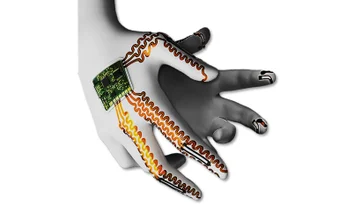
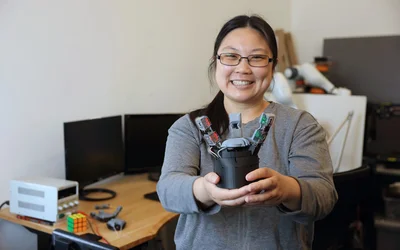
MIT CSAIL researchers enhance robotic precision with sophisticated tactile sensors in the palm and agile fingers, setting the stage for improvements in human-robot interaction and prosthetic technology.
Combining biology and robotics, scientists at EPFL have built a robotic microsurgery platform that can perform high-precision, micrometer-resolution dissections to advance our understanding of how the vertebrate body forms during embryonic development.
Success lies in open innovation and forging partnerships to further develop deep-tech, medical applications for its technology. So, at first glance, Eindhoven and its semiconductor and deep-tech focus isn’t the obvious place for a pharma company. Yet the founders of Emultech knew they needed to be here, and time has proved them right.
An artificial intelligence algorithm can determine non-invasively, with about 70% accuracy, if an in vitro fertilized embryo has a normal or abnormal number of chromosomes, according to a new study from researchers at Weill Cornell Medicine.
As an Inspiring 50 award-winner and startup founder, Greek-Albanian Sophia-Eriola Shanko is a first-time entrepreneur. She has a BSc in Control Systems Engineering, graduating in a classroom with two girls and 100 boys. She pursued a fully EU-funded MSc on Semiconductors and obtained her Ph.D. at TU Eindhoven.
Bion Space became one of the finalists in the Stratosphere Satellite research and engineering program. Their project became a part of a research probe sent into the stratosphere on November 19 to analyze the way lower gravity can affect the biomimetic process of bone-like tissue formation.
You want some medical device prototypes or low-volume production parts to verify the design structure, materials or even your whole medical device idea? Or your medical device development is stalled because the structure of low-volume parts is too complex to be CNC machined or injection molded?
How can you spot emerging technology innovation at public companies? And how could you scale this up, so that you could track not just a handful but hundreds or even thousands of companies?
For this article, I analyzed more than 650,000 financial news to find out.
Complex surgical procedures place high demands on medical devices. In order to meet the growing regulatory requirements for medical devices, a strict quality control process must be observed and implemented during the manufacturing of the products.
Last year, MIT researchers announced that they had built “liquid” neural networks, inspired by the brains of small species: a class of flexible, robust machine learning models that learn on the job and can adapt to changing conditions, for real-world safety-critical tasks, like driving and flying.
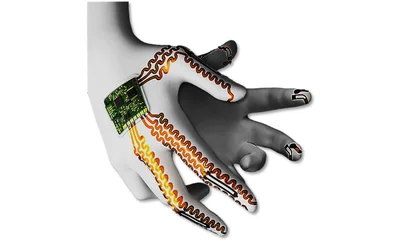


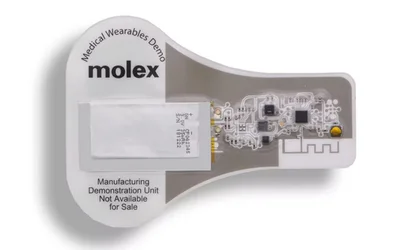
In this episode, we talk about the tattoo-like flexible wearable technology that’ll provide seamless high precision health monitoring for patients and enthusiasts.
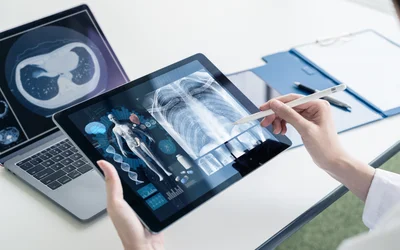
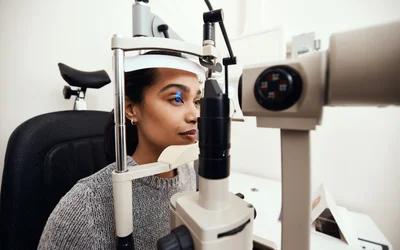
Matroid's deep-learning system comprising of 3D-CNN helps to automatically detect Glaucoma from a single raw Optical Coherence Tomography (OCT) scan. The results are close to human doctors across heterogeneous datasets and scanning environments.
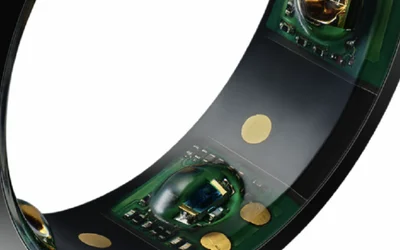
Medsled, a team from ITMO University, has developed a concept of a smart armband for monitoring the condition of hospital patients. Unlike its competitors, the new solution doesn’t have a screen and can transport data directly into a medical information system.
In this episode, we talk about a breakthrough in cancer research from Penn State involving 3D printing of tumors for more accurate pre-clinical trials of experimental solutions.