Featured
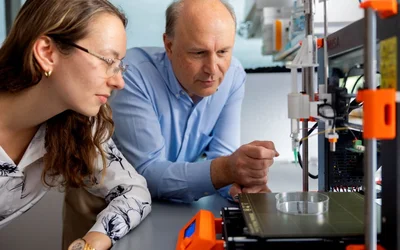
3D printing applications continued to flourish in more technical industries, and the technology has become an intrinsic part of manufacturing and producing products from hearing aids, dentistry parts or surgical instruments and inhalers.
3D printing applications continued to flourish in more technical industries, and the technology has become an intrinsic part of manufacturing and producing products from hearing aids, dentistry parts or surgical instruments and inhalers.
3D printing applications continued to flourish in more technical industries, and the technology has become an intrinsic part of manufacturing and producing products from hearing aids, dentistry parts or surgical instruments and inhalers.
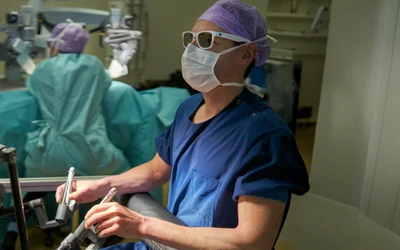
Thanks to a newly developed surgical robot, reconstructive surgery can be performed more safely and accurately in the future. This is also expected to lead to fewer complications and faster patient recovery.
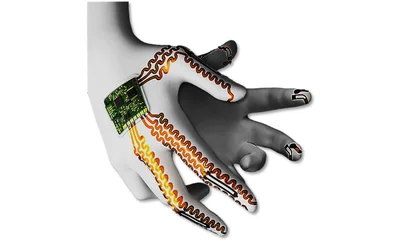
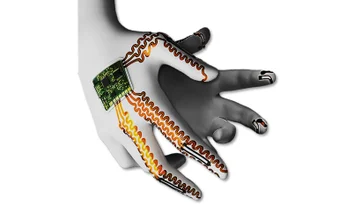
Two new kinds of on-skin electronics allow users to build and customize them directly on the body – with potential applications in biometric sensing, medical monitoring, interactive prosthetic makeup and more.
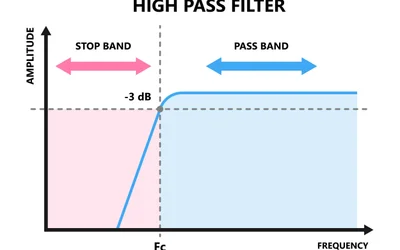
Active high-pass filters remove unwanted low-frequency signals while preserving useful higher frequencies. This article covers first- and second-order filter design, Sallen-Key and multiple-feedback topologies, and practical applications in audio electronics, instrumentation, and signal processing.
16 minutes read.
15 minutes read.
19 minutes read.
12 minutes read.
14 minutes read.


Entertainment
The Next Byte Podcast is hosted by two young engineers - Daniel and Farbod - who select the most interesting tech/engineering cont...
165 Posts

High Tech
High Tech Campus Eindhoven is Europe's smartest square km and has the ultim...
49 Posts

University for science and technology
Freedom and individual responsibility, entrepreneurial spirit and open-min...
43 Posts

University
At the Harvard John A. Paulson School of Engineering and Applied Sciences (...
42 Posts
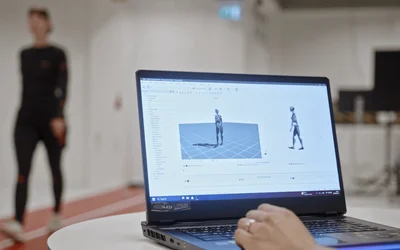
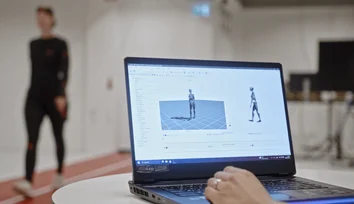
with Xsens motion capture
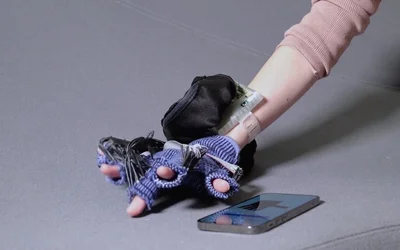
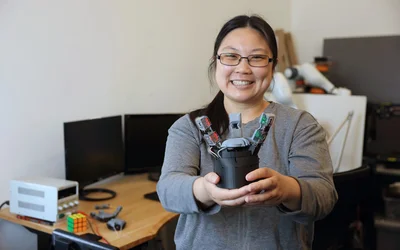
A new glove with more than three dozen actuators across all five fingers and the palm, developed by Cornell researchers, aims to reduce swelling for people suffering from edema.
AI-powered artificial muscles made from pliable materials are reshaping recovery, from stroke rehabilitation to prosthetic design. These machines help people regain motion, strength, and confidence.
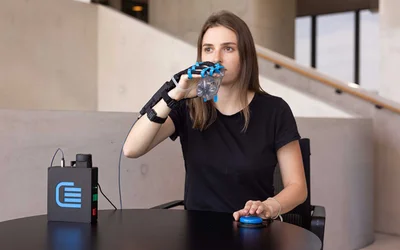
Researchers at ETH Zurich have developed an innovative hand exoskeleton that helps persons after stroke re-learn how to grasp. Its accordion-like structure makes it light, robust and easy to integrate into everyday life.
AI-powered artificial muscles made from pliable materials are reshaping recovery, from stroke rehabilitation to prosthetic design. These machines help people regain motion, strength, and confidence.
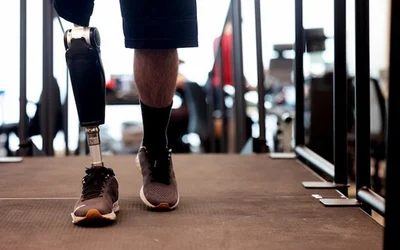
Paired with custom control software, Össur's powered knee prosthesis helped study participants sit, stand and walk more easily.
MIT CSAIL researchers enhance robotic precision with sophisticated tactile sensors in the palm and agile fingers, setting the stage for improvements in human-robot interaction and prosthetic technology.
In this episode, we discuss a breakthrough from ETH Zurich to mimic natural foot signals to the brain using state of the art neuroprosthetics.
3D printing applications continued to flourish in more technical industries, and the technology has become an intrinsic part of manufacturing and producing products from hearing aids, dentistry parts or surgical instruments and inhalers.

5 minutes read
Thanks to a newly developed surgical robot, reconstructive surgery can be performed more safely and accurately in the future. This is also expected to lead to fewer complications and faster patient recovery.

4 minutes read
Two new kinds of on-skin electronics allow users to build and customize them directly on the body – with potential applications in biometric sensing, medical monitoring, interactive prosthetic makeup and more.

3 minutes read
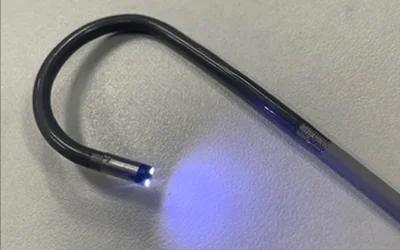
RNDR Medical is set to launch a novel single-use scope for endourology, designed for direct visualization and navigation to diagnose and treat urinary tract disorders like kidney stones and urothelial carcinoma, as well as facilitating pyeloscopy procedures.
4 minutes read
Alumni-founded Ambience Healthcare automates routine tasks for clinicians before, during, and after patient visits.
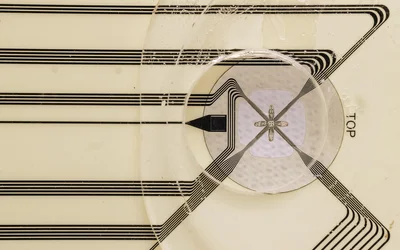
EPFL researchers have developed a novel neural recording device called the "e-Flower" that gently wraps organoids in soft petals.
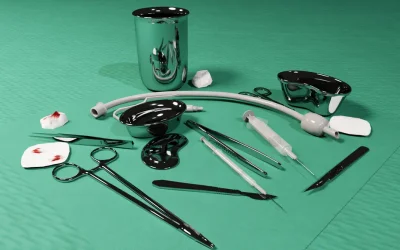
Several factors contribute to the occurrence of retained surgical bodies. One common factor is the hectic nature of surgical environments, where numerous instruments and items are used during procedures.

5 minutes read
In this episode, we explore the versatile knee exoskeleton designed to enhance safety during lifting by using a novel design that improves the freedom of movement and safety in comparison to current state of the art.

16 minutes read
By Xsens MVN Analyze

4 minutes read
In this episode, we explore an innovative and sustainable wearable device designed by researchers at the Karlsruhe Institute of Technology to improve posture and we discuss why AI isn’t just a novelty in this product but a core feature that sets it apart from the rest!
12 minutes read
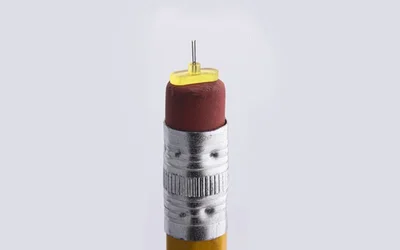
Researchers created a smart sensor that attaches to the tip of a syringe to measure, in real time, the concentration and viability of the cells that pass through it – a device that would enable surgeons and biomanufacturers to produce higher quality
7 minutes read
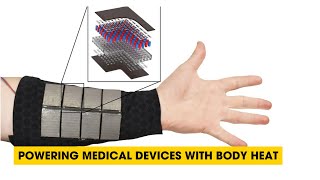
In this episode, we explore the first healthcare device powered by body heat, made possible with liquid-based metals and discover how this innovative technology is paving the way for sustainable and energy-efficient medical devices, revolutionizing the future of healthcare.
13 minutes read
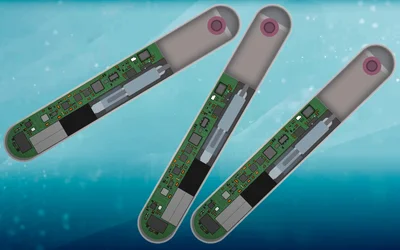
The new device, which can be implanted under the skin, rapidly releases naloxone when an overdose is detected.
New printing method creates branching vessels in heart tissue that replicate the structure of human vasculature in vitro

4 minutes read
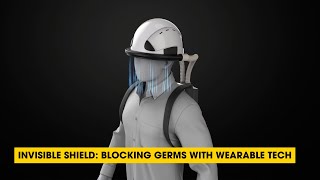
In this episode, we explore the groundbreaking invisible mask developed by a University of Michigan spin-off that is equipped with a wearable air curtain capable of killing viruses and blocking 99.8% of aerosols.
14 minutes read