Featured
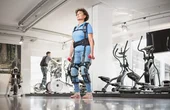
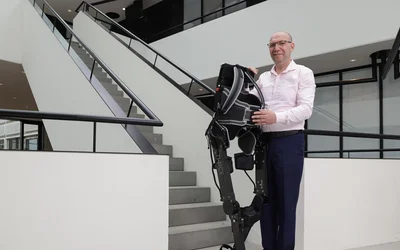
From a mechanical guide dog to a self-learning exoskeleton and magnetically controlled bacteria, researchers at ETH Zurich are busy devising robots for medical applications.
From a mechanical guide dog to a self-learning exoskeleton and magnetically controlled bacteria, researchers at ETH Zurich are busy devising robots for medical applications.
From a mechanical guide dog to a self-learning exoskeleton and magnetically controlled bacteria, researchers at ETH Zurich are busy devising robots for medical applications.
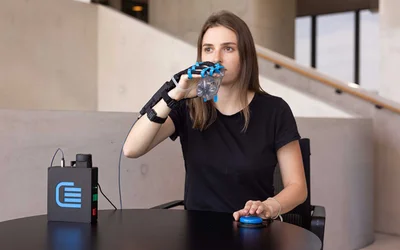
Researchers at ETH Zurich have developed an innovative hand exoskeleton that helps persons after stroke re-learn how to grasp. Its accordion-like structure makes it light, robust and easy to integrate into everyday life.
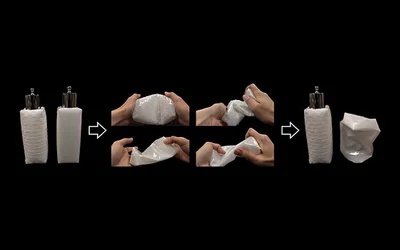
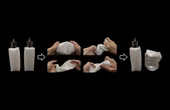
Able to undergo repeated compressions without losing their shape, woven materials could form robots, exoskeletons, car parts, architectural components and more.
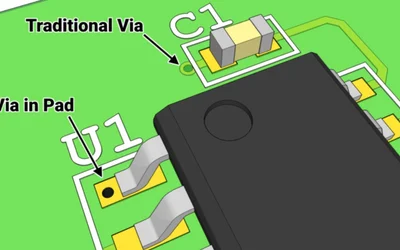
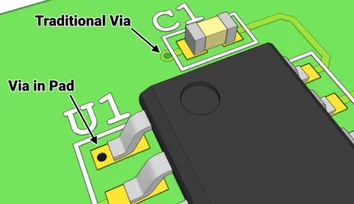
What makes via in pad different from traditional vias? Find out in this short blog.
From a mechanical guide dog to a self-learning exoskeleton and magnetically controlled bacteria, researchers at ETH Zurich are busy devising robots for medical applications.

6 minutes read
Researchers at ETH Zurich have developed an innovative hand exoskeleton that helps persons after stroke re-learn how to grasp. Its accordion-like structure makes it light, robust and easy to integrate into everyday life.
3 minutes read
Able to undergo repeated compressions without losing their shape, woven materials could form robots, exoskeletons, car parts, architectural components and more.

4 minutes read
When we're healthy, activities like walking, sitting down, speaking and remembering things can be done with ease. But if an accident or illness impairs our physical or cognitive capabilities, such everyday tasks can become difficult or even impossible.

7 minutes read
In this episode, we explore a groundbreaking system developed by researchers at the Technical University of Munich that aids stroke patients in regaining arm and hand mobility.

12 minutes read
Researchers at the Technical University of Munich (TUM) have developed a system that helps patients learn to move their paralyzed arms and hands quickly after a stroke. This requires targeted stimulation of the muscles in the forearm and the support of an exoskeleton.

2 minutes read
Researchers created a deep learning-driven controller that helps users in real-world tasks, even those it wasn’t trained for.

5 minutes read
New research touts effectiveness of individual optimization algorithms

4 minutes read
In this episode, we explore the versatile knee exoskeleton designed to enhance safety during lifting by using a novel design that improves the freedom of movement and safety in comparison to current state of the art.
16 minutes read
Helping out the quad muscles kept study participants lifting safely despite fatigue, with an algorithm that smoothly shifts between lifting and carrying tasks.
4 minutes read
Aaron Young’s team has developed a wear-and-go approach that requires no calibration or training.
6 minutes read
Somanity aims to revolutionize mobility for individuals with motor disabilities by developing an affordable 3D-printed exoskeleton.
In this episode, we talk about how a soft robotic exoskeleton from Harvard and Boston University is allowing patients suffering from Parkinson’s Disease to get their independence back by being able to walk safely without extra assistance.
16 minutes read
Robotic exosuit eliminated gait freezing, a common and highly debilitating symptom
4 minutes read
Using a simple and convenient touchscreen interface, the algorithm learns the assistance preferences of the wearer.