Be the first to know.
Get our Computer Vision  weekly email digest.

Category

Computer Vision

Engineers Wiki.

Most Asked Questions.

This article explores TPU vs GPU differences in architecture, performance, energy efficiency, cost, and practical implementation, helping engineers and designers choose the right accelerator for AI workloads today!

View more

ORGANIZATIONS.

SHAPING THE INDUSTRY.

EPFL

University

Located in Switzerland, EPFL is one of Europe’s most vibrant and cosmopolitan science and technology institutions. EPFL is Europe...

56 Posts

Photoneo

Industrial Automation

Photoneo develops industrial 3D vision, robotic intelligence software, and ...

54 Posts

High Tech Campus Eindhoven

High Tech

High Tech Campus Eindhoven is Europe's smartest square km and has the ultim...

49 Posts

Movella

Appliances, Electrical, and Electronics Manufacturing

Movella | Xsens digitizes movement.

47 Posts

ETH Zurich

University for science and technology

Freedom and individual responsibility, entrepreneurial spirit and open-​min...

43 Posts

View more

TAGGED WITH machine learning

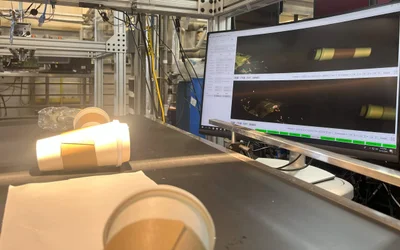
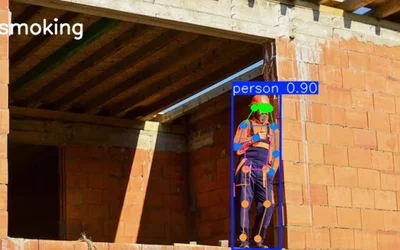
In large-scale warehousing and distribution operations, conveyor belts are an essential infrastructure that must operate with near-zero downtime to ensure the timely delivery of products. The presence of loose or foreign items on a conveyor belt can pose a serious risk to these operations.

Leveraging Open Set Detectors to Create a Custom Detector

Latest Posts

Article #1 of Confronting AI Series: AI is rapidly evolving beyond language models, quietly transforming fields like vision, prediction, and control. Explore how diverse AI techniques are solving complex challenges where text-based approaches fall short.

The Expanding Reach of AI: Exploring Intelligence Beyond LLMs

Researchers at EPFL have created a mathematical model that helps explain how breaking language into sequences makes modern AI like chatbots so good at understanding and using words.

How AIs understand words

Researchers at ETH Zurich and Empa have developed a new image sensor made of perovskite. This semiconductor material enables better colour reproduction and fewer image artefacts with less light. Perovskite sensors are also particularly well suited for machine vision.
Better images for humans and computers

Scientists at EPFL have unraveled the details of the first crucial step in the oxygen evolution reaction, a bottleneck for clean hydrogen production, using advanced simulations and machine learning techniques.

Toward more efficient hydrogen production