Featured
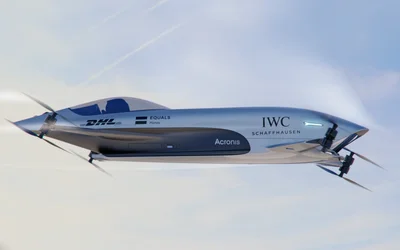
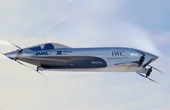
Airspeeder is building the world’s most progressive motorsport. It will see a full-grid of electric flying cars racing closely at high speed above some of the most visually arresting scenery in the world.

This white paper explains how precision timing solutions support reliable PNT architectures across aerospace, defense, and industrial systems.
Airspeeder is building the world’s most progressive motorsport. It will see a full-grid of electric flying cars racing closely at high speed above some of the most visually arresting scenery in the world.
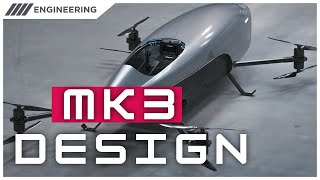
Meet flying racing car Head Designer Felix Pierron, tasked with creating future flying machines.
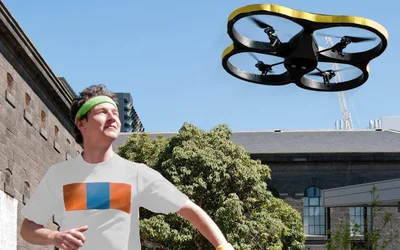
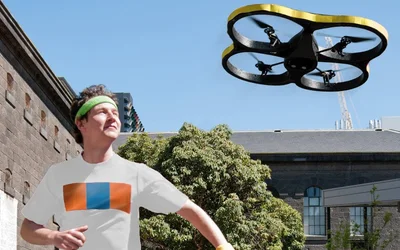
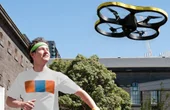
In this episode, we talk about Charm Industrial’s novel approach for carbon offsetting, a concept fitness drone from Hongik University that could be the first to commercialize, and a joint effort between MIT and US Navy to understand how sound waves are altered by water conditions in the North Pole.
Lidar SLAM lets a robot, vehicle, or handheld scanner map an unknown space while tracking its own position inside it. This guide discusses the processing pipeline, compares nine lidar SLAM and odometry algorithms, from GMapping to lidar-inertial and neural methods, and shows how to choose sensors
16 minutes read.

Aerospace
Airspeeder is the world’s first racing series for electric flying cars. Our mission will accelerate eVTOL (electric vertical tak...
26 Posts

Robotics and Drones
We empower R&D by providing the computational power, ROS packages, payloads...
14 Posts

Drone Fleet Management Software
Cloud Ground Control is a cloud based command and control solution for oper...
7 Posts

Automation Machinery Manufacturing
Addcomposites is the provider of the Automated Fiber Placement (AFP) ecosys...
5 Posts
Learn why growing hardware teams slow down as they scale, and how aligned workflows, parallel collaboration, and real-time design visibility restore speed and momentum.
How standardized electronic identification will enable high-volume, complex drone operations.
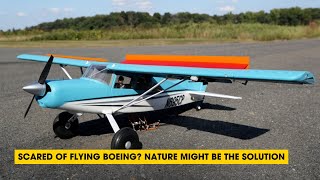
In this episode, we explore how the mechanics of bird wings are inspiring new approaches to prevent airplanes from stalling and learn how bio-mimetic designs from nature are paving the way for innovations in aviation, enhancing stability and safety for future flights.
Taking inspiration from bird feathers, Princeton engineers have found that adding rows of flaps to a remote-controlled aircraft’s wings improves flight performance and helps prevent stalling, a condition that can jeopardize a plane’s ability to stay aloft.
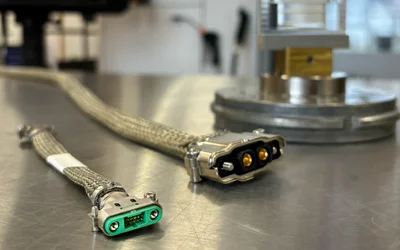
How does connector design influence UAV performance in demanding environments? Harwin explores high-reliability connectors for next-generation UAVs.
An interview with Ryan Smart, VP of Product at Harwin, discussing the challenges of shielding in high-reliability connectors, high-current design trends, and the hybrid power-and-signal connector layouts.
Adding Intelligence to Radar with the BrainChip Real-Time Micro-Doppler Classification
CBC Interview: InDro Robotics CEO Philip Reece on the New Federal Budget & Technology
Airspeeder is building the world’s most progressive motorsport. It will see a full-grid of electric flying cars racing closely at high speed above some of the most visually arresting scenery in the world.

2 minutes read
Meet flying racing car Head Designer Felix Pierron, tasked with creating future flying machines.
In this episode, we talk about Charm Industrial’s novel approach for carbon offsetting, a concept fitness drone from Hongik University that could be the first to commercialize, and a joint effort between MIT and US Navy to understand how sound waves are altered by water conditions in the North Pole.

The intersection of drones and wearables is opening the doors to the market of fitness drones
Airspeeder is the world’s first racing series for electric flying cars.
In this episode, we talk about Ford and HP’s partnership to enable a more sustainable manufacturing process, NASA’s Ingenuity drone, and a joint effort to prevent fall-related deaths by creating snake inspired no slip shoes.
For many years, the aerospace industry has been plagued by manufacturing challenges— limited capacity, complex geometries, strength requirements, and temperature resistance requirements, just to name a few.
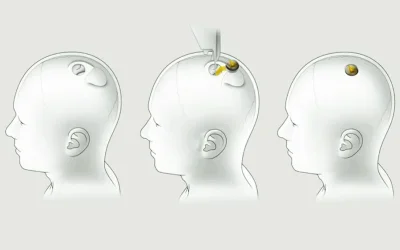
In this episode, we talk about how Neuralink wants to put chips in people’s heads, how Alauda wants to bring about the age of flying electric vehicles with their Airspeeder, and a joint effort to consider the carbon footprint of high performance processors.
Airspeeder is the world's first electric flying racing car series which will take to the skies across the globe in 2021.
CEO Matt Pearson takes Goodwood SpeedWeek fans inside the Airspeeder factory where we make flying cars a reality.
2 minutes read
Airspeeder desert and sea races will feature slide and lock swappable batteries and teams competing will have the pressure of deciding when to make a pit stop.
Explore what an eVTOL multicopter grand prix could look like across different terrains including desert, ice and snow, and how teams can use pit stops to their advantage during a race.
Researchers in A&A’s Computational Fluid Mechanics Lab discovered a new law of fluid mechanics, a branch of physics, that will aid the future of aircraft design.
The Chair for Aerospace Systems is an integrating chair dealing with the aircraft in its entirety and the integration within civil and/or military aviation.

3 minutes read
There is a small 3D printing revolution happening within astronautics and aeronautics.