Featured
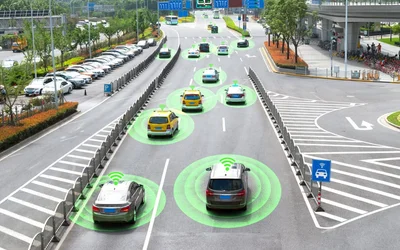
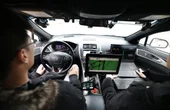
Autonomous Vehicles (AVs) are poised to revolutionize human transportation by making it more safe, comfortable, and reliable. From passenger travel to cargo transportation, AVs equipped with AI and sensors offer tremendous potential.
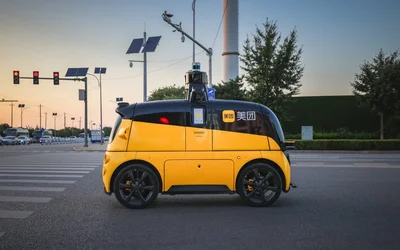
Autonomous Vehicles (AVs) are poised to revolutionize human transportation by making it more safe, comfortable, and reliable. From passenger travel to cargo transportation, AVs equipped with AI and sensors offer tremendous potential.
Autonomous Vehicles (AVs) are poised to revolutionize human transportation by making it more safe, comfortable, and reliable. From passenger travel to cargo transportation, AVs equipped with AI and sensors offer tremendous potential.
CGConnect, its cellular micro-modem that uses 4G/5G networks to link any drone or robotic vehicle to Cloud Ground Control’s cloud-based drone fleet management platform, enabling live-streaming, command and control from a web browser.
As part of TechBlick series on additive and printed electronics, Michael LeFebvre draws upon his four decades of industry experience to highlight 3 recent technical and application innovations impacting transparent 5G antennas, ADAS, and wearable therapy all based on printed & additive electronics
Autonomous Vehicles (AVs) are poised to revolutionize human transportation by making it more safe, comfortable, and reliable. From passenger travel to cargo transportation, AVs equipped with AI and sensors offer tremendous potential.
16 minutes read.
14 minutes read.
18 minutes read.
10 minutes read.
16 minutes read.



Robotics and Drones
We empower R&D by providing the computational power, ROS packages, payloads...
14 Posts

Test and Measurement equipment
Keysight Technologies, Inc. (NYSE: KEYS) is a leading technology company th...
11 Posts

Electro-Mechanical Component Manufacturing
ISL Products is an engineering oriented designer and manufacturer of value-...
9 Posts
Examining the latest developments in self-driving vehicles.
Autonomous Vehicles (AVs) are poised to revolutionize human transportation by making it more safe, comfortable, and reliable. From passenger travel to cargo transportation, AVs equipped with AI and sensors offer tremendous potential.
CGConnect, its cellular micro-modem that uses 4G/5G networks to link any drone or robotic vehicle to Cloud Ground Control’s cloud-based drone fleet management platform, enabling live-streaming, command and control from a web browser.
More than 20 years ago, a team set out to solve a problem: How do we reduce power loss and help reduce MOSFET size at the same time? LFPAK was the answer - and it changed everything.
As robotics shifts from innovation showcases to real-world deployment, motion systems play a vital role in this next stage of robotics.
Specialized design and manufacturing of robotic systems for chemical, nuclear, and high-risk industrial applications.
The Companies and Concepts Redefining Tomorrow's Industries
Safe autonomy in various vehicle systems and in uncertain conditions.
Autonomous Vehicles (AVs) are poised to revolutionize human transportation by making it more safe, comfortable, and reliable. From passenger travel to cargo transportation, AVs equipped with AI and sensors offer tremendous potential.
CGConnect, its cellular micro-modem that uses 4G/5G networks to link any drone or robotic vehicle to Cloud Ground Control’s cloud-based drone fleet management platform, enabling live-streaming, command and control from a web browser.

2 minutes read
As part of TechBlick series on additive and printed electronics, Michael LeFebvre draws upon his four decades of industry experience to highlight 3 recent technical and application innovations impacting transparent 5G antennas, ADAS, and wearable therapy all based on printed & additive electronics

8 minutes read
The automotive industry undergoes a profound transformation through the IoT's power. Vehicle connectivity and autonomous driving redefine transportation, offering innovative opportunities. Embracing IoT's potential, our daily lives are poised for a significant shift in the automotive sector.
In this episode, we delve into a game-changing approach developed by the University of Michigan, where 'simulated terrible drivers' in a mixed reality environment are used to drastically cut the time and cost of Autonomous Vehicle (AV) safety testing.

A new computer vision system turns any shiny object into a camera of sorts, enabling an observer to see around corners or beyond obstructions.
The CeCaS research project creates processors, interfaces and system architectures for highly automated networked vehicles - KIT develops hardware accelerators and benchmarking software

3 minutes read
In this article, we will dive deep into the world of simultaneous localization and mapping using Lidar technology. Lidar SLAM has been gaining popularity in recent years, thanks to its versatility and applications across various domains, including autonomous vehicles, mobile robotics, and indoor mapping.
Cellular Vehicle-to-Everything (C-V2X) technology is transforming the transportation industry by enabling advanced communication between vehicles, infrastructure, and other road users. This breakthrough technology has the potential to improve road safety, reduce traffic congestion, and support the development of autonomous vehicles.
Explore the key differences, advantages, and applications of lidar and radar technologies in modern engineering projects.
Article #8 of Innovations in Electric and Autonomous Vehicles Series: Advancements in voice recognition, touch displays, and other HMI technologies of next-gen vehicles are all set to transform the way we interact with our rides. Car dashboards will be safer, non-distracting, and highly intuitive.
Article #7 of Innovations in Electric and Autonomous Vehicles Series: As electric vehicles (EVs) gain traction, challenges surrounding noise cancellation are dramatically changing, and the desire to reduce the weight of EVs is driving engineers toward active noise-cancellation solutions.
Reducing CO2 emissions from road transport presents a key challenge and opportunity for the automotive industry.
A GTC Session Watch Party is a replay of an original GTC talk hosted by NVIDIA.
Article #4 of Innovations in Electric and Autonomous Vehicles Series: Advances in technology and new safety regulations are accelerating the adoption of Driver Monitoring Systems (DMS) into passenger vehicles. DMS is expected to be a mandatory feature in new cars in many countries by the end of the decade.

7 minutes read