Featured
New research shows automatically controlling vehicle speeds to mitigate traffic at intersections can cut carbon emissions between 11 and 22 percent.
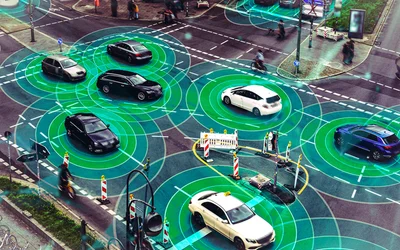
New research shows automatically controlling vehicle speeds to mitigate traffic at intersections can cut carbon emissions between 11 and 22 percent.
New research shows automatically controlling vehicle speeds to mitigate traffic at intersections can cut carbon emissions between 11 and 22 percent.
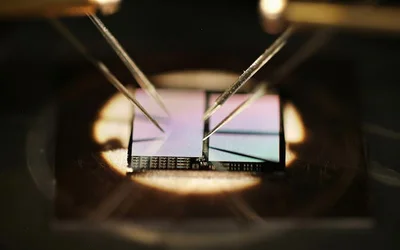
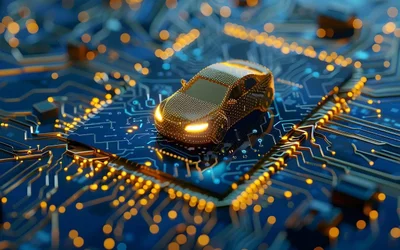
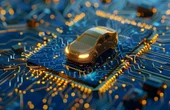
How today's semiconductors are powering the current and future landscape of autonomous driving
Michigan Engineers are leading hardware efforts to enable the AI required for full autonomy.
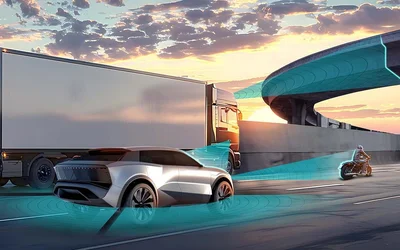
Autonomous Vehicles (AVs) are poised to revolutionize human transportation by making it more safe, comfortable, and reliable. From passenger travel to cargo transportation, AVs equipped with AI and sensors offer tremendous potential.
16 minutes read.
14 minutes read.
18 minutes read.
10 minutes read.
16 minutes read.


Robotics and Drones
We empower R&D by providing the computational power, ROS packages, payloads...
14 Posts

Test and Measurement equipment
Keysight Technologies, Inc. (NYSE: KEYS) is a leading technology company th...
11 Posts

Electro-Mechanical Component Manufacturing
ISL Products is an engineering oriented designer and manufacturer of value-...
9 Posts
Examining the latest developments in self-driving vehicles.
Autonomous Vehicles (AVs) are poised to revolutionize human transportation by making it more safe, comfortable, and reliable. From passenger travel to cargo transportation, AVs equipped with AI and sensors offer tremendous potential.
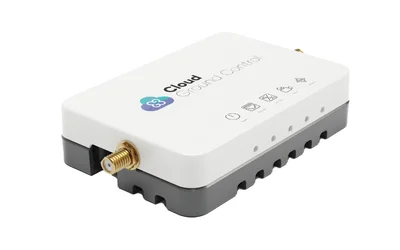
CGConnect, its cellular micro-modem that uses 4G/5G networks to link any drone or robotic vehicle to Cloud Ground Control’s cloud-based drone fleet management platform, enabling live-streaming, command and control from a web browser.
More than 20 years ago, a team set out to solve a problem: How do we reduce power loss and help reduce MOSFET size at the same time? LFPAK was the answer - and it changed everything.
As robotics shifts from innovation showcases to real-world deployment, motion systems play a vital role in this next stage of robotics.
Specialized design and manufacturing of robotic systems for chemical, nuclear, and high-risk industrial applications.
The Companies and Concepts Redefining Tomorrow's Industries
Safe autonomy in various vehicle systems and in uncertain conditions.
New research shows automatically controlling vehicle speeds to mitigate traffic at intersections can cut carbon emissions between 11 and 22 percent.
How today's semiconductors are powering the current and future landscape of autonomous driving
Michigan Engineers are leading hardware efforts to enable the AI required for full autonomy.

3 minutes read
The system automatically learns to adapt to unknown disturbances such as gusting winds.
LiDAR (Light Detection And Ranging) is a pivotal technology for robotic vision in industrial automation.
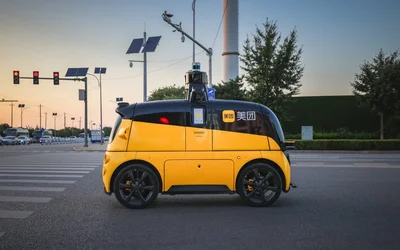
Autonomous mobility already exists... to some extent. Building an autonomous vehicle that can safely navigate an empty highway is one thing. The real challenge lies in adapting to the dynamic and messy reality of urban environments.
"IntersectionZoo," a benchmarking tool, uses a real-world traffic problem to test progress in deep reinforcement learning algorithms.
The Silicon Photomultiplier (SiPM) is transforming optical sensing and LiDAR technology by providing high photon detection efficiency, low noise, and fast response times, enabling greater accuracy and resolution in applications such as autonomous navigation, environmental mapping, and 3D imaging.
Safe autonomy in various vehicle systems and in uncertain conditions.

4 minutes read
With Xsens MTi-300

3 minutes read
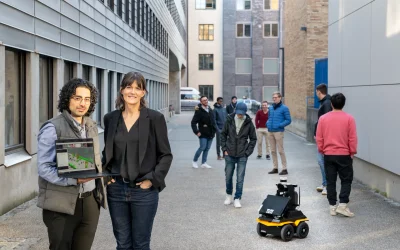
Researchers at the Technical University of Munich (TUM) have developed a wheeled robot that makes its way through a crowd of people safely and without hesitation. A computer on board predicts the movement of people in the vicinity and how they are likely to react to the robot.

3 minutes read
LiDAR technology is advancing industrial automation by providing precise measurements of object distances using light, with companies like Hamamatsu Photonics leading in the development of high-quality sources and detectors.
VOSTOK, a local navigation system for autonomous systems, has been unveiled at ITMO. Useful in areas with poor or non-existent GPS signal, the technology can be applied in autonomous vehicles, unmanned aircraft employed on icebreakers along the Northern Sea Route, or drones delivering groceries.

4 minutes read
Innovative semiconductor solutions are essential for addressing ADAS sensor integration challenges, including power management, communication reliability, and safety enhancements, enabling smarter and safer automotive systems.
Nexperia addresses the challenges of ADAS integration with innovative semiconductor solutions, driving the future of safer and smarter vehicles.