Generics
Latest Posts


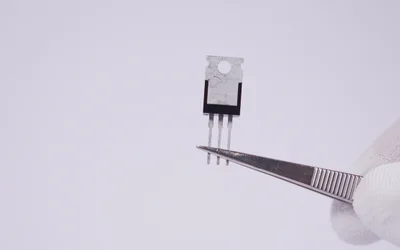
Learn how to use MOSFETs as switches, explore circuit configurations, and optimize performance for efficient, reliable electronic designs.

18 minutes read


A single point of failure is any part whose failure stops the whole system. Learn how engineers find SPOFs with FMEA and fault trees, quantify them with reliability math, and remove them with N+1, 2N, failover, quorum, and voting designs, and why common cause failures can still defeat redundancy.

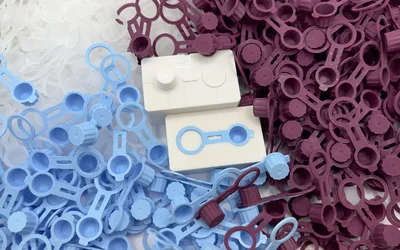
From Functional Prototypes to Complex, Low-Volume Parts.

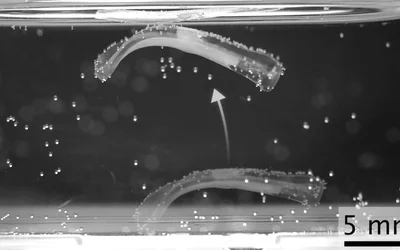
These robots have real muscles, and they'e finally making big moves. Researchers at ETH Zurich have developed muscle actuators that flex strongly enough to enable small robots to jump, swim, walk and grasp.

Several EPFL labs are converging around an idea that began as a doctoral researcher's hunch: the spinal cord revealed by functional magnetic resonance imaging might unlock new therapies.


Synaptics Astra® SL1680 integrates AI, compute, multimedia, security, and I/O to simplify the development of multimodal Edge AI devices.


A practical engineering guide to spine-leaf data center fabrics: how every leaf connects to every spine, why the design replaced the three-tier network, how to size oversubscription and port counts, and which routing, cabling, and optics choices follow from it.

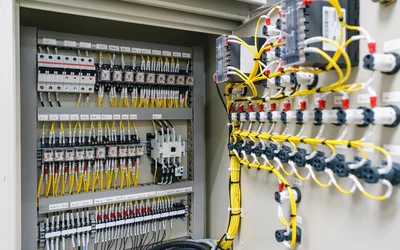
NFPA 79 governs the electrical equipment inside industrial machines, picking up where the National Electrical Code stops. This guide covers its scope, how it splits responsibility with the NEC and UL 508A, what the 2024 edition requires, and the 2027 revision in progress.


This guide covers what it applies to, how it differs from UL 508, how Supplement SB establishes the short-circuit current rating for a panel, and what it actually takes to label a panel under the UL 508A panel shop program.

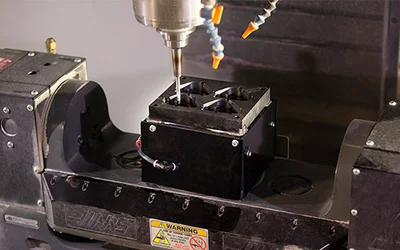
Nylon parts are used widely, but when standard nylon is not tough enough, glass filled nylon is a good candidate. This polyamide engineering plastic offers higher strength, stiffness and heat resistance by adding powdered glass to nylon resin or compounding nylon with glass fibres.

3 minutes read
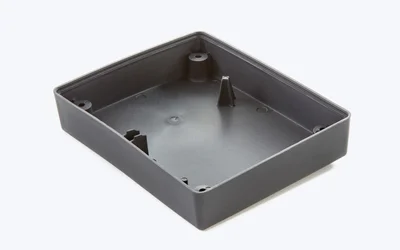
We sometimes get questions about how thermoplastic elastomers (TPEs) differ from thermoset elastomers and which of the various TPEs would work best for a given part.
4 minutes read

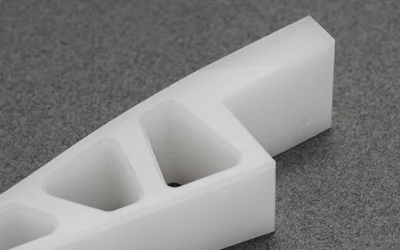
We've all heard of nylon, and most of us touch it daily. First synthesised in 1935 by chemist Wallace Carothers of DuPont, this well-known polymer was first used to replace silk in women's stockings.
5 minutes read