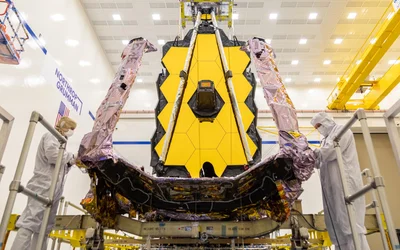
James Webb Space Telescope aims to take us to the unexplored realm of our cosmic origins. From observing the formation of the first stars and galaxies to looking for the possibility of life on other planets, the telescope will play a major role in the future of space exploration.
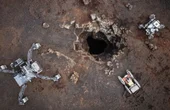
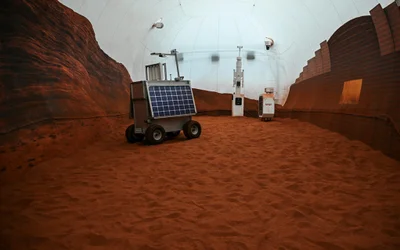
Humanity's drive to explore has taken us across the solar system, with astronaut boots, various landers and rovers' wheels exploring the surfaces of several different planetary bodies.
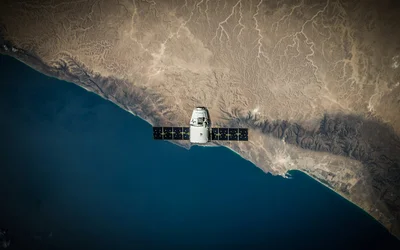
In space, maintenance isn't possible, so satellites must operate reliably for their entire mission. This makes fault detection, isolation, and recovery (FDIR) a critical requirement in satellite design.
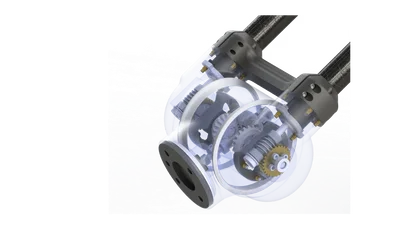
Springs, squeegees and soda straws function with a common property — they are rigid in one direction and flexible in another. Structures like these, with properties that vary across dimensions, have played critical roles in human technology from the longbow to the booster rocket.
Technologies have played a vital role to provide practical solutions to expensive and risky space projects. With the advent of more precise instruments and techniques, observations in more distant space regions are being enabled which could hold the key to understanding the origins of the universe.
How an online manufacturer supplied over 50 components for the LUVMI lunar rover, a project of the Space Applications Services that specializes in space technology.
When you ask people to name a few cutting-edge technologies, they’ll probably mention artificial intelligence, quantum computing, autonomous vehicles, perhaps synthetic biology… but probably not welding.
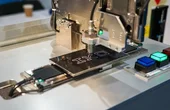
As NASA prepares to send astronauts back to the Moon to live and explore, capabilities for space-based manufacturing of sensors, circuits, and other electronics will become increasingly critical. Recent microgravity flights have helped to advance cutting-edge methods for 3D printing of electronics
The new Space Sustainability Rating hosted at eSpace, the EPFL Space Center, encourages space actors to design and implement sustainable and responsible space missions – trailblazing the path to ensure the long-term sustainability of the space environment.
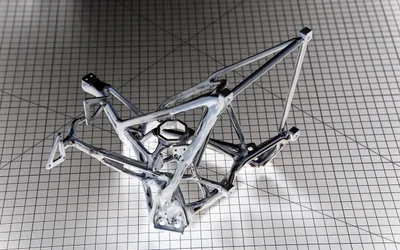
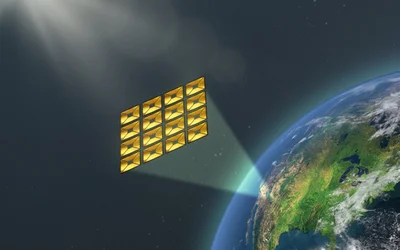
In this episode, we talk about how researchers are bringing affordable space technology to the masses via additive manufacturing along with a manufacturing approach that could serve as the keystone for wide scale use of affordable, semitransparent organic solar cells.
What’s the difference between deep space and the deep sea? For a robot, the answer is: not much. Both environments are harsh and demanding, and, more importantly, both are far removed from the machine’s operator.