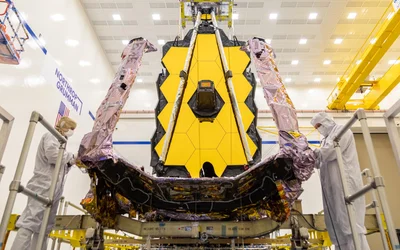
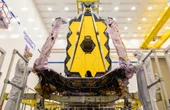
James Webb Space Telescope aims to take us to the unexplored realm of our cosmic origins. From observing the formation of the first stars and galaxies to looking for the possibility of life on other planets, the telescope will play a major role in the future of space exploration.
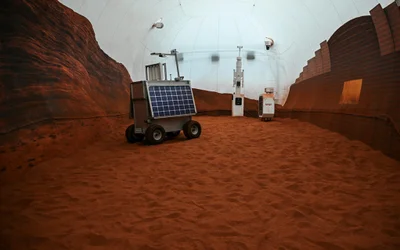
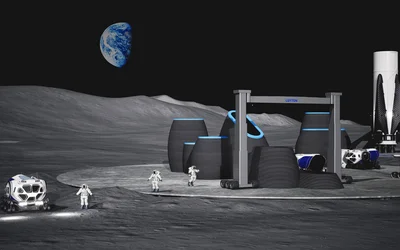
Humanity's drive to explore has taken us across the solar system, with astronaut boots, various landers and rovers' wheels exploring the surfaces of several different planetary bodies.
In space, maintenance isn't possible, so satellites must operate reliably for their entire mission. This makes fault detection, isolation, and recovery (FDIR) a critical requirement in satellite design.
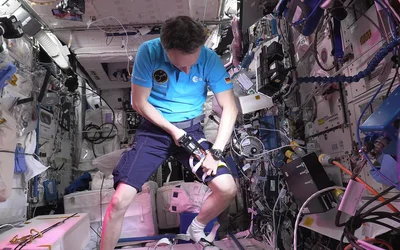
In this episode, we talk about the smart t-shirt that’ll track astronauts' vitals while they hang out in microgravity and a research effort that aims to study the physiology of freedivers to assist cardiac surgery patients
In this episode, we talk about why we are going back to the Saturn system with NASA’s Dragonfly mission, how MIT PhD student’s AI Algorithm could expedite the drug that could cure duchenne muscular dystrophy, and a Cornell professors invention that can track your facial features throughout the day.
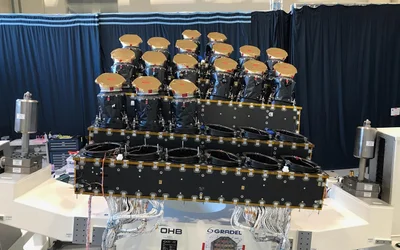
NASA researchers successfully launched a sophisticated X-ray solar imager on a brief but potentially illuminating suborbital flight via sounding rocket to gather new insight regarding how and why the Sun’s corona grows so much hotter than the actual surface of Earth’s parent star.
In a simulated lunar mission, two architects spent three months in North Greenland testing their fold-out moon habitat. The mission, which was aided by experts from DTU Space, has demonstrated how to create an environment where you not only survive, but also thrive in space.
In this episode, we talk about a research out of Stanford University shedding light on the effectiveness of AI policing social media, How studying Marsquakes is providing valuable insight regarding the red planet’s origin, an EPFL effort to prevent lead leakage from solar cells using phosphate salts
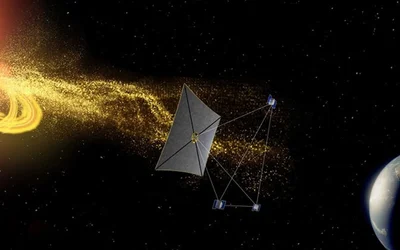
In this episode, we talk about NASA’s new packable solar sail for deep space travel, how to prevent cyber attacks by fixing memory vulnerabilities, and how flying robots could be the solution to our space trash problem.
In this episode, we talk about UMich’s new aircraft wings that mimic birds, MIT research that aims to deploy digital twins at scale, and how NASA is repurposing an old weather satellite to monitor microplastic pollution.
In this episode, we talk about a new machine learning model developed by NIST to predict flashover in burning buildings and protect firefighters, NASA’s new ultrasonic additive manufacturing approach, and an affordable, high performance athletic prosthetic.
In this episode, we talk about the next-gen lunar rover built by Lockheed and GM for NASA’s Artemis mission, how a frustrated tech CEO made a rock-picking robot, and an initiative from University of Manchester to reduce global CO2 emissions by 2% using graphene-enhanced concrete.