Featured
By enabling two chips to authenticate each other using a shared fingerprint, this technique can improve privacy and energy efficiency.

By enabling two chips to authenticate each other using a shared fingerprint, this technique can improve privacy and energy efficiency.
By enabling two chips to authenticate each other using a shared fingerprint, this technique can improve privacy and energy efficiency.
Monogoto Software-Defined Connectivity Cloud Honored for Satellite IoT Innovation, Powering Hybrid Connectivity Across Earth and Orbit
Nakahira received a Young Investigator Award from the Japan Science and Technology Agency for developing a machine that builds autonomous systems.
How a mesh network works: node roles, routing vs managed flooding, the multi-hop throughput cost, and Wi-Fi mesh, Thread, Zigbee and LoRa compared.
15 minutes read.
18 minutes read.
19 minutes read.
18 minutes read.
17 minutes read.
23 minutes read.
Semiconductors
Nordic Semiconductor is a fabless semiconductor company specializing in wireless technology that powers the IoT.
181 Posts

High Tech
High Tech Campus Eindhoven is Europe's smartest square km and has the ultim...
49 Posts

University for science and technology
Freedom and individual responsibility, entrepreneurial spirit and open-min...
43 Posts

Higher Education
Work together. Create smart machines. Serve society. University of Michiga...
40 Posts
A JFET is a normally-on, voltage-controlled semiconductor device that regulates current through a conductive channel by varying its depletion region using an electric field.
A common-source MOSFET amplifier is a voltage-amplifier circuit with input at the gate, output at the drain, and source as the common reference. It provides voltage gain with an approximately 180 degree phase shift between input and output.
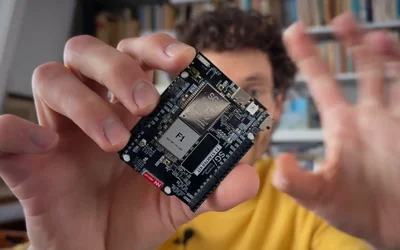
The F1 Starter Kit, built around the F1 Smart Module which supports cellular, LoRa, BLE and WiFi
This guide to robotics programming covers offline, lead-through, and teach pendant methods, key vendor languages, C++ alongside Python, ROS 2 integration, and safety limit implementation.
ROS is not an operating system. It is the open-source middleware and toolset that much of the robotics industry builds on, and this guide explains what is ROS, how it works, what changed in ROS 2, and when you should use it.
Mario Mauerer, maxon's Global Business Development Manager, Robotics, discusses what it takes for robotic deployments to be successful in complex real-world environments.
Join Prof. Fei Chen as he explores advanced bimanual manipulation and teleoperation techniques shaping the future of intelligent human-like robots in this expert-led robotics session.
By enabling two chips to authenticate each other using a shared fingerprint, this technique can improve privacy and energy efficiency.
Monogoto Software-Defined Connectivity Cloud Honored for Satellite IoT Innovation, Powering Hybrid Connectivity Across Earth and Orbit

3 minutes read
Nakahira received a Young Investigator Award from the Japan Science and Technology Agency for developing a machine that builds autonomous systems.

Princeton researchers have developed a new tool to speed the discovery of advanced materials known as metal organic frameworks, or MOFs.

3 minutes read
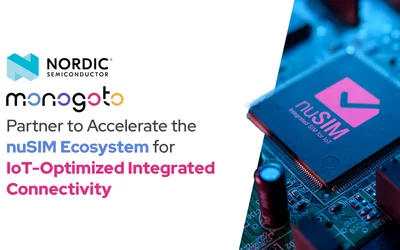
Monogoto and Nordic Semiconductor Launch Dedicated Partnership to Power the Future of Global Cellular + Satellite IoT
2 minutes read
EPFL roboticists have shown that when a modular robot shares power, sensing, and communication resources among its individual units, it is significantly more resistant to failure than traditional robotic systems, where the breakdown of one element often means a loss of functionality.

3 minutes read
MIT researchers' DiffSyn model offers recipes for synthesizing new materials, enabling faster experimentation and a shorter journey from hypothesis to use.
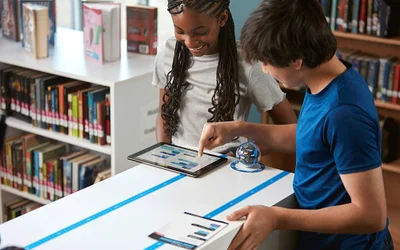
In this modern environment, STEAM (science, technology, engineering, arts and mathematics) subjects are infused with digital tools, connectivity and collaboration, opening up new possibilities for hands-on investigation, data collection and creative exploration.

4 minutes read
M2M SIM cards enable smart city infrastructure with reliable mobile connectivity, supporting traffic systems, environmental monitoring, public safety, and scalable urban digitalization worldwide.
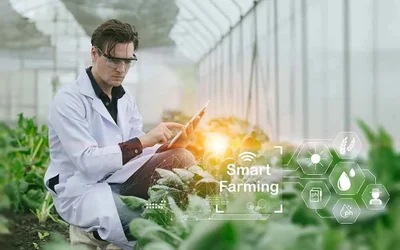
This latest revolution has introduced wirelessly-connected and -guided machinery, drones, sensors, AI and machine learning (ML), robotics, biotechnology and IoT-connected farms.
4 minutes read
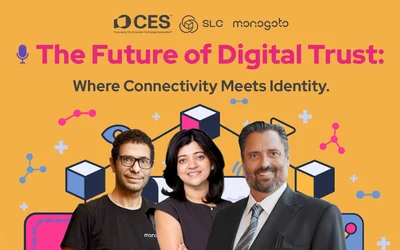
At CES, Monogoto and SLC Digital came together for a chat exploring how identity & connectivity must come together to rebuild digital trust.
Discover why manufacturing needs domain-specific AI agents and how tools like FACTUREE Navigator accelerate smarter, faster procurement decisions.
The 2G and 3G switch-off is reshaping IoT connectivity worldwide, making migration to 4G, 5G, LTE-M, or NB-IoT essential to avoid outages and ensure future-ready devices.
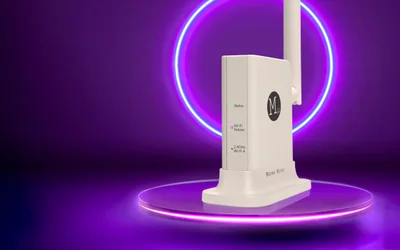
Introducing HaLowLink 2 — Wi-Fi HaLow Access Point by Morse Micro for Reliable, Long-Range, and Low-Power IoT Connectivity.