Featured
Nordic supports cellular IoT asset tracking applications by supplying an end-to-end cellular IoT platform which brings simplicity, stability and cost efficiency to cellular IoT design, manufacture and deployment.
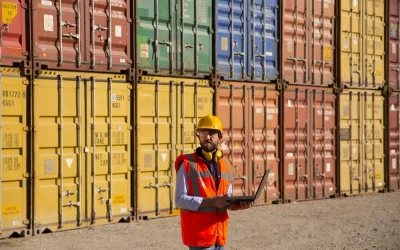
Nordic supports cellular IoT asset tracking applications by supplying an end-to-end cellular IoT platform which brings simplicity, stability and cost efficiency to cellular IoT design, manufacture and deployment.
Nordic supports cellular IoT asset tracking applications by supplying an end-to-end cellular IoT platform which brings simplicity, stability and cost efficiency to cellular IoT design, manufacture and deployment.
Ensuring Connectivity in Complex Environments
Even if you’re not very familiar with deep learning, you’ve probably heard about it and how it can, among other things, help automate the driving experience, increase manufacturing efficiency and change the consumer shopping experience.
This article is a practical PLC programming guide covering the five IEC 61131-3 languages, the scan cycle that governs how your code actually runs, ladder and structured text examples, and the mistakes that cost engineers the most commissioning time.
23 minutes read.
18 minutes read.
18 minutes read.
15 minutes read.
13 minutes read.
17 minutes read.
Semiconductors
Nordic Semiconductor is a fabless semiconductor company specializing in wireless technology that powers the IoT.
181 Posts

High Tech
High Tech Campus Eindhoven is Europe's smartest square km and has the ultim...
49 Posts

University for science and technology
Freedom and individual responsibility, entrepreneurial spirit and open-min...
43 Posts

Higher Education
Work together. Create smart machines. Serve society. University of Michiga...
40 Posts
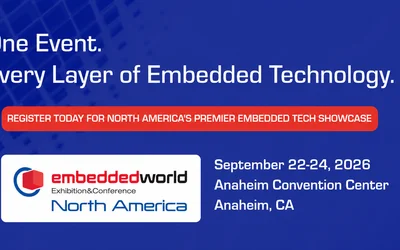
embedded world North America is the premier trade show and conference dedicated to the community of innovators and developers in the embedded tech ecosystem.
How Embedded Systems, AI, and Human-Centered Design Are Driving the Future of Robotics
Mario Mauerer, maxon's Global Business Development Manager, Robotics, discusses what it takes for robotic deployments to be successful in complex real-world environments.
Join Prof. Fei Chen as he explores advanced bimanual manipulation and teleoperation techniques shaping the future of intelligent human-like robots in this expert-led robotics session.
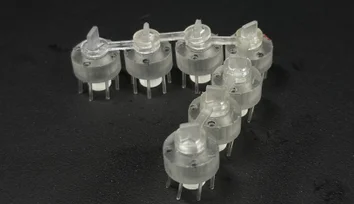
'Link-bots' can move, explore, cooperate without sensing or computation
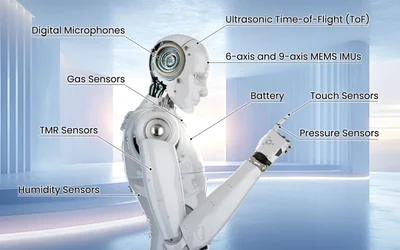
This article is part 4 of a 4-part article series on TDK's advanced robotics.
Nordic supports cellular IoT asset tracking applications by supplying an end-to-end cellular IoT platform which brings simplicity, stability and cost efficiency to cellular IoT design, manufacture and deployment.

5 minutes read
Ensuring Connectivity in Complex Environments
Even if you’re not very familiar with deep learning, you’ve probably heard about it and how it can, among other things, help automate the driving experience, increase manufacturing efficiency and change the consumer shopping experience.
MAIA is a multimodal agent that can iteratively design experiments to better understand various components of AI systems.
Integrating AI and Digital Tools Beyond Digital Transformation.

6 minutes read
Discover the transformative shift in human-machine interaction as touchless technologies redefine how we interact with machines.
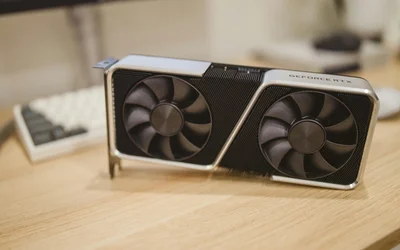
CUDA Cores and Tensor Cores are specialized units within NVIDIA GPUs; the former are designed for a wide range of general GPU tasks, while the latter are specifically optimized to accelerate AI and deep learning through efficient matrix operations.
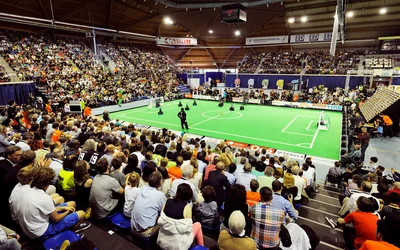
Alongside René van de Molengraft, Professor of Lazy Robotics and founder of Tech United, we dive into the technology behind the RoboCup.

6 minutes read
At least 15 billion primary batteries are being disposed of yearly worldwide. The world is getting better at recycling, which is excellent news. However, the bad news is that we are still throwing batteries that are not fully utilized.

3 minutes read
Explore the future of connected communities in intelligent cities and underserved regions, highlighting the role of technologies like 5G, AI, and blockchain in enhancing connectivity and promoting inclusive development.
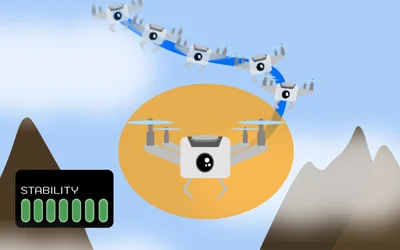
Neural network controllers provide complex robots with stability guarantees, paving the way for the safer deployment of autonomous vehicles and industrial machines.
Researchers at EPFL have made a breakthrough in understanding how neural network-based generative models perform against traditional data sampling techniques in complex systems, unveiling both challenges and opportunities for AI's future in data generation.

3 minutes read
The method, which combines a ChatGPT-like large language model with information about a protein’s 3D shape, could make it easier and faster to develop better medicines for infectious diseases, cancer, and other conditions.

4 minutes read
The logistics industry today is grappling with multi-layered challenges, prominently among which is sustainability.
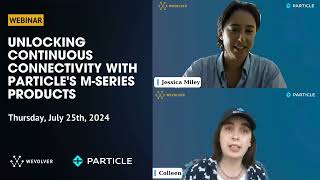
Explore how IoT revolutionizes remote infrastructure management, enhancing efficiency and resilience with solutions like Particle's M-Series for future-ready connectivity.