Featured
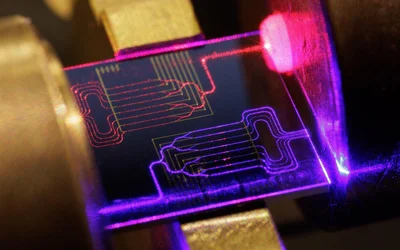
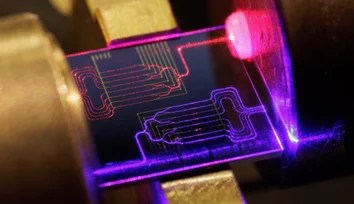
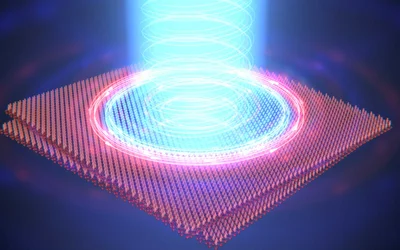
Light-emitting structures that curl off the chip surface could enable advanced displays, high-speed optical communications, and larger-scale quantum computers.
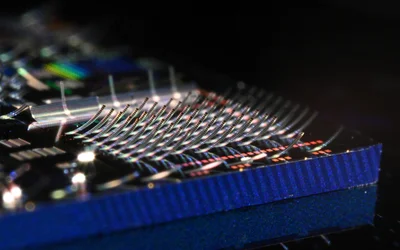
Light-emitting structures that curl off the chip surface could enable advanced displays, high-speed optical communications, and larger-scale quantum computers.
Light-emitting structures that curl off the chip surface could enable advanced displays, high-speed optical communications, and larger-scale quantum computers.
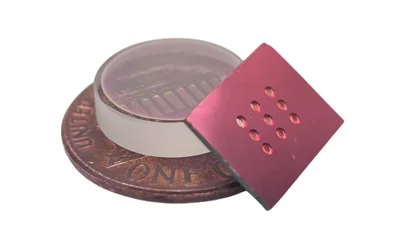
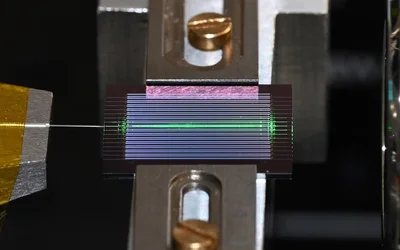
Caltech scientists have developed a way to guide light on silicon wafers with low signal loss approaching that of optical fiber at visible wavelengths.
Innovative fabrication method for high-performance optical resonators
Photoresist, a light-sensitive material, is essential in photolithography for transferring intricate circuit patterns onto semiconductor wafers. This article explores positive vs. negative photoresists, detailing their chemical mechanisms, processing parameters, and performance traits.


Higher Education
ITMO University is one of Russia's leading higher education and research institutions, specializing in Information Technology, Opt...
17 Posts

Machinery Manufacturing
We Are Giving Human Materials the Superpowers of Nature Using Lasers
1 Post

PICs are unlocking faster wireless technologies like FSO, 6G, and ISAC, with real solutions already emerging for today's biggest challenges.
Aluminum oxide PICs are gaining attention for their broad wavelength coverage, low optical losses, and support for on-chip optical amplification. In this discussion, Steve Stoffels, the CEO of Aluvia Photonics, explains where the platform fits and how teams can design with it.
Inverse design enables compact, foundry-ready silicon nitride photonic components
XIVER's Sreekanth Chirayath on why photonic innovations fail on the production line and how designing for manufacturing from the start changes the outcome.
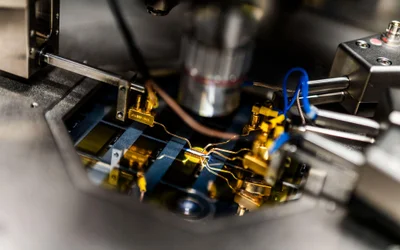
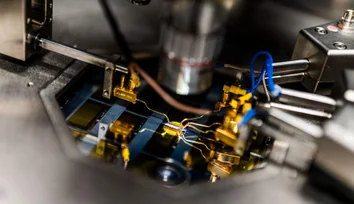
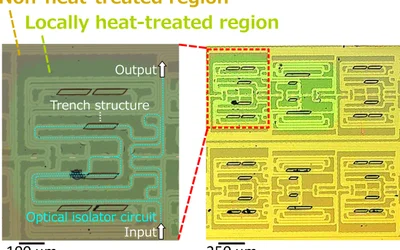
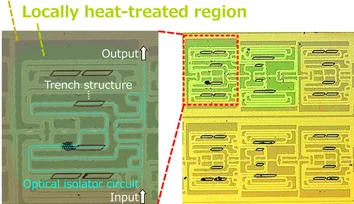
A laboratory device reaches 13.6 dB of isolation at 1540 nm, with heat confined to a window 700 micrometres across instead of the whole wafer going through a furnace.
PICs are unlocking faster wireless technologies like FSO, 6G, and ISAC, with real solutions already emerging for today's biggest challenges.
Aluminum oxide PICs are gaining attention for their broad wavelength coverage, low optical losses, and support for on-chip optical amplification. In this discussion, Steve Stoffels, the CEO of Aluvia Photonics, explains where the platform fits and how teams can design with it.
Inverse design enables compact, foundry-ready silicon nitride photonic components
Light-emitting structures that curl off the chip surface could enable advanced displays, high-speed optical communications, and larger-scale quantum computers.
Caltech scientists have developed a way to guide light on silicon wafers with low signal loss approaching that of optical fiber at visible wavelengths.

4 minutes read
Innovative fabrication method for high-performance optical resonators

3 minutes read
Learn how photonic integrated circuits are reshaping the future of imaging, and why PhotonDelta is inviting engineers to rethink how PICs can tackle imaging challenges of today and power the next generation of innovation.
How the DataComb Team is Exploring Photonic Frequency Combs to Unclog the Optical Bottlenecks of Tomorrow?
Researchers at ETH Zurich and the University of Basel have succeeded in changing the polarity of a special ferromagnet using a laser beam. In the future, this method could be used to create adaptable electronic circuits with light.

3 minutes read
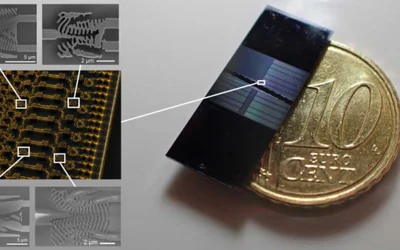
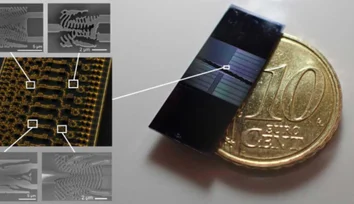
New technique could improve the scalability of trapped-ion quantum computers, an essential step toward making them practically useful.
Explore the future of photonic-enabled systems, system-level engineering, and join PhotonDelta's challenge to rethink photonic design, integration, and real-world applications.
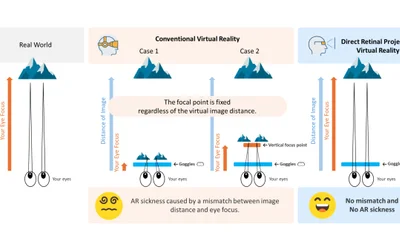
Direct Retinal Projection (DRP) technology eliminates vergence-accommodation conflict, delivering focus-free, high-resolution AR and VR experiences with unmatched comfort, clarity, and optical efficiency.
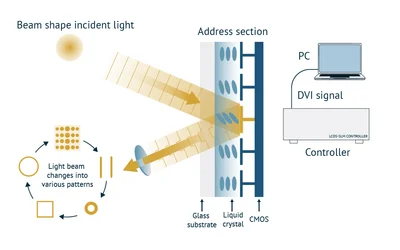
By manipulating light with exceptional accuracy, LCOS-SLM plays a crucial role in improving the performance of quantum systems and refining techniques in laser machining and other related applications.
Focused laser-like light that covers a wide range of frequencies is highly desirable for many scientific studies and for many applications, for instance quality control of manufacturing semiconductor electronic chips.
4 minutes read
An international team of researchers has developed a silicon-based metasurface that transmits light in a narrow range of wavelengths irrespective of a source's polarization.

3 minutes read
Rewarding Engineering Brilliance: Meet the Winners of the Hamamatsu 2025 Innovation Awards
Lithium niobate device could replace signal modulators in fiber-optic networks
3 minutes read
How InnoPIC's Photonic Raman Spectroscopy Platform Is Taking Aim at One of Medicine's Most Elusive Challenges.