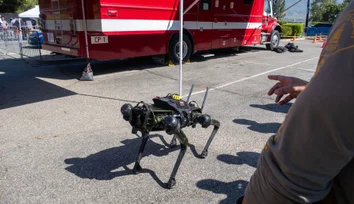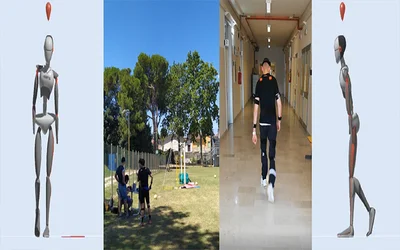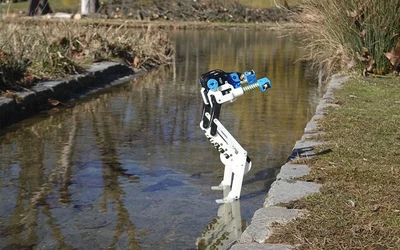
Created by the Dynamic Locomotion Group at the Max Planck Institute for Intelligent Systems (MPI-IS), BirdBot serves two purposes: Demonstrating a more efficient bipedal robot design, and furthering our understanding of how birds' legs work.
In this episode, we talk about how a group of researchers were inspired by the adaptive immune system found in humans to fortify vulnerable neural networks and a joint effort between universities to create electric skin with unmatched performance.
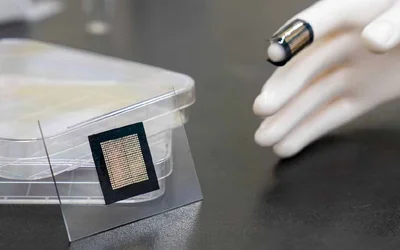
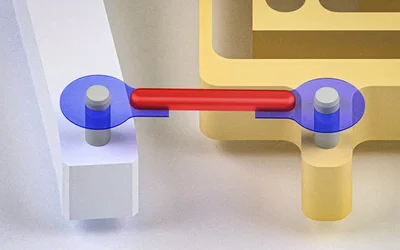
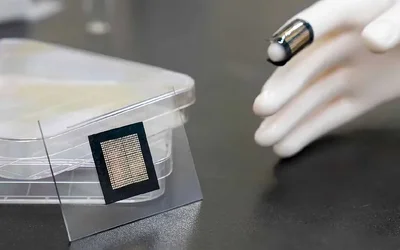
Using a highly-scalable approach to creating dense sensor networks, yet requiring only a pair of address lines, these researchers have taken inspiration from the human somatosensory system for a rapid-response sensitive sense of electronic touch.
Created by the Dynamic Locomotion Group at the Max Planck Institute for Intelligent Systems (MPI-IS), BirdBot serves two purposes: Demonstrating a more efficient bipedal robot design, and furthering our understanding of how birds' legs work.
In this episode, we talk about how a group of researchers were inspired by the adaptive immune system found in humans to fortify vulnerable neural networks and a joint effort between universities to create electric skin with unmatched performance.

Using a highly-scalable approach to creating dense sensor networks, yet requiring only a pair of address lines, these researchers have taken inspiration from the human somatosensory system for a rapid-response sensitive sense of electronic touch.
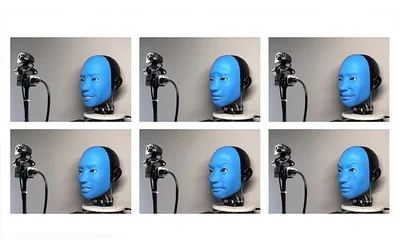
Columbia Engineering researchers use AI to teach robots to make appropriate reactive human facial expressions, an ability that could build trust between humans and their robotic co-workers and care-givers
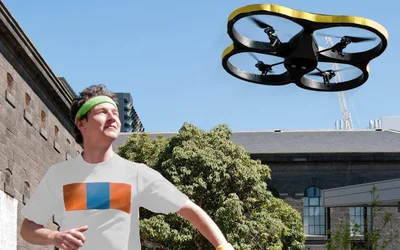
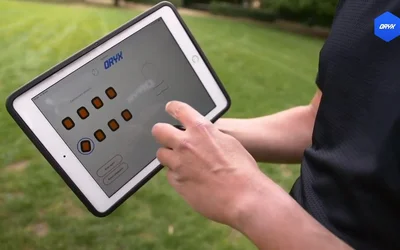
In this episode, we talk about Charm Industrial’s novel approach for carbon offsetting, a concept fitness drone from Hongik University that could be the first to commercialize, and a joint effort between MIT and US Navy to understand how sound waves are altered by water conditions in the North Pole.
Charm's unique approach for reducing atmospheric carbon has already proven to be fruitful by delivering 416 tons of carbon offsetting to Stripe one month ahead of schedule
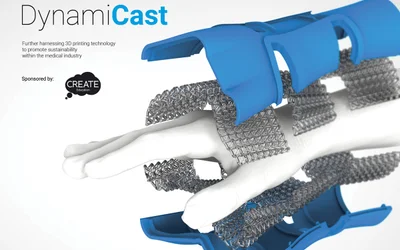
As technology has become more accessible, 3D Printed casts have grown in popularity, owing to several benefits. However, all casts share a fundamental flaw - they are single-use products