Featured
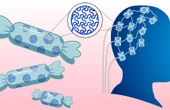
A sweetener commonly found in chewing gum can replace toxic additives in hydrogels used to diagnose and treat a variety of medical conditions.
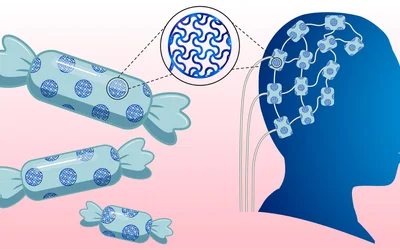
A sweetener commonly found in chewing gum can replace toxic additives in hydrogels used to diagnose and treat a variety of medical conditions.
A sweetener commonly found in chewing gum can replace toxic additives in hydrogels used to diagnose and treat a variety of medical conditions.
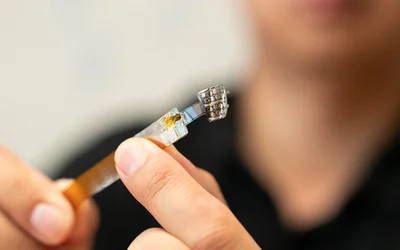
Wound assessment can be challenging due to its subjective nature, but a new sensor array quantifies biomarkers and has potential to offer real time measurements that could improve the healing process.
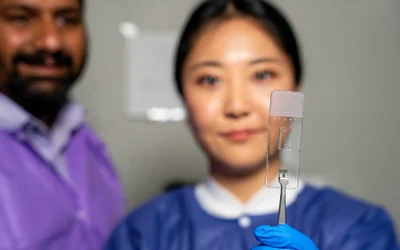
A new platform mimics various blood vessel structures, enabling more accurate models of vascular disease and patient-specific research.
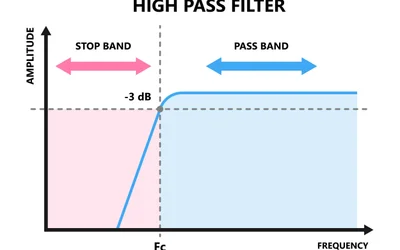
Active high-pass filters remove unwanted low-frequency signals while preserving useful higher frequencies. This article covers first- and second-order filter design, Sallen-Key and multiple-feedback topologies, and practical applications in audio electronics, instrumentation, and signal processing.
16 minutes read.
15 minutes read.
19 minutes read.
12 minutes read.
14 minutes read.


Entertainment
The Next Byte Podcast is hosted by two young engineers - Daniel and Farbod - who select the most interesting tech/engineering cont...
165 Posts

High Tech
High Tech Campus Eindhoven is Europe's smartest square km and has the ultim...
49 Posts

University for science and technology
Freedom and individual responsibility, entrepreneurial spirit and open-min...
43 Posts

University
At the Harvard John A. Paulson School of Engineering and Applied Sciences (...
42 Posts
with Xsens motion capture
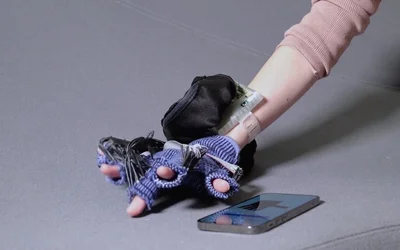
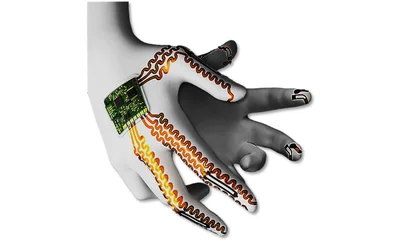
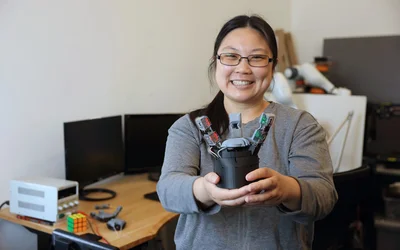
A new glove with more than three dozen actuators across all five fingers and the palm, developed by Cornell researchers, aims to reduce swelling for people suffering from edema.
AI-powered artificial muscles made from pliable materials are reshaping recovery, from stroke rehabilitation to prosthetic design. These machines help people regain motion, strength, and confidence.
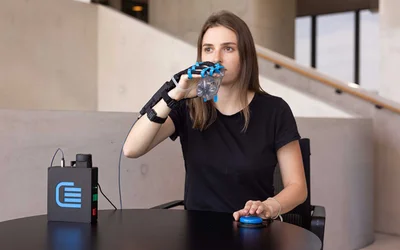
Researchers at ETH Zurich have developed an innovative hand exoskeleton that helps persons after stroke re-learn how to grasp. Its accordion-like structure makes it light, robust and easy to integrate into everyday life.
AI-powered artificial muscles made from pliable materials are reshaping recovery, from stroke rehabilitation to prosthetic design. These machines help people regain motion, strength, and confidence.
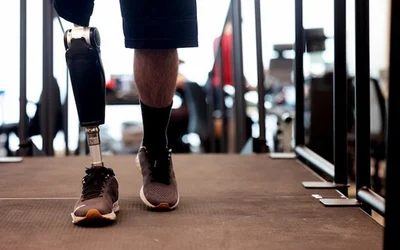
Paired with custom control software, Össur's powered knee prosthesis helped study participants sit, stand and walk more easily.
MIT CSAIL researchers enhance robotic precision with sophisticated tactile sensors in the palm and agile fingers, setting the stage for improvements in human-robot interaction and prosthetic technology.
In this episode, we discuss a breakthrough from ETH Zurich to mimic natural foot signals to the brain using state of the art neuroprosthetics.
A sweetener commonly found in chewing gum can replace toxic additives in hydrogels used to diagnose and treat a variety of medical conditions.

3 minutes read
Wound assessment can be challenging due to its subjective nature, but a new sensor array quantifies biomarkers and has potential to offer real time measurements that could improve the healing process.

2 minutes read
A new platform mimics various blood vessel structures, enabling more accurate models of vascular disease and patient-specific research.
3 minutes read
BrainChip's Akida processor is enabling real-time seizure prediction in wearable devices, marking a breakthrough in low-power, personalized medical AI at the edge.
Hitting 2 petawatts, the NSF-funded ZEUS facility at U-M enables research that could improve medicine, national security, materials science and more.

5 minutes read
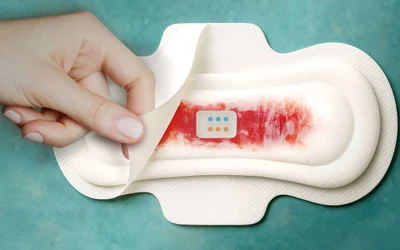
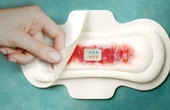
Researchers at ETH Zurich have developed the first technology that is able to recognise biomarkers in menstrual blood – directly in sanitary towels. MenstruAI promises a simple, non-invasive method for recording health data in everyday life.

4 minutes read
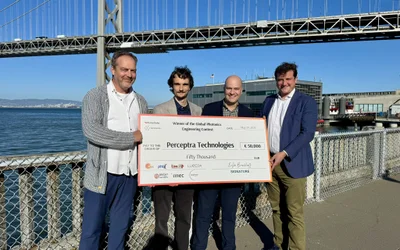
The winner of the Global Photonics Engineering Contest, Perceptra from San Francisco, is setting a new benchmark for real-time molecular monitoring.
JFETs are uniquely positioned to maximize the performance of modern medical instrumentation.
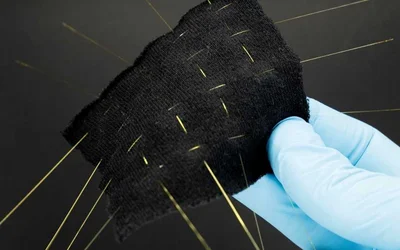
New smart textiles developed by researchers at ETH Zurich use acoustic waves and glass fibres to help make precise measurements. They are light, breathable and inexpensive, and offer great potential for medicine, sports and everyday life.
3 minutes read
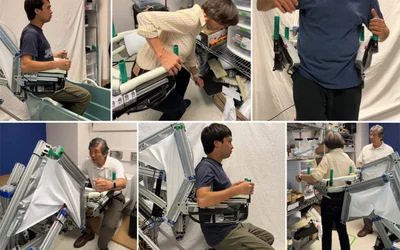
The new design could assist the elderly as they age in place at home.
While the shortage of available housing is alarming, the quality of life for low-income households and elderly populations is also a major concern. So how can society address this enormous challenge?

3 minutes read
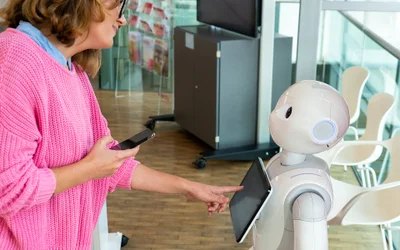
The hospitality industry can leverage the gender characteristics of service robots to influence customers' decisions, according to new research from a team in the Penn State School of Hospitality Management.

3 minutes read
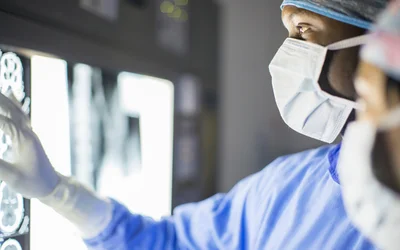
A new method helps convey uncertainty more precisely, which could give researchers and medical clinicians better information to make decisions.
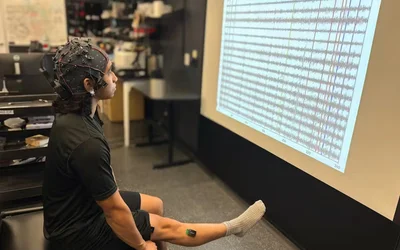
Ismael Seáñez’s lab develops brain wave decoder that may help in spinal cord injury rehabilitation

3 minutes read
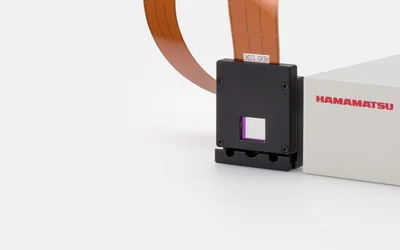
Hamamatsu Photonics has developed a new product that addresses the growing need for precise beam-shaping solutions in the - nm spectral range.