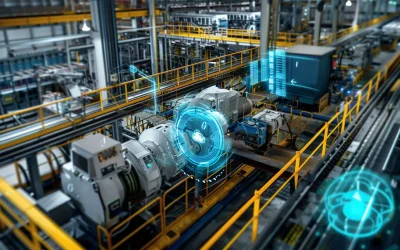
Artificial intelligence (AI) is a wide-ranging tool that enables people to rethink how we integrate information, analyze data, and use the resulting insights to improve decision making
In large-scale warehousing and distribution operations, conveyor belts are an essential infrastructure that must operate with near-zero downtime to ensure the timely delivery of products. The presence of loose or foreign items on a conveyor belt can pose a serious risk to these operations.

To reduce waste, the Refashion program helps users create outlines for adaptable clothing, such as pants that can be reconfigured into a dress. Each component of these pieces can be replaced, rearranged, or restyled.
Smart eyewear promises to transform how we see and interact with the world. Among its many potential advantages, the technology offers hands-free access to information, vision enhancement, and accessibility tools.
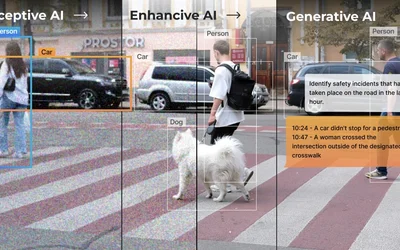
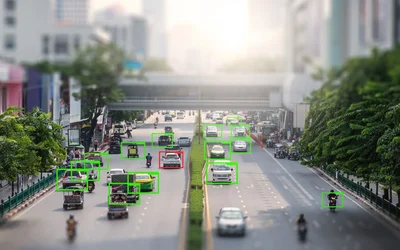
Matroid builds no-code computer-vision detectors that can spot everything from microscopic material defects to real-time safety hazards on a factory floor.
In large-scale warehousing and distribution operations, conveyor belts are an essential infrastructure that must operate with near-zero downtime to ensure the timely delivery of products. The presence of loose or foreign items on a conveyor belt can pose a serious risk to these operations.
In this post, we'll walk through how to evaluate that progress using the same metrics our platform provides automatically, so you can build detectors that get smarter, sharper, and more reliable over time.
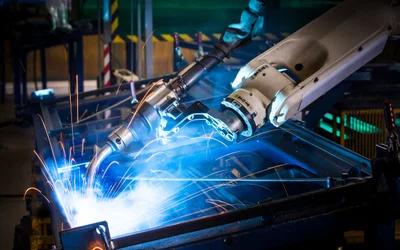
The no-code platform from Matroid trains ordinary cameras to act like expert inspectors, turning simple footage into a pixel-level defect checklist. Even a handheld GoPro can spot issues human eyes miss—using remarkably small datasets.
The upcoming "Machine Learning for Safety Experts" training by SAE and Fraunhofer IKS in Munich on October 22-23, 2024 is a timely initiative. It will address this crucial skill gap and ensure engineers are well-equipped to handle the intricacies of safe Machine Learning applications.
Someday, you may want your home robot to carry a load of dirty clothes downstairs and deposit them in the washing machine in the far-left corner of the basement. The robot will need to combine your instructions with its visual observations to determine the steps it should take to complete this task.
In this episode, we discuss research coming out of the Karlsruhe Institute of Technology to detect the emotions of tennis players better than humans can!
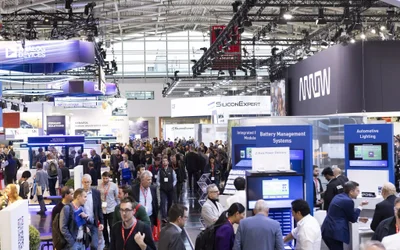
The Vision, Robotics & Motion trade event, held annually in Brabanthallen, 's-Hertogenbosch, Netherlands, successfully concluded its 2024 edition on June 5th and 6th.
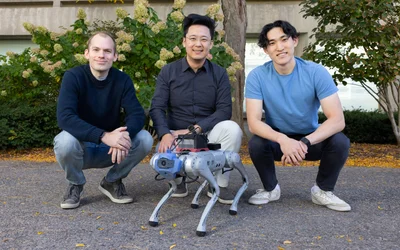
Scientists from ITMO have come up with a three-step algorithm for the development of manipulators and walking or wearable robots. Compared to the usual methods, the new approach results in lighter, more efficient, affordable, and compact mechanisms.
Yiannis Kantaros will enable teams of robots to interact collaboratively, perceive and respond to their environment with a CAREER Award from the National Science Foundation
The computing industry's energy appetite is notoriously ravenous. Currently, this results in the industry producing between 2.1 and 3.9 percent of all global carbon emissions.
To strengthen the case for noninvasive BCIs, Carnegie Mellon researchers have demonstrated that through precision neuromodulation using focused ultrasound, the performance of a BCI could be improved for communication.
A new study that integrates machine learning, optimization, 3D printing and stress experiments allowed engineers to gain insight into these natural wonders by developing a material that replicates the functionalities of human bone for orthopedic femur restoration.