Featured
This article explores the significant advancements in AI-driven MEMS sensors, focusing on STMicroelectronics' (ST) cutting-edge technologies, their applications, and the ecosystem supporting these innovations.
This article explores the significant advancements in AI-driven MEMS sensors, focusing on STMicroelectronics' (ST) cutting-edge technologies, their applications, and the ecosystem supporting these innovations.
This article explores the significant advancements in AI-driven MEMS sensors, focusing on STMicroelectronics' (ST) cutting-edge technologies, their applications, and the ecosystem supporting these innovations.
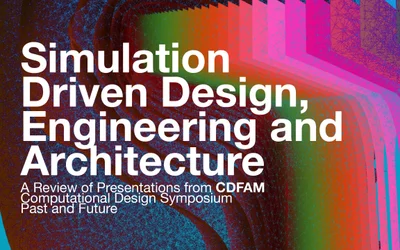
A REVIEW OF PAST AND FUTURE CDFAM PRESENTATIONS
Researchers at ETH Zurich have developed the first technology that is able to recognise biomarkers in menstrual blood – directly in sanitary towels. MenstruAI promises a simple, non-invasive method for recording health data in everyday life.
Artificial intelligence (AI) is a wide-ranging tool that enables people to rethink how we integrate information, analyze data, and use the resulting insights to improve decision making
15 minutes read.
20 minutes read.
13 minutes read.
17 minutes read.
25 minutes read.
11 minutes read.


Entertainment
The Next Byte Podcast is hosted by two young engineers - Daniel and Farbod - who select the most interesting tech/engineering cont...
165 Posts

High Tech
High Tech Campus Eindhoven is Europe's smartest square km and has the ultim...
49 Posts

University for science and technology
Freedom and individual responsibility, entrepreneurial spirit and open-min...
43 Posts
From leading experts at the CDFAM Computational Design Symposium
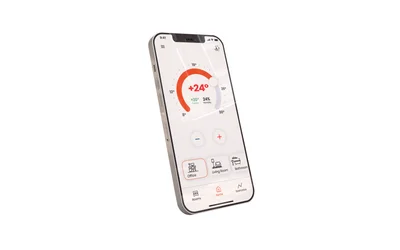
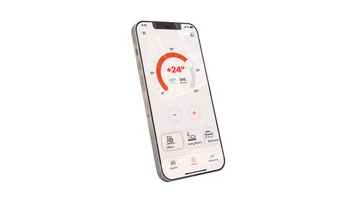
eCozy 2.0 system addresses the limitations of traditional thermostats for water heating radiators, delivering efficiency, convenience and sustainability benefits to households
Protect the cloud by securing the edge with hardware-based security, TPMs, HSMs, and resilient edge computing architectures.
Explore the rise of intelligent EV hardware and how real-time processing, ML acceleration, and hardware virtualization are enabling safer, smarter, software-defined electric vehicles.
EPFL researchers are developing AI models that could one day enable vision prosthetics able to restore meaningful, object-level sight for the blind.
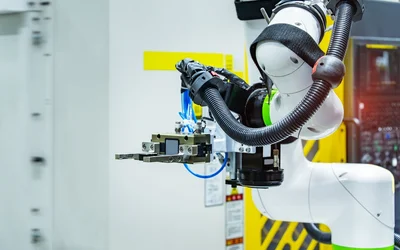
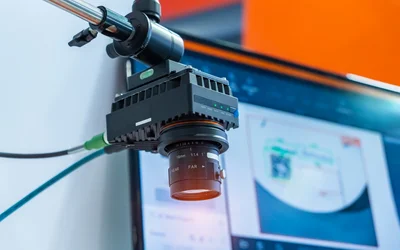
A deep-dive listicle guiding controls, automation, and quality engineers toward the best vision systems for manufacturing applications in 2026.
Understanding industrial vision systems by examining their components, imaging fundamentals, AI integration since 2020, and how to choose the right solution for every application.
The AI-powered tool could inform the design of better sensors and cameras for robots or autonomous vehicles.
This article explores the significant advancements in AI-driven MEMS sensors, focusing on STMicroelectronics' (ST) cutting-edge technologies, their applications, and the ecosystem supporting these innovations.
A REVIEW OF PAST AND FUTURE CDFAM PRESENTATIONS

6 minutes read
Researchers at ETH Zurich have developed the first technology that is able to recognise biomarkers in menstrual blood – directly in sanitary towels. MenstruAI promises a simple, non-invasive method for recording health data in everyday life.

4 minutes read
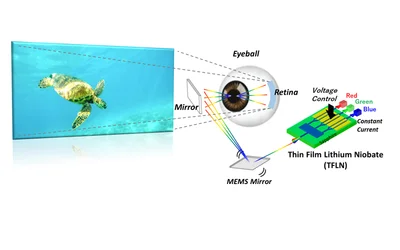
As augmented smart glasses technology edges closer to mainstream adoption, engineers face challenges around display performance. Namely, many seek to achieve higher resolution without driving up power consumption and device bulk.
Wevolver spoke with John Weil, Vice President of IoT and Edge AI Processor Business at Synaptics, to understand the challenges of bringing AI to the edge, how the Synaptics Astra™AI Native platform enables cognitive computing in real-world devices, and what the future holds for edge intelligence.
A Review of Presentations from CDFAM Computational Design Symposium Series, Past and Future
8 minutes read
Generative artificial intelligence (GenAI) suffers from several types of biases that reflect human failings. How can we avoid being tricked?

4 minutes read
As seen at CDFAM Computational Design Symposium
4 minutes read
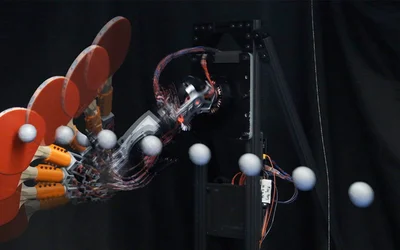
In addition to training future players, the technology could expand the capabilities of other humanoid robots, such as for search and rescue.
EPFL researchers have discovered key 'units' in large AI models that seem to be important for language, mirroring the brain's language system. When these specific units were turned off, the models got much worse at language tasks.
4 minutes read
New type of "state-space model" leverages principles of harmonic oscillators.
Join MVTec to explore how advanced machine vision software is revolutionizing semiconductor wafer inspection with live demos, not slides—boosting precision, quality, and efficiency.
Explore how advanced computer vision technology transforms quality control in metal manufacturing and why it represents the industry's future.
"IntersectionZoo," a benchmarking tool, uses a real-world traffic problem to test progress in deep reinforcement learning algorithms.
A new method helps convey uncertainty more precisely, which could give researchers and medical clinicians better information to make decisions.