Be the first to know.
Get our printed electronics  weekly email digest.

Tagged with

Printed Electronics

ORGANIZATIONS.

SHAPING THE INDUSTRY.

Voltera

Appliances, Electrical, and Electronics Manufacturing

Bridging the gap between what you can do and what you wish you could do wit...

9 Posts

Latest Posts

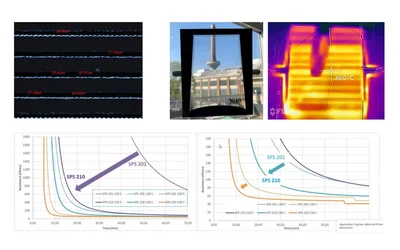
Silver nanoparticle inks improve every year. These improvements are often incremental, but very important. One ever-present direction of development is towards inks which offer ever higher conductivity levels at a low curing temperature and a short curing time. This a critical figure of merit because it opens more substrate choices, saves time, and lowers energy consumption costs.

Ag Nanoparticle Inks: Achieving Ever Higher Conductivity at Lower Curing Time and Temperature

This article explores the key differences between active and passive filters, detailing their transfer functions, frequency responses, components, circuit configurations, stability, design challenges, approximation methods, and CAD tools for filter simulation and optimization.

Difference between Active and Passive Filters?

Circuit card assemblies (CCA) give birth to a complete printed circuit board (PCB) after assembling every component. A printed circuit board has no electrical components and needs to go through a manufacturing process called circuit card assemblies which are the complete board assembly.

Circuit Card Assemblies: A Comprehensive Guide

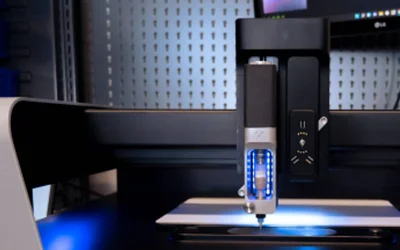
Experimenting in the world of Flexible Hybrid Electronics (FHE) comes with a variety of hurdles. Printing technologies are vastly different in terms of materials compatibility and have pros and cons that make them suitable for particular applications. Choosing materials that match the printing technology you intend to use is the most important decision you’re going to make. But what if one could print, digitally, using any paste and ink on any substrate? Read more

Comparison of Inkjet and Extrusion Printed Tattoo Electrodes for Biomedical Applications

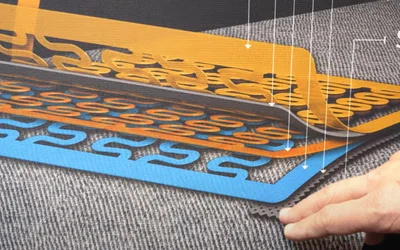
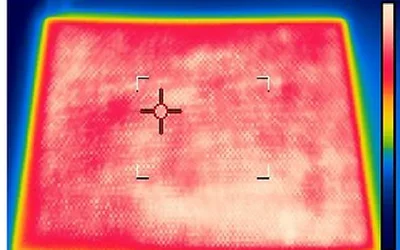
Sometimes manufacturers would like to install heating in objects that are difficult to heat. The armrest of your car. Your sporty winter coat. Bags for food delivery. Sleeping bags. etc This has been difficult to achieve until now. Read more about printed heater technology

The advantages and functioning of PTC heaters

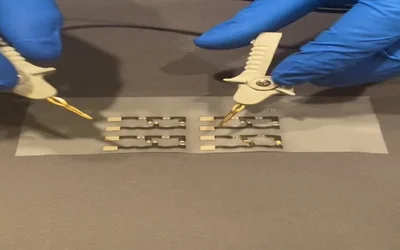
Wearable electronic textiles are a demanding environment for reliable interconnects – the ability to function with movement and survive multiple cleanings and reuse. Good adhesion is particularly challenging in these wearable and conformable electronics applications. While solders provide the most conductive electrical connection, they are rigid and require not only the addition of an underfill adhesive but usually a post bond encapsulation. This Anisotropic Conductive Epoxy, provides reliable interconnections between electronic components and circuitry on textiles with excellent structural bonding, without encapsulation, even under repeated stretching and washings. This technology has been shown as a scalable assembly process for e-Textile manufacturing in an SMT line.

Reliable, Scalable, Anisotropic Interconnect Solution for Wearable Electronics

The progress of screen printing towards fine line printing has been incredible going from 100 µm features before 2010 to 70 µm to 2015 to 40 µm in 2018 and now pushing - in development- towards 20 µm and less. In parallel, the wet thickness of the printed line have gone down from 12um or so in 2018 to now just 4um.