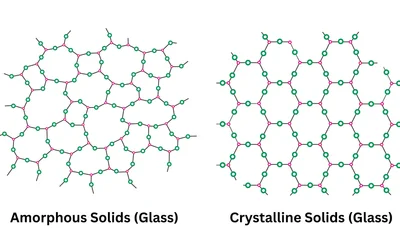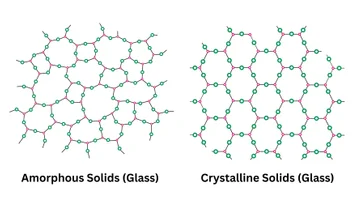
This article is a detailed exploration of crystalline vs amorphous solids, covering atomic order, materials properties, semiconductors, and how they translate into practical semiconductor, hardware and digital design applications.
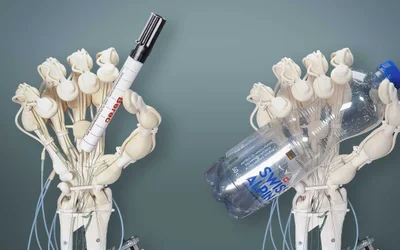
For the first time, researchers have succeeded in printing a robotic hand with bones, ligaments and tendons made of different polymers using a new laser scanning technique.
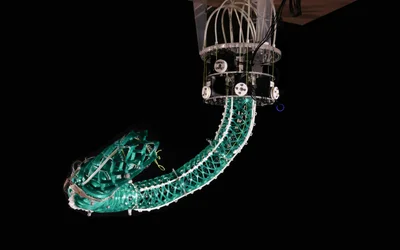
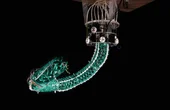
EPFL researchers have designed a bio-inspired robot with a novel trimmed helicoid structure that allows for a wide range of motion and safe interaction with humans.
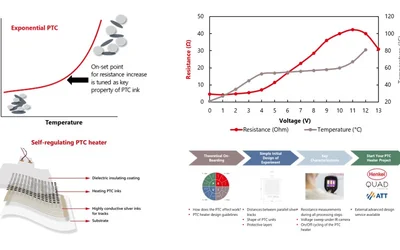
Heaters are one of the most successful applications of printed electronics. At first they seem deceptively simple, yet their successful realization is in fact an art relying on the interplay of all the elements from the right material selection to right design, right printing, etc. Learn how here.
Textiles are tactile, sensorial and visual. Qualities can be modified or even expanded when technology is added, transforming passive textiles into active and interactive devices, monitoring and detecting bodily functions due to their constant contact with our skin.
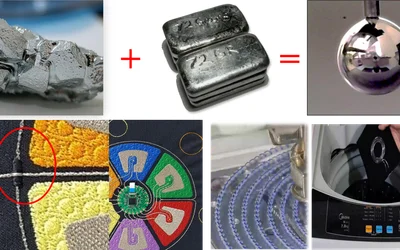
In this article you will learn more about liquid metals, a material that never ceases to amaze. It is water-like at room temperature but with metallic properties. Here you will see how researchers want to make them printable or turn them into conductive, stretchable, and washable fibers for e-textiles.
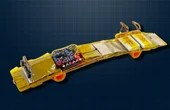
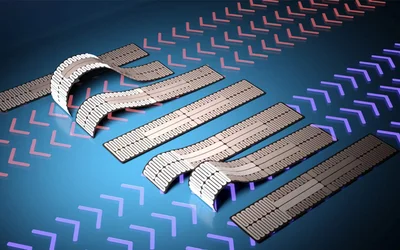
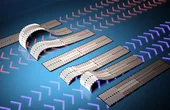
Researchers at North Carolina State University have demonstrated a caterpillar-like soft robot that can move forward, backward and dip under narrow spaces. The caterpillar-bot’s movement is driven by a novel pattern of silver nanowires that use heat to control the way the robot bends, allowing users to steer the robot in either direction.
As the field of soft robotics continues to evolve, one of the most critical challenges researchers face is developing reliable and efficient power sources to drive these pliable machines.
In this episode, we talk about a novel approach to multi-material 3D printing that’ll enable the production of soft components capable of contracting in a similar fashion to muscles.
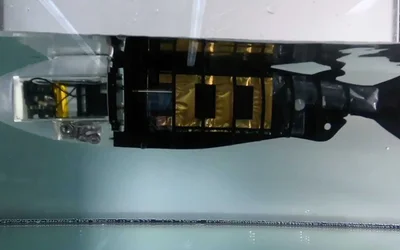
Inspired by the biomechanics of the manta ray, researchers at North Carolina State University have developed an energy-efficient soft robot that can swim more than four times faster than previous swimming soft robots.