Featured
A Swiss Italian team has created RoboCake, an edible robotic wedding cake that illustrates the advances in robotic food research.

A Swiss Italian team has created RoboCake, an edible robotic wedding cake that illustrates the advances in robotic food research.
A Swiss Italian team has created RoboCake, an edible robotic wedding cake that illustrates the advances in robotic food research.
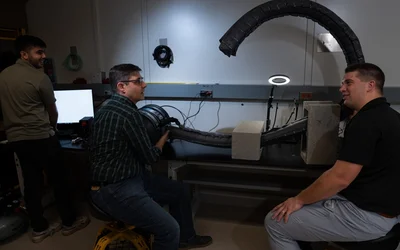
SPROUT, developed by Lincoln Laboratory and University of Notre Dame researchers, is a vine robot capable of navigating under collapsed structures.
This fresh, newly captured video from Unitree's testing grounds showcases the breakneck speed of humanoid intelligence advancement. Every day brings something thrilling!
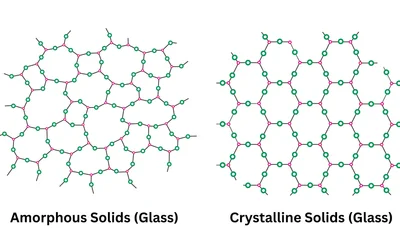
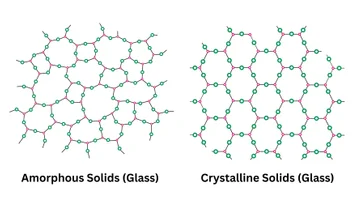
This article is a detailed exploration of crystalline vs amorphous solids, covering atomic order, materials properties, semiconductors, and how they translate into practical semiconductor, hardware and digital design applications.
16 minutes read.

University
At the Harvard John A. Paulson School of Engineering and Applied Sciences (SEAS), we work within and beyond the disciplines of eng...
42 Posts

Robotics
This podcast is dedicated to the (soft) robotics community and audience who...
6 Posts

University
NC State is a powerhouse in science, technology, engineering and math. We l...
3 Posts

Machinery Manufacturing
Automation and Robotics for Food, Bakery, Pet Food and Pharmaceuticals.
This article is a detailed exploration of crystalline vs amorphous solids, covering atomic order, materials properties, semiconductors, and how they translate into practical semiconductor, hardware and digital design applications.
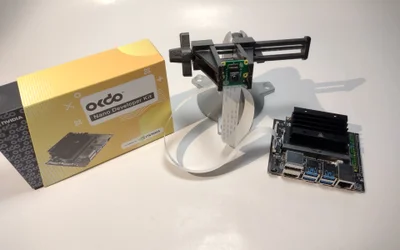
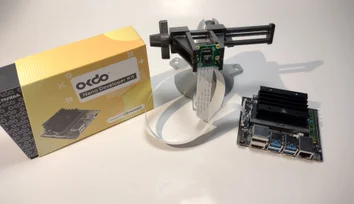
Dive into the future of Edge AI with an in-depth look at the top 5 AI Single Board Computers shaping tomorrow's tech.
A Swiss Italian team has created RoboCake, an edible robotic wedding cake that illustrates the advances in robotic food research.

3 minutes read
SPROUT, developed by Lincoln Laboratory and University of Notre Dame researchers, is a vine robot capable of navigating under collapsed structures.
This fresh, newly captured video from Unitree's testing grounds showcases the breakneck speed of humanoid intelligence advancement. Every day brings something thrilling!

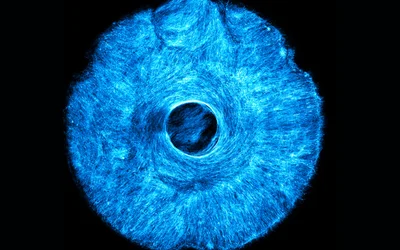
MIT engineers developed a way to grow artificial tissues that look and act like their natural counterparts.
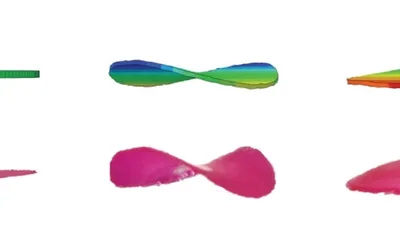
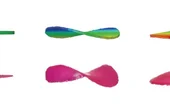
Researchers encode multiple shapes into simple material

3 minutes read
Complex and sophisticated, a plant’s mechanical systems could be the key to more advanced biohybrid softbotic designs.

2 minutes read
Texas A&M University joins a Northwestern University-led Engineering Research Center to bring highly skilled, affordable robotic assistance to the workforce and beyond.

3 minutes read
A fully edible robot could soon end up on our plate if we overcome some technical hurdles, say EPFL scientists involved in RoboFood – an EU-funded project which aims to marry robots and food.
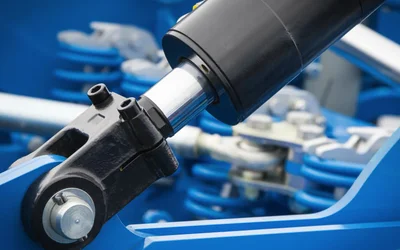
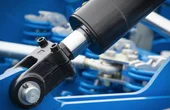
Pneumatic actuators convert compressed air into mechanical motion, enabling precise and efficient control in various industrial applications.
A new algorithm learns to squish, bend, or stretch a robot’s entire body to accomplish diverse tasks like avoiding obstacles or retrieving items.
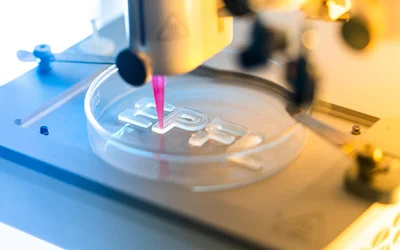
EPFL researchers are targeting the next generation of soft actuators and robots with an elastomer-based ink for 3D printing objects with locally changing mechanical properties, eliminating the need for cumbersome mechanical joints.
3 minutes read
Researchers develop metafluid with programmable response
4 minutes read
AIRSKIN® revolutionizes industrial automation by adding air-powered tactile skin for to robots to create safe, collaborative environments, ensuring maximum safety with PLe / Cat. 3 certification.
New modular, spring-like devices maximize the work of live muscle fibers so they can be harnessed to power biohybrid bots.
Dive into the future of Edge AI with an in-depth look at the top 5 AI Single Board Computers shaping tomorrow's tech.