Be the first to know.
Get our Computer Vision  weekly email digest.
Computer Vision

featured

Large language models (LLMs) are increasingly automating tasks like translation, text classification and customer service. But tapping into an LLM’s power typically requires users to send their requests to a centralized server — a process that’s expensive, energy-intensive and often slow.
Featured

Fine-tuning large language models adapts pre-trained models to specific tasks or domains using tailored datasets, while Retrieval-Augmented Generation (RAG) combines retrieval systems with generative models to dynamically incorporate external, up-to-date knowledge into outputs.

RAG vs Fine-Tuning: Differences, Benefits, and Use Cases Explained
Featured

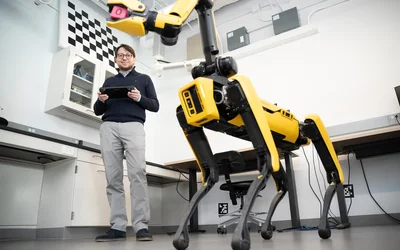
A team of MIT CSAIL researchers have developed a novel approach to robot training that could significantly accelerate the deployment of adaptable, intelligent machines in real-world environments.

Can robots learn from machine dreams?

Engineers Wiki.

Most Asked Questions.

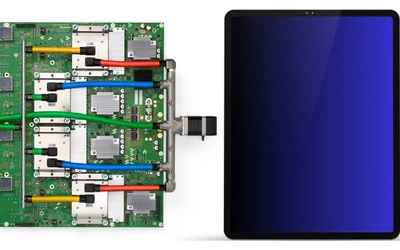
This article explores TPU vs GPU differences in architecture, performance, energy efficiency, cost, and practical implementation, helping engineers and designers choose the right accelerator for AI workloads today!

View more

ORGANIZATIONS.

SHAPING THE INDUSTRY.

EPFL

University

Located in Switzerland, EPFL is one of Europe’s most vibrant and cosmopolitan science and technology institutions. EPFL is Europe...

56 Posts

Photoneo

Industrial Automation

Photoneo develops industrial 3D vision, robotic intelligence software, and ...

54 Posts

High Tech Campus Eindhoven

High Tech

High Tech Campus Eindhoven is Europe's smartest square km and has the ultim...

49 Posts

Movella

Appliances, Electrical, and Electronics Manufacturing

Movella | Xsens digitizes movement.

47 Posts

ETH Zurich

University for science and technology

Freedom and individual responsibility, entrepreneurial spirit and open-​min...

43 Posts

View more

TAGGED WITH machine learning

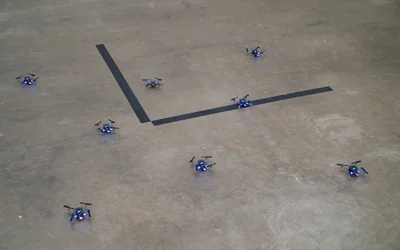
EPFL roboticists have shown that when a modular robot shares power, sensing, and communication resources among its individual units, it is significantly more resistant to failure than traditional robotic systems, where the breakdown of one element often means a loss of functionality.

Resource-sharing boosts robotic resilience

Latest Posts

Fine-tuning large language models adapts pre-trained models to specific tasks or domains using tailored datasets, while Retrieval-Augmented Generation (RAG) combines retrieval systems with generative models to dynamically incorporate external, up-to-date knowledge into outputs.

RAG vs Fine-Tuning: Differences, Benefits, and Use Cases Explained

A team of MIT CSAIL researchers have developed a novel approach to robot training that could significantly accelerate the deployment of adaptable, intelligent machines in real-world environments.

Can robots learn from machine dreams?