Featured
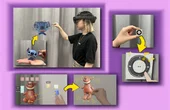
“InteRecon” enables users to capture items in a mobile app and reconstruct their interactive features in mixed reality. The tool could assist in education, medical environments, museums, and more.
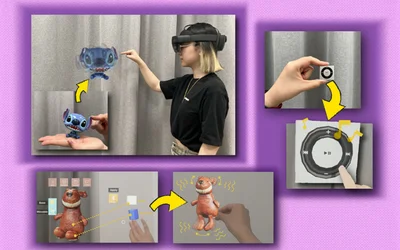
“InteRecon” enables users to capture items in a mobile app and reconstruct their interactive features in mixed reality. The tool could assist in education, medical environments, museums, and more.
“InteRecon” enables users to capture items in a mobile app and reconstruct their interactive features in mixed reality. The tool could assist in education, medical environments, museums, and more.
New apps for cancer patients, cannabis users, others make use of algorithms that continually customize support
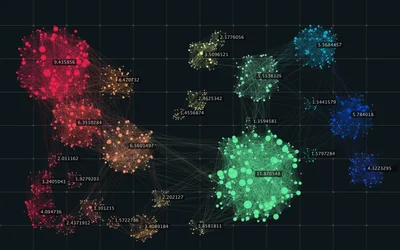
Unsupervised learning is a machine learning approach that finds patterns, structure, or useful representations in unlabeled data. It groups similar observations, compresses high-dimensional features, detects outliers, discovers item relationships, and supports modern representation learning.
13 minutes read.
17 minutes read.
11 minutes read.
16 minutes read.
14 minutes read.
14 minutes read.



High Tech
High Tech Campus Eindhoven is Europe's smartest square km and has the ultim...
49 Posts

University for science and technology
Freedom and individual responsibility, entrepreneurial spirit and open-min...
43 Posts
From leading experts at the CDFAM Computational Design Symposium
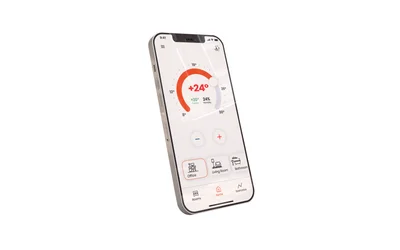
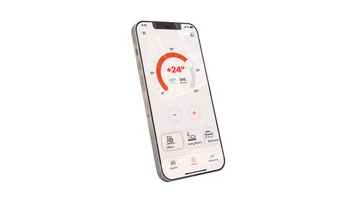
eCozy 2.0 system addresses the limitations of traditional thermostats for water heating radiators, delivering efficiency, convenience and sustainability benefits to households
Protect the cloud by securing the edge with hardware-based security, TPMs, HSMs, and resilient edge computing architectures.
Explore the rise of intelligent EV hardware and how real-time processing, ML acceleration, and hardware virtualization are enabling safer, smarter, software-defined electric vehicles.
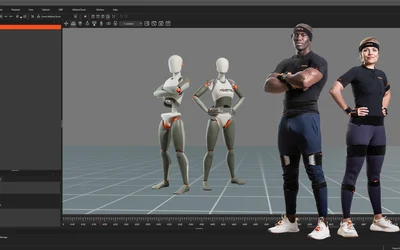
With MVN Analyze
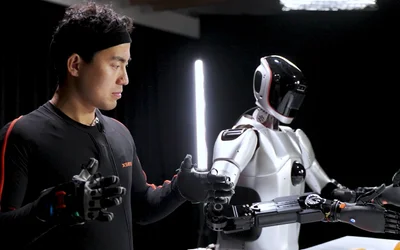
how Last Praetorian Interactive made Project Vesperi with one Xsens suit
With Xsens Motion Capture
“InteRecon” enables users to capture items in a mobile app and reconstruct their interactive features in mixed reality. The tool could assist in education, medical environments, museums, and more.
With Xsens MVN Link

3 minutes read
New apps for cancer patients, cannabis users, others make use of algorithms that continually customize support

3 minutes read
This article covers advanced architectural patterns, performance optimisation strategies, and critical operational considerations for building production-grade AI infrastructure systems!
Claire Najjuuko, Chenyang Lu, Fred Ssewamala use AI to target interventions to improve compliance

4 minutes read
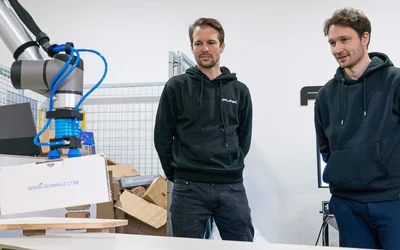
The ETH spin-off Flink Robotics wants to revolutionize the handling of packages. Its founders Moritz Geilinger and Simon Huber have developed software that allows robots to work together and quickly take on new tasks.

5 minutes read
For this article we interviewed Niwa and Omura, who are responsible for the design, development, and operation of the system, as well as Toda, who requested its development and is also a user.

9 minutes read
Researchers from Princeton and Rutgers University have used reinforcement learning, a method frequently deployed to train artificial intelligence, to show how flexible responses can substantially increase the cost-effectiveness of steps to defend cities like New York against climate change.

6 minutes read
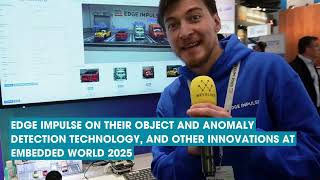
Unveiling the Future of Embedded AI: Object Anomaly Detection and More at Embedded World 2025
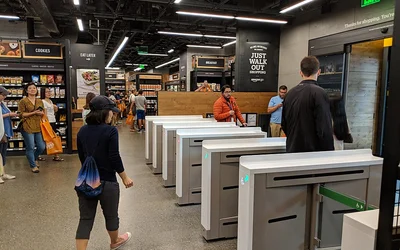
AI and ML-driven cashierless stores not only improve operational efficiency and customer personalization but are also expected to propel the global AI retail market to over $40 billion by 2030.
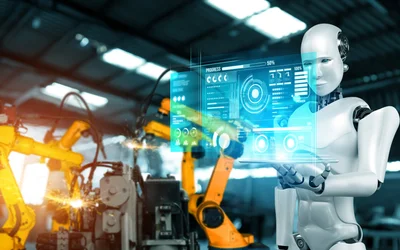
Camera-equipped robotic systems serve as key expansion components within this industry because they improve efficiency and accuracy across multiple fields, including manufacturing, healthcare, logistics, and autonomous vehicle development.
With Xsens motion capture technology
3 minutes read
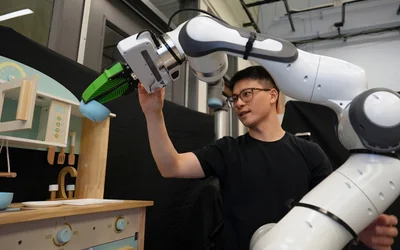
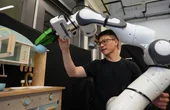
New research could allow a person to correct a robot’s actions in real-time, using the kind of feedback they’d give another human.
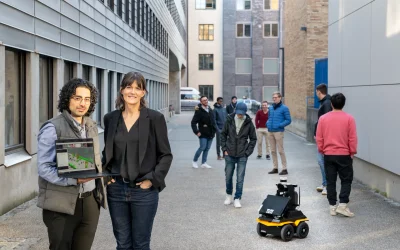
Researchers at the Technical University of Munich (TUM) have developed a wheeled robot that makes its way through a crowd of people safely and without hesitation. A computer on board predicts the movement of people in the vicinity and how they are likely to react to the robot.

3 minutes read