Featured
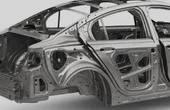
A new multiscale materials modeling framework predicts microstructures to control the final strength of lightweight aluminum alloys for fuel-efficient vehicles.
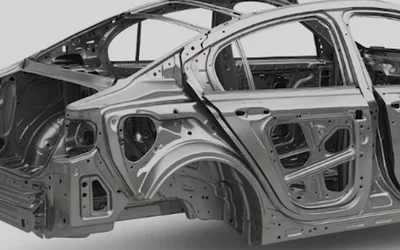
A new multiscale materials modeling framework predicts microstructures to control the final strength of lightweight aluminum alloys for fuel-efficient vehicles.
A new multiscale materials modeling framework predicts microstructures to control the final strength of lightweight aluminum alloys for fuel-efficient vehicles.
The AI-powered tool could inform the design of better sensors and cameras for robots or autonomous vehicles.
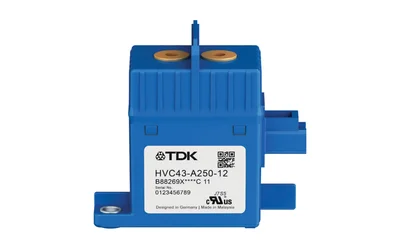
This article outlines the key considerations for HVC design in these applications and emphasizes the importance of robust switching solutions in meeting modern industry standards.
Lidar SLAM lets a robot, vehicle, or handheld scanner map an unknown space while tracking its own position inside it. This guide discusses the processing pipeline, compares nine lidar SLAM and odometry algorithms, from GMapping to lidar-inertial and neural methods, and shows how to choose sensors
14 minutes read.
14 minutes read.
16 minutes read.
12 minutes read.
13 minutes read.

Electronics
Mouser Electronics is a worldwide leading authorized distributor of semiconductors and electronic components.
219 Posts

Electrical and Electronic Manufacturing
Drop-in power cords that improve battery performance.
18 Posts
One of the goals of building the Mars Rover is to demonstrate SPARK. As an early step, Fabien introduced a new hardware abstraction layer (HAL) on top of the existing HALs that had been developed for the various pieces of hardware that make up the Mars Rover.
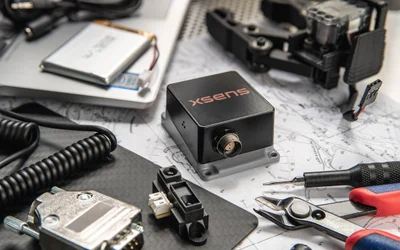
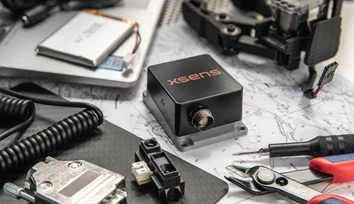
The all new Xsens Sirius series has been engineered to enable true autonomy in harsh conditions
This article provides a detailed overview of the principles, components, types, applications, and future trends of Remote I/O technology.
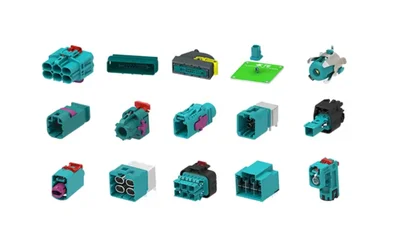
The connectivity foundation for advanced driver assistance systems, software-defined vehicles, zonal architectures and electrified powertrains.
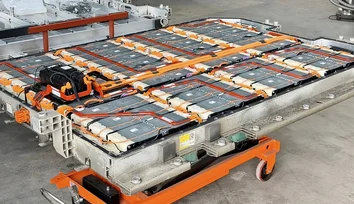
Engineering principles, BTMS architectures, and design tradeoffs.
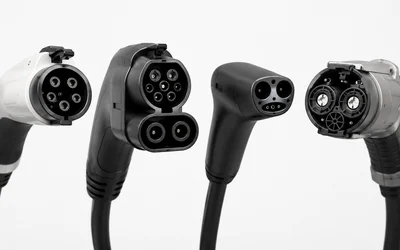
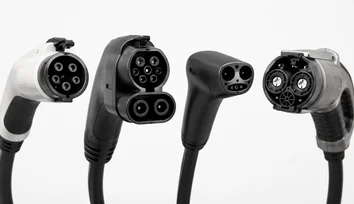
This article explains EV charging connector types, including AC, CCS, Tesla, CHAdeMO, GB/T, and NACS, with regional compatibility.
This article details EV charging levels, covering AC charging, DC fast charging, power delivery, infrastructure needs, and key trade-offs.
A new multiscale materials modeling framework predicts microstructures to control the final strength of lightweight aluminum alloys for fuel-efficient vehicles.

4 minutes read
The AI-powered tool could inform the design of better sensors and cameras for robots or autonomous vehicles.
This article outlines the key considerations for HVC design in these applications and emphasizes the importance of robust switching solutions in meeting modern industry standards.
Building the Data Backbone of Vehicles with GEMnet Solutions by TE Connectivity — combining Multi-Gigabit Bandwidth, Robust EMI Shielding, and Automotive-Grade Durability
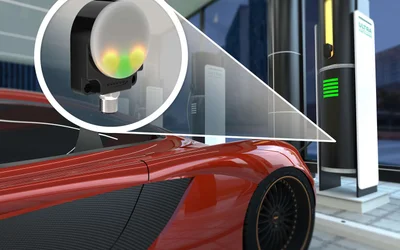
Discover how radar sensors enhance building safety, traffic control, and asset management with reliable vehicle detection solutions for docks, parking, drive-thrus, and toll applications.
This article discusses the role of sensing in ADAS and in-cabin monitoring and how Murata supports these technologies with compact, reliable, automotive-grade components and modules that enable the functionality of camera, radar, LiDAR, and wireless systems.
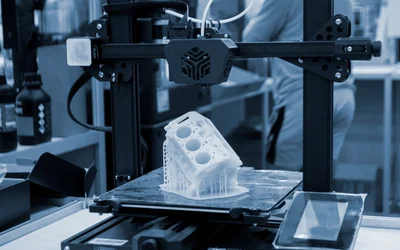
Additive Manufacturing (AM) is transforming the European automotive industry; enhancing supply chain resilience, sustainability, and design freedom while driving innovation toward scalable, data-driven production.
Advancing New Horizons in Additive Manufacturing (AM)
Prototyping Brushless DC Motor Control with the S32M276SFFRD Development Kit
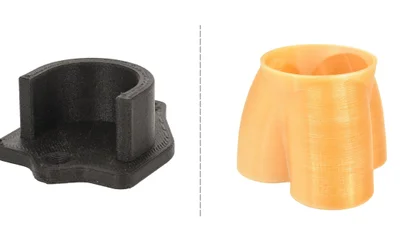
Discover how to print with high-performance filaments like PEEK, PEKK, and ULTEM. Learn about their properties, hardware needs, challenges, and best practices for industrial-grade 3D printing.
What open-source software means for EV charging, interoperability and the EV market?
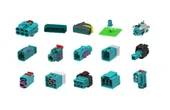
Inside-the-box connectors enable reliable power and signal transmission within automotive modules. Molex offers tailored solutions that combine electrical performance, mechanical durability, and manufacturing efficiency to meet the diverse demands of modern vehicle electronics.
The robo-couch they crafted sits on two wheels like those used on electric scooters that are connected to an electric motor, plus two other unmotorized wheels that simply work to share the couch's weight. A rechargeable battery supplies the power.

3 minutes read
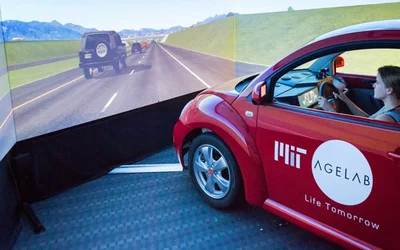
A decade-plus alliance between MIT's AgeLab and Toyota's Collaborative Safety Research Center is recognized as a key contributor to advancements in automotive safety and human-machine interaction.
Modular high-voltage PDU architectures enable scalable power distribution using standardized components. This approach reduces tooling requirements, supports platform reuse, improves serviceability, and accelerates integration in EV systems.