Featured
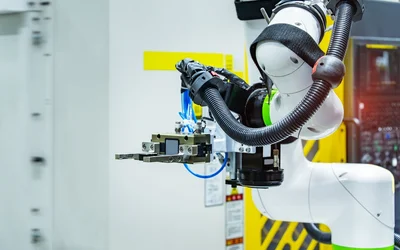
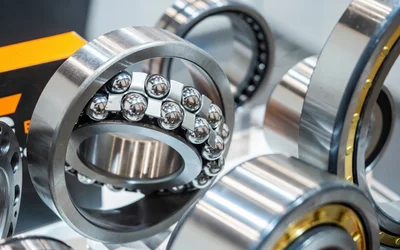
AI tools like predictive maintenance, automated visual inspection, and intelligent supplier matching are setting a new standard for zero-defect manufacturing across the supply chain.
AI tools like predictive maintenance, automated visual inspection, and intelligent supplier matching are setting a new standard for zero-defect manufacturing across the supply chain.
AI tools like predictive maintenance, automated visual inspection, and intelligent supplier matching are setting a new standard for zero-defect manufacturing across the supply chain.
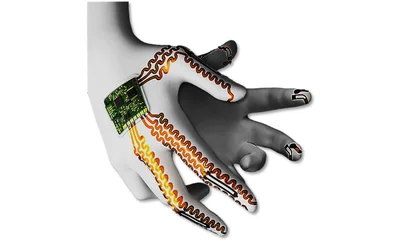
AI-powered artificial muscles made from pliable materials are reshaping recovery, from stroke rehabilitation to prosthetic design. These machines help people regain motion, strength, and confidence.
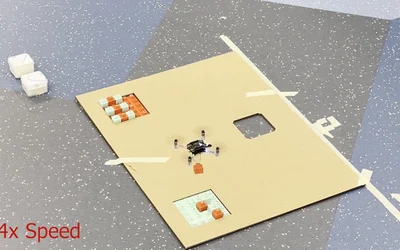
Advancements in aerial additive manufacturing from the lab of Amir Barati Farimani could one day enable drones to construct remote infrastructure, maintain cities, and support space exploration.
Artificial intelligence (AI) is a wide-ranging tool that enables people to rethink how we integrate information, analyze data, and use the resulting insights to improve decision making
15 minutes read.
20 minutes read.
13 minutes read.
17 minutes read.
25 minutes read.
11 minutes read.


Entertainment
The Next Byte Podcast is hosted by two young engineers - Daniel and Farbod - who select the most interesting tech/engineering cont...
165 Posts

High Tech
High Tech Campus Eindhoven is Europe's smartest square km and has the ultim...
49 Posts

University for science and technology
Freedom and individual responsibility, entrepreneurial spirit and open-min...
43 Posts
From leading experts at the CDFAM Computational Design Symposium
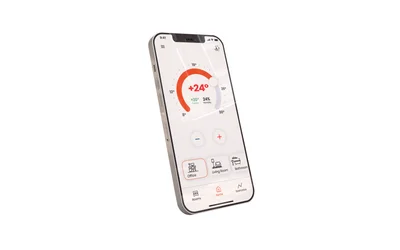
eCozy 2.0 system addresses the limitations of traditional thermostats for water heating radiators, delivering efficiency, convenience and sustainability benefits to households
Protect the cloud by securing the edge with hardware-based security, TPMs, HSMs, and resilient edge computing architectures.
Explore the rise of intelligent EV hardware and how real-time processing, ML acceleration, and hardware virtualization are enabling safer, smarter, software-defined electric vehicles.
EPFL researchers are developing AI models that could one day enable vision prosthetics able to restore meaningful, object-level sight for the blind.
A deep-dive listicle guiding controls, automation, and quality engineers toward the best vision systems for manufacturing applications in 2026.
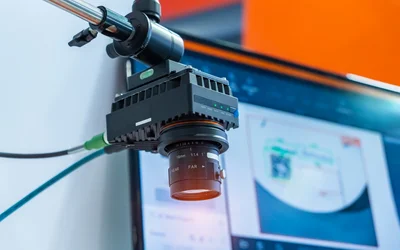
Understanding industrial vision systems by examining their components, imaging fundamentals, AI integration since 2020, and how to choose the right solution for every application.
The AI-powered tool could inform the design of better sensors and cameras for robots or autonomous vehicles.
AI tools like predictive maintenance, automated visual inspection, and intelligent supplier matching are setting a new standard for zero-defect manufacturing across the supply chain.
AI-powered artificial muscles made from pliable materials are reshaping recovery, from stroke rehabilitation to prosthetic design. These machines help people regain motion, strength, and confidence.

4 minutes read
Advancements in aerial additive manufacturing from the lab of Amir Barati Farimani could one day enable drones to construct remote infrastructure, maintain cities, and support space exploration.

In this post, we'll walk through how to evaluate that progress using the same metrics our platform provides automatically, so you can build detectors that get smarter, sharper, and more reliable over time.

7 minutes read
Master what is GDDR6 memory with our comprehensive engineering guide covering architecture, performance formulas, design techniques and applications. Learn how dual channel architecture and 16 Gb/s per pin data rates empower GPUs, FPGAs and AI accelerators.
UP launches the Xtreme ARL AI Development Kit, combining 83 TOPS of edge AI performance with industrial-grade design — empowering developers to seamlessly scale from prototype to production.
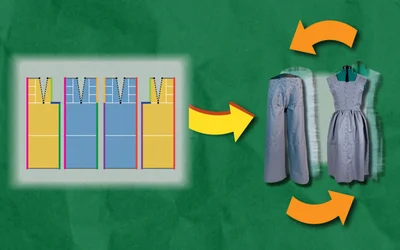
To reduce waste, the Refashion program helps users create outlines for adaptable clothing, such as pants that can be reconfigured into a dress. Each component of these pieces can be replaced, rearranged, or restyled.
Smart eyewear promises to transform how we see and interact with the world. Among its many potential advantages, the technology offers hands-free access to information, vision enhancement, and accessibility tools.

4 minutes read
Join SimScale's 3-session Engineering AI Bootcamp to discover how top manufacturers use AI to cut design cycles by up to 70%, reduce prototyping costs, and scale innovation.
Machine learning, wearable sensors could help reduce injury, improve form

4 minutes read
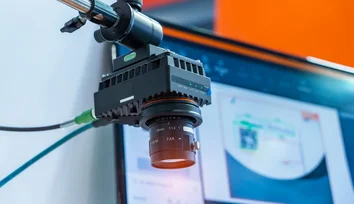
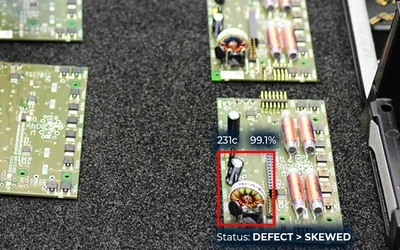
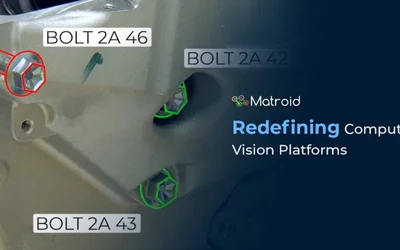
The no-code platform from Matroid trains ordinary cameras to act like expert inspectors, turning simple footage into a pixel-level defect checklist. Even a handheld GoPro can spot issues human eyes miss—using remarkably small datasets.
4 minutes read
Texas A&M researchers have developed a new cyber defense system to improve the safety of critical infrastructure.

2 minutes read
Researchers from NC State University have identified the first hardware vulnerability that allows attackers to compromise the data privacy of artificial intelligence (AI) users by exploiting the physical hardware on which AI is run.

5 minutes read
65% of organizations reported that they already implemented GenAI across their business units. The reason for this popularity is simple: generative AI can easily imitate human cognitive abilities and create different types of content in less than a minute.

6 minutes read
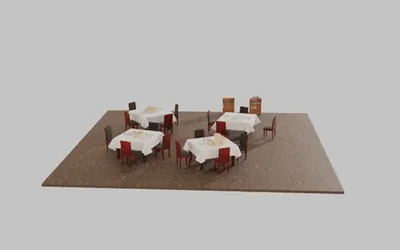
New tool from MIT CSAIL creates realistic virtual kitchens and living rooms where simulated robots can interact with models of real-world objects, scaling up training data for robot foundation models.