Artificial intelligence (AI) is a wide-ranging tool that enables people to rethink how we integrate information, analyze data, and use the resulting insights to improve decision making
In large-scale warehousing and distribution operations, conveyor belts are an essential infrastructure that must operate with near-zero downtime to ensure the timely delivery of products. The presence of loose or foreign items on a conveyor belt can pose a serious risk to these operations.


To reduce waste, the Refashion program helps users create outlines for adaptable clothing, such as pants that can be reconfigured into a dress. Each component of these pieces can be replaced, rearranged, or restyled.
Smart eyewear promises to transform how we see and interact with the world. Among its many potential advantages, the technology offers hands-free access to information, vision enhancement, and accessibility tools.
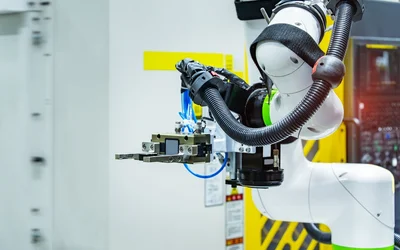
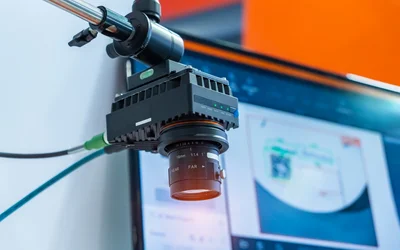
Matroid builds no-code computer-vision detectors that can spot everything from microscopic material defects to real-time safety hazards on a factory floor.
In large-scale warehousing and distribution operations, conveyor belts are an essential infrastructure that must operate with near-zero downtime to ensure the timely delivery of products. The presence of loose or foreign items on a conveyor belt can pose a serious risk to these operations.
In this post, we'll walk through how to evaluate that progress using the same metrics our platform provides automatically, so you can build detectors that get smarter, sharper, and more reliable over time.
The no-code platform from Matroid trains ordinary cameras to act like expert inspectors, turning simple footage into a pixel-level defect checklist. Even a handheld GoPro can spot issues human eyes miss—using remarkably small datasets.
ETH Zurich researchers have developed a method that makes AI responses increasingly reliable. Their algorithm specifically selects data relevant to the question. In addition, even AI models up to 40 times smaller achieve the same output performance as the best large AI models.
A new method from the MIT-IBM Watson AI Lab helps large language models to steer their own responses toward safer, more ethical, value-aligned outputs.
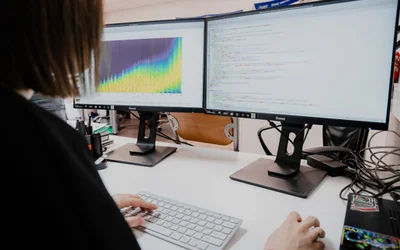
What’s particularly exciting is not just that Gen AI can write code – it’s that it’s beginning to understand context, reduce time spent on boilerplate, and support developers where they work best: in the flow of creation.
“InteRecon” enables users to capture items in a mobile app and reconstruct their interactive features in mixed reality. The tool could assist in education, medical environments, museums, and more.
Ambiq’s ultra-low-power edge AI technology is pushing health monitoring by enabling always-on, intelligent wearable devices that track vital signs in real time without relying on cloud connectivity.
Healthcare is facing a critical workforce shortage, with AI emerging as a key tool to support clinicians by improving diagnostics, treatment planning, and efficiency without replacing human expertise.