Lithium-Ion Solar Battery Selection and Integration for Engineers
This article explains lithium-ion solar battery selection, sizing, BMS, safety, and integration for reliable off-grid, hybrid & PV systems.

30 Jun, 2026. 16 minutes read
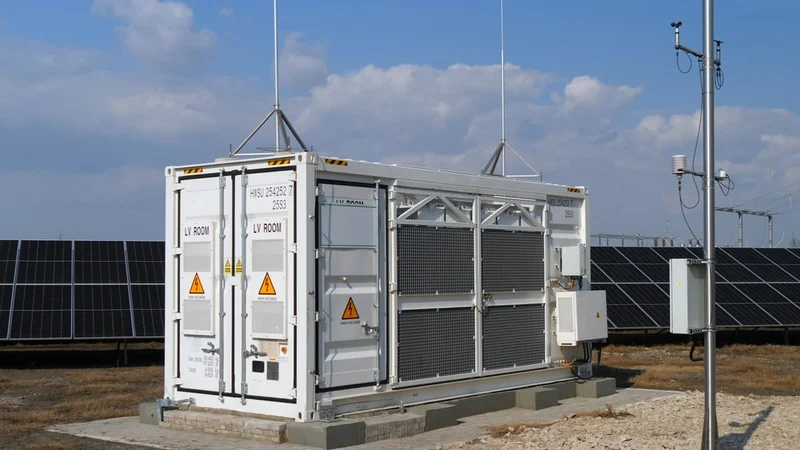
Battery Energy Storage System (BESS) Unit Integrated with Solar Farm
Key Takeaways
Lithium-Ion Replaced Lead-Acid in Solar Energy Storage due to higher usable capacity, deeper depth of discharge (DoD) and longer cycle life; LiFePO4 cells maintain >80% usable capacity and achieve 2,000-8,000 cycles.
Chemistry Matters: Lithium Iron Phosphate (LFP) offers lower energy density but exceptional safety, cycle life and thermal stability, while Nickel Manganese Cobalt (NMC) or Nickel Cobalt Aluminium (NCA) provide higher Wh/kg at the cost of reduced cycle life and greater thermal runaway risk.
Battery Management Systems (BMS) monitor cell voltage, current and temperature, provide protection, balance cells and communicate with inverters to optimize performance and safety; without a BMS, the risk of overcharge, undervoltage and thermal runaway increases.
Sizing a Lithium-Ion Solar Battery Bank requires calculating daily load, desired days of autonomy, applying DoD and round-trip efficiency; a 5 kWh daily load with 2 days of autonomy and 80% DoD yields ~12.5 kWh of required capacity.
Proper Charging Profiles and Integration are Essential: Li-ion batteries use a constant current-constant voltage (CC-CV) algorithm that requires precise voltage sensing. MPPT charge controllers achieve 90-99% efficiency compared with 75-80% for PWM controllers and are recommended for lithium systems.
Safety and Compliance require adherence to standards such as UL 1973 (stationary batteries), UL 9540/9540A (system safety and thermal-runaway testing), and IEC 62619, combined with thermal management to operate within 0-45 °C for charging and -20-60 °C for discharging.
Introduction
Renewable energy and remote power systems rely on batteries to ensure continuous power delivery when solar radiation is low. Historically, deep-cycle lead-acid batteries dominated off-grid storage because of their low cost; however, they suffer from limited usable capacity, poor round-trip efficiency and frequent maintenance. The lithium-ion solar battery offers a compelling alternative. Engineers designing photovoltaic (PV) energy storage systems must understand lithium-ion chemistry, BMS requirements, charge control, safety standards and system sizing to build reliable and efficient installations.
This article provides a comprehensive engineering reference for lithium-ion solar battery design. It explores why lithium-ion replaced lead-acid, compares chemistries such as LiFePO4 and NMC, explains BMS operation, discusses charge controllers, details system sizing and integration, and reviews safety standards. By combining practical design methods with engineering fundamentals, it helps professionals specify, size, and deploy a lithium-ion solar battery that supports reliable, efficient, and scalable solar energy storage.
Evolution from Lead-Acid to Lithium-Ion in Solar Storage
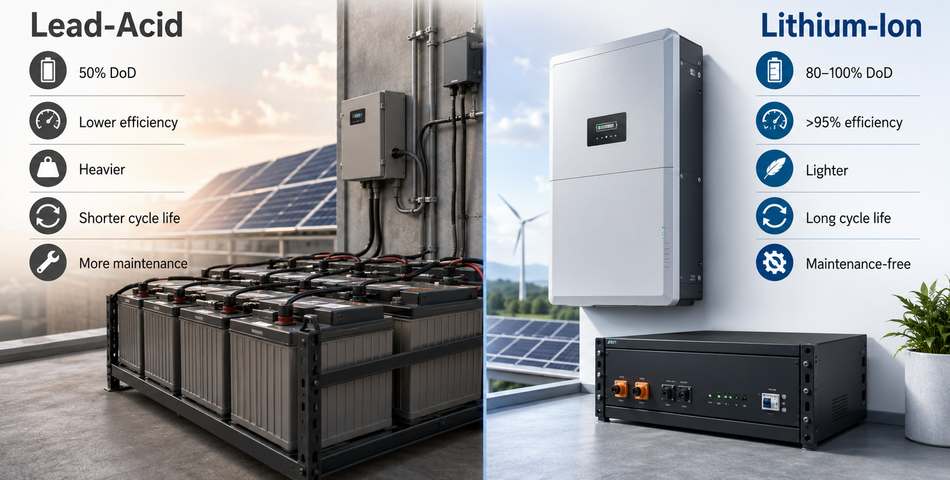
Limitations of Lead-Acid Batteries
Traditional solar installations used flooded, gel or AGM lead-acid batteries. These chemistries are inexpensive but have several drawbacks:
Restricted Usable Capacity: Lead-acid batteries are typically limited to about 50% depth of discharge to preserve service life. Deeper discharge cycles accelerate degradation and reduce cycle life.
Lower Efficiency: Lead-acid systems generally deliver lower round-trip efficiency than lithium-ion alternatives, meaning more solar generation is required to achieve the same usable energy output.
Limited Cycle Life: Even high-quality AGM and gel batteries usually provide only a few hundred to around 1,500 cycles, depending on operating conditions, temperature, and discharge depth.
Maintenance and Weight: Flooded lead-acid batteries require water top-ups, ventilation, and periodic equalization. They are also significantly heavier than lithium-ion batteries for the same usable battery capacity.
Advantages of Lithium-Ion for Solar
Lithium-ion batteries overcome many lead-acid limitations:
Higher Usable Capacity: LiFePO4 batteries can typically support 80–100% depth of discharge, reducing oversizing requirements and improving system economics.
Longer Lifespan: A lithium iron phosphate battery can deliver thousands of cycles at high DoD, often supporting 10–20 years of service when paired with proper charge controllers and a suitable BMS. [1]
Efficiency and Maintenance: Lithium-ion systems commonly exceed 95% round-trip efficiency and are maintenance-free, with sealed cells and no electrolyte servicing requirements.
Energy Density: Lithium chemistries provide higher energy density than lead-acid batteries, enabling compact, wall-mounted, stackable, and scalable energy storage solution designs.
These advantages make lithium-ion the preferred choice for modern renewable energy storage across residential, commercial, off-grid, hybrid, and grid-tied solar applications.
Recommended Reading: Lead-Acid Batteries vs Lithium-Ion Batteries: Efficiency
Lithium-Ion Chemistry Selection for Solar Systems
Lithium-ion is not a single battery type but a family of chemistries with different cathodes, performance characteristics, safety profiles, and cost structures. Engineers must evaluate energy density, cycle life, safety and cost when choosing a cathode material.
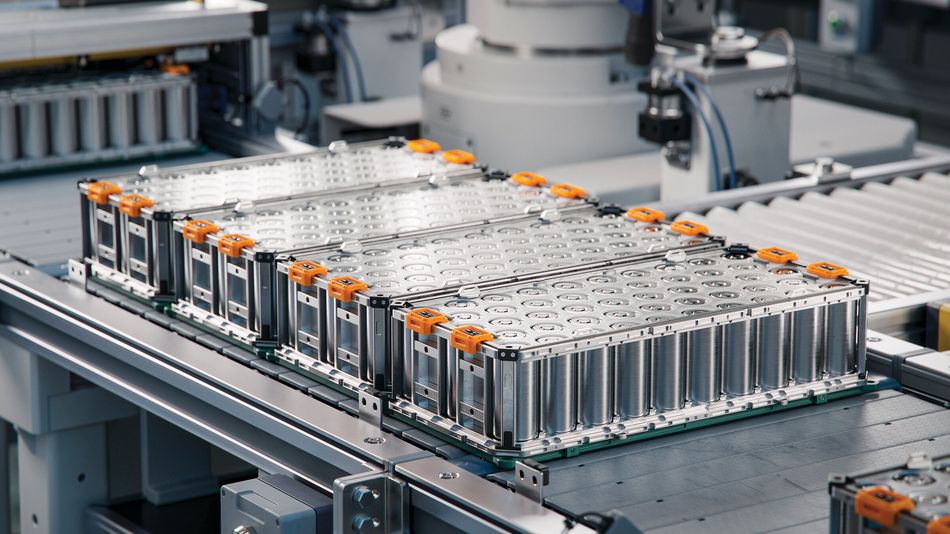
The common chemistries include:
Lithium Iron Phosphate, commonly known as LiFePO4 or LFP, is the most widely adopted chemistry for stationary solar storage. It typically offers an energy density of 90–160 Wh/kg and can deliver 2,000–8,000 cycles at 80% DoD, depending on cell quality, operating temperature, and charge-control strategy. Its excellent thermal stability, resistance to thermal runaway, and long cycle life make it highly suitable for residential solar storage, commercial energy storage systems, off-grid homes, RVs, and marine applications.
Nickel Manganese Cobalt, or NMC, provides higher energy density, typically around 150–220 Wh/kg, but has a shorter cycle life than LiFePO4. It is often used where weight and compact packaging are more important than maximum longevity, such as in electric vehicles and portable energy storage solutions. However, NMC requires a robust battery management system due to its lower thermal stability and higher risk of thermal runaway under abusive conditions.
Nickel Cobalt Aluminium, or NCA, offers one of the highest commercial lithium-ion energy densities, typically around 200–260 Wh/kg. This chemistry is commonly used in EV battery packs and high-performance applications where lightweight energy storage is critical. However, NCA is more sensitive to degradation, elevated temperatures, and thermal runaway risks. This makes it less attractive for typical stationary lithium-ion solar batteries unless advanced safety controls are implemented.
Lithium Titanate, or LTO, has a lower energy density, typically 50–80 Wh/kg, but offers outstanding cycle life, fast charge and discharge capability, and strong low-temperature performance. It can deliver 10,000–20,000 cycles in demanding applications. Due to its high cost and larger physical footprint, LTO is generally reserved for grid-scale storage, high-power applications, and systems requiring extremely long service life.
Why LiFePO4 Dominates Stationary Solar Storage?
LiFePO4 dominates stationary solar storage because it offers the best balance of safety, cycle life, cost, and reliability. The LFP cell has a nominal voltage of about 3.2 V and is fully charged at approximately 3.65 V. Its flat voltage profile supports stable operation and predictable SOC estimation when paired with a suitable BMS. Unlike cobalt-rich chemistries, lithium iron phosphate does not release oxygen at typical operating temperatures, reducing the risk of thermal runaway.
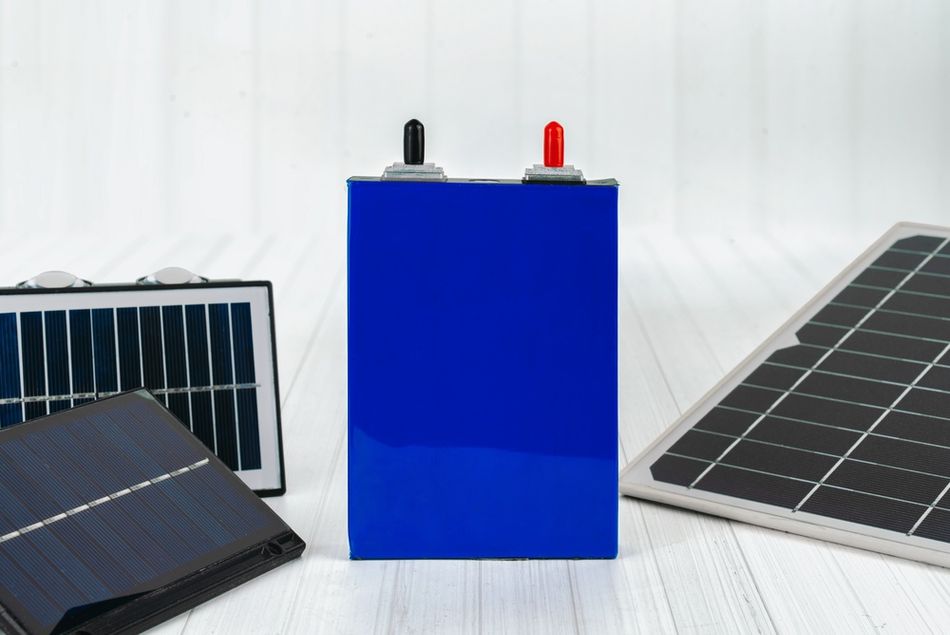
The main trade-off of LFP is lower energy density compared with NMC or NCA. However, in stationary solar installations, mass and volume are usually less critical than safety, lifespan, and maintenance-free operation. This makes the lithium iron phosphate battery a preferred choice for wall-mounted, stackable, and scalable solar energy storage systems, especially where long cycle life and predictable performance are required.
Voltage Configurations for Solar Packs
Lithium battery packs are built by connecting cells in series and parallel. Engineers should design pack voltages compatible with inverters and charge controllers. The common LFP solar battery configurations include 12-volt, 24-volt, and 48-volt nominal systems.
12 V Pack (4S): Nominal 12.8 V; Fully Charged at 14.6 V; 50% SOC around 13.0 V; Cut-Off at ~10 V.
24 V Pack (8S): Nominal 25.6 V; Fully Charged at 29.2 V; 50% SOC around 26.1 V; Cut-Off at ~20 V.
48 V Pack (16S): Nominal 51.2 V; Fully Charged at 58.4 V; 50% SOC around 52.2 V; Cut-Off at ~40 V.
These voltages help set charge controller thresholds and calibrate state-of-charge estimation within the BMS.
Recommended Reading: How to Charge a Lithium-Ion Battery Safely and Efficiently?
Battery Management Systems
The battery management system is essential for lithium-ion solar batteries because individual cells in a pack do not age, charge, or discharge identically. [2] Without proper monitoring and control, cell imbalance can lead to overvoltage, undervoltage, overcurrent, excessive temperature rise, reduced cycle life, or safety failures. In solar power systems, the BMS acts as the control and protection layer between the battery cells, charge controllers, the inverter, and external loads.
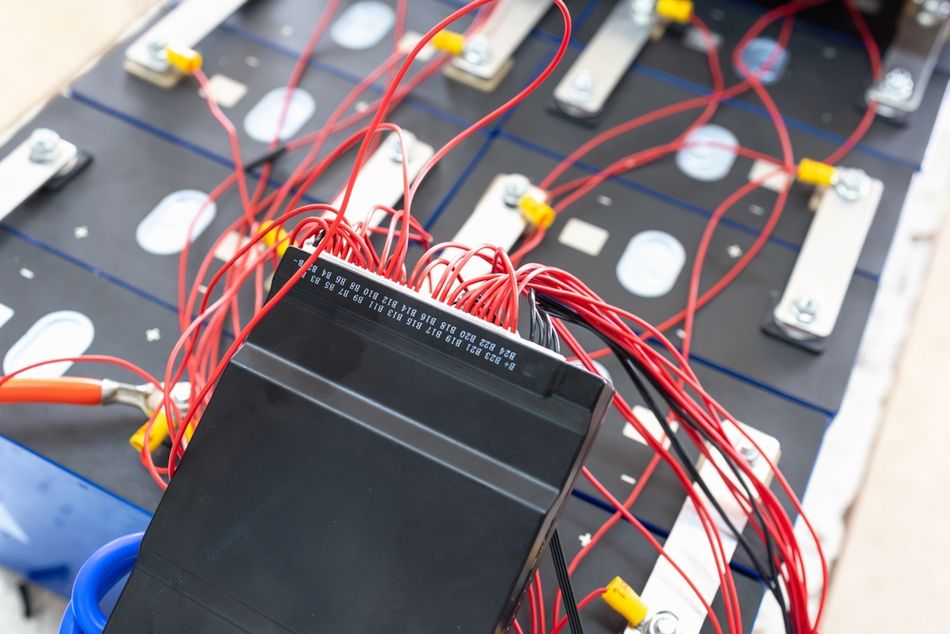
The battery management system continuously monitors cell voltages, pack current, temperature, and operating status. It also performs cell balancing, estimates state of charge and state of health, protects against unsafe operating conditions, and communicates battery data to external devices. In practical lithium-ion solar batteries, the BMS may reduce charge current, disconnect the pack, trigger alarms, or send fault signals if voltage, current, or temperature exceeds safe limits.
Functions and Architecture
Cell Voltage and Current Measurement: High-resolution ADCs track each cell's voltage. Current sensors monitor charge/discharge to estimate state of charge (SoC).
Cell Balancing: Passive balancing bleeds current from high-voltage cells, while active balancing redistributes charge between cells. Balancing prevents divergence over many cycles.
State Estimation: Algorithms, often extended Kalman filters, estimate SoC and state of health (SoH) from voltage, current and temperature data. Temperature compensation is important because LiFePO4 voltage changes little between 20-80% SOC.
Protection: The BMS enforces upper and lower limits on voltage, current, and temperature to prevent overcharge, overdischarge, and thermal runaway.
Communication: Many BMSs interface with inverters and chargers via CAN, RS-485 or Modbus. The data exchange allows closed-loop control of charge currents, load shedding and fault reporting.
Thermal Management
Temperature strongly influences performance and safety. The recommended temperature ranges for LiFePO4 batteries:
Charging: 0 °C to 45 °C
Discharging: -20 °C to 60 °C
Storage: 0 °C to 35 °C
Optimal Performance: 15-35 °C
Operating outside these limits reduces capacity, increases internal resistance and can induce thermal runaway. High temperatures accelerate self-discharge and degrade cycle life, while low temperatures reduce capacity and increase internal resistance. For off-grid or high-ambient environments, engineers should consider thermal insulation, forced-air or liquid cooling and heating elements integrated with the BMS to maintain safe operating temperature.
Safety Standards and Compliance
Regulatory compliance ensures safe deployment. The key standards include:
UL 1973 - Safety requirements for stationary battery systems. It evaluates electrical, mechanical and environmental performance over the expected life of the ESS.
UL 9540 - Safety standard for energy storage systems and equipment, addressing electrical, mechanical and fire safety, including explosion control and thermal runaway mitigation.
UL 9540A - Test method for evaluating thermal-runaway fire propagation; required for large systems. [6]
IEC 62619 - International standard for safety requirements of secondary lithium cells and batteries for industrial applications.
UL 991/1998 - Standards for safety-related software, often applied to BMS software design. [8]
Once integrating a lithium-ion solar battery, engineers should ensure that the battery module, BMS and system have relevant certifications. The local electrical codes (e.g., NEC Article 706 for ESS) specify installation requirements, clearances, disconnects and ventilation.
Recommended Reading: Battery Thermal Management for EV Battery Packs
Charge Control and System Integration
Charge Profiles for Lithium-Ion Batteries
Unlike lead-acid batteries, which use bulk, absorption, and float stages, lithium-ion cells follow a CC-CV (constant current-constant voltage) charging algorithm. [5]
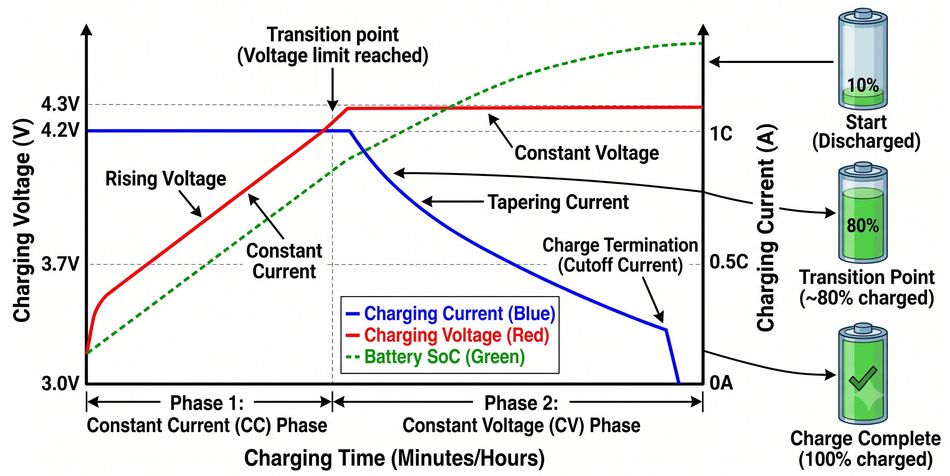
The lithium-ion cell should be charged at a set current (often 0.5C-1C) until it reaches its final voltage (≈4.2 V per cell for cobalt-rich chemistries or 3.65 V for LiFePO4), then the charger switches to constant voltage, supplying only the current necessary to hold the battery at that voltage. Here, precision is important: deviations of ±1% from the final voltage can cause undercharging (loss of capacity) or overcharging (risk of failure).
Charge Controllers: MPPT vs PWM
Solar charge controllers regulate the power flow from PV panels to the battery. The two main types are used:
Pulse-Width Modulation (PWM): Simple and inexpensive; connect the solar array to the battery via a high-frequency-modulated switch. The efficiency ranges from 75 to 80%. PWM controllers cannot step down the voltage, so the panel voltage must match the battery voltage. They are adequate for small off-grid systems using lead-acid or LFP packs.
Maximum Power Point Tracking (MPPT): Use a DC-DC converter to adjust panel voltage and maintain operation at the maximum power point. MPPT controllers achieve 90-99% efficiency and can step down higher PV voltages to battery voltage. This flexibility enables larger PV arrays, improved performance in cold conditions (when panel voltage rises), and support for lithium-ion charge profiles that require precise voltage control.
Given the higher cost of lithium-ion batteries, the improved efficiency and control of MPPT controllers justify their additional expense. Engineers should program charge-voltage and current limits based on cell chemistry and consult the specifications from the manufacturer. Float charging is unnecessary for LiFePO4 and should be avoided; instead, maintain a full charge until just before use.
AC vs DC Coupling
Energy storage can be integrated into solar power systems through either AC coupling or DC coupling. Each approach affects system efficiency, cost, flexibility, installation complexity, and inverter architecture.
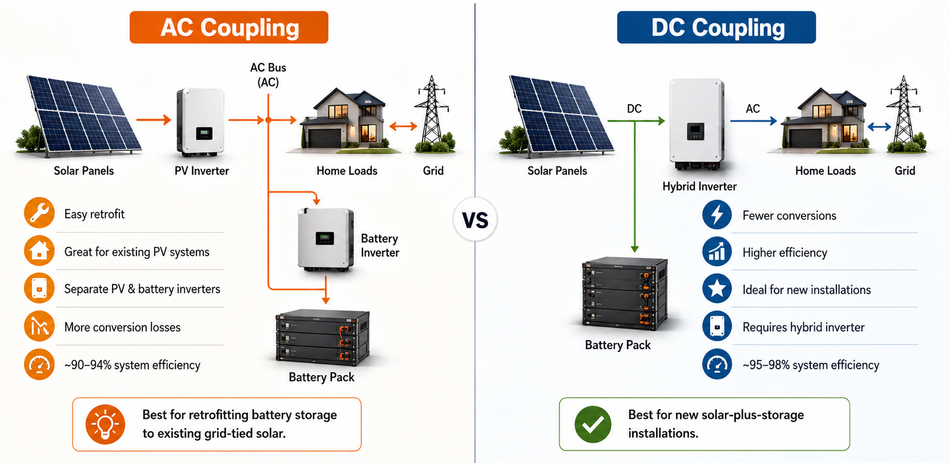
AC Coupling connects the battery system to the AC side of the PV inverter. This approach is useful when adding battery storage to an existing grid-tied solar installation because it allows the original PV inverter to remain in place. It also offers design flexibility, as the battery inverter can be installed separately from the solar inverter. Multiple inverters can improve redundancy, and the system can be expanded without redesigning the entire PV array.
However, AC-coupled systems involve additional power conversion stages. Solar energy is first converted from DC to AC by the PV inverter, then converted back to DC to charge the battery, and finally converted back to AC again to supply loads. These extra conversions increase cost and reduce overall efficiency. AC coupling is therefore practical for retrofits but may be less efficient for fully off-grid homes or new installations designed around maximum round-trip efficiency.
DC Coupling connects the solar array and battery on the DC side of a hybrid inverter or charge controller. This reduces conversion losses because solar energy can charge the battery directly before being converted to AC for loads. DC-coupled systems can also support PV array oversizing relative to inverter capacity, improve round-trip efficiency, and reduce equipment cost in new builds. [3]
The trade-off is reduced flexibility. DC coupling usually requires a dedicated hybrid inverter and more careful system design. If the main inverter fails, both PV generation and battery output may be affected. Installation can also be more complex because the PV array, battery capacity, charge control, BMS, and inverter must be designed as an integrated system.
Integration with Hybrid and Off-Grid Inverters
Hybrid inverters combine PV MPPT inputs, battery DC input, and grid AC interface in a single unit. They communicate with the BMS to manage charging/discharging, grid export, and islanding. Off-grid inverters are designed for standalone operation and must supply sufficient surge current to start inductive loads. Upon sizing, ensure that the continuous and surge ratings of the inverter match the load profile. High-voltage battery systems (200-400 V DC) improve efficiency in larger systems but require more cells and complex BMS coordination. Low-voltage systems (12 V/24 V/48 V) are simpler but carry higher currents, requiring thicker cables and busbars.
System Sizing and Design Calculations
Steps for Sizing a Lithium-Ion Solar Battery Bank
Determine Daily Energy Consumption: Sum the energy usage of all loads (Wh/day). For example, a cabin consuming 5 kWh per day.
Choose Desired Days of Autonomy: Off-grid systems typically require 3-5 days of autonomy; grid-connected backup may require only 8-24 hours. Suppose 2 days are desired.
Select Depth of Discharge (DoD): For LiFePO4, 80% DoD is common; deeper discharge shortens life but reduces battery cost. DoD of 80% means a 0.8 factor.
Account for Round-Trip Efficiency and Inverter Losses: Multiply by system efficiency (e.g., 90% for MPPT plus inverter). For simplicity, include this later if designing conservatively.
Calculate Required Energy Capacity: The required battery capacity is calculated as: Total Battery Capacity = Daily Energy × Days of Autonomy ÷ DoD. For a 5 kWh daily load with 2 days of autonomy and 80% DoD, the required capacity is: Required Capacity = (5 kWh × 2 days) ÷ 0.8 = 12.5 kWh.
Add Safety Margin: Increase capacity by 20-30% to account for ageing, temperature extremes and unexpected loads.
Select Battery Modules: Divide the total required capacity by the usable capacity of the chosen modules. For example, using 2.5 kWh LFP modules with 100% usable capacity, a 12.5 kWh bank requires five modules.
Worked Example: Off-Grid Cabin
Suppose an engineer designs an off-grid cabin with a daily load of 3 kWh. The owner requires three days of autonomy and uses LiFePO4 batteries with an 80% DoD. The MPPT-inverter system has a round-trip efficiency of 90%.
Initial Capacity: 3 kWh × 3 days ÷ 0.8 = 11.25 kWh
Adjust for Efficiency: 11.25 kWh ÷ 0.90 ≈ 12.5 kWh
Add 20% Reserve: 12.5 kWh × 1.20 = 15 kWh
Module Selection: Using 3 kWh LFP modules yields 5 modules (15 kWh). Each module may weigh ~30 kg and deliver 3 kW continuous power; ensure the inverter can handle the combined surge.
Considerations for High-Voltage vs Low-Voltage Systems
Low-Voltage Systems (12-48 V): Common in RVs, tiny homes and small off-grid cabins. They allow the use of inexpensive charge controllers and inverters but require high current, leading to thicker cables and higher conduction losses.
High-Voltage Systems (100-400 V): Reduce current and wiring cost but require specialized BMS and isolation. They are common in commercial systems and integrate easily with three-phase hybrid inverters.
C-Rates and Load Management
C-Rate defines charge or discharge current relative to battery capacity. 1C discharge rate means the battery can theoretically discharge its full capacity in one hour. Lithium-ion solar batteries are commonly rated at around 0.5C for charging and 1C for discharging, although exact limits depend on chemistry, cell design, and BMS configuration. [7]
During system design, engineers must ensure that peak loads do not exceed the continuous discharge rating of the battery. The charging current of the inverter should also remain within the manufacturer’s recommended range. Proper C-rate management reduces thermal stress, protects cycle life, prevents BMS shutdowns, and supports reliable long-term operation.
Recommended Reading: Critical Design Considerations in Estimating the State of Lithium-ion Batteries
Comparison of Lithium-Ion and Lead-Acid for Solar Storage
Once comparing lithium-ion and lead-acid batteries for solar storage, LiFePO4 provides clear engineering advantages in usable capacity, efficiency, lifespan, maintenance, and system footprint.
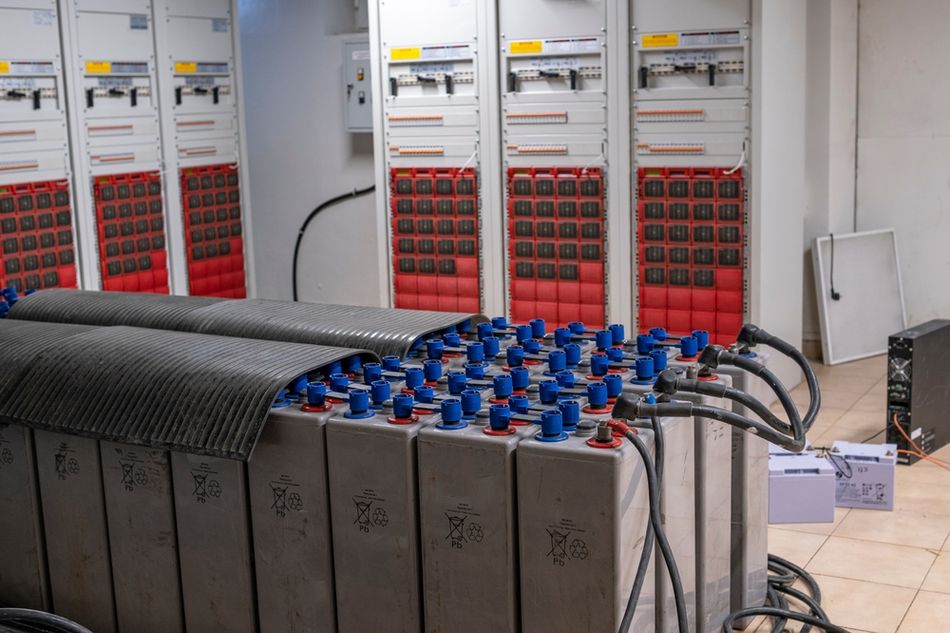
Below is the detailed comparison:
One of the most important differences is the usable Depth of Discharge (DoD). LiFePO4 batteries typically operate at 80–100% of their nominal capacity, while AGM and gel lead-acid batteries are usually limited to about 50% DoD to protect cycle life. [4] This means a lithium-ion solar battery bank can be smaller in nominal capacity while still delivering the same usable energy. The result is lower weight, reduced footprint, and easier integration in wall-mounted, stackable, RV, marine, and residential solar applications.
Round-Trip Efficiency is another major advantage. LiFePO4 systems commonly exceed 95% efficiency, while lead-acid batteries may operate across a much wider and often lower efficiency range depending on battery type, age, temperature, and state of charge. Higher efficiency reduces wasted solar energy, shortens recharge time, and may reduce the required PV array size for the same load profile.
Cycle Life also strongly favors lithium-ion technology. A high-quality lithium iron phosphate battery can deliver thousands of cycles at the recommended depth of discharge, while AGM and gel lead-acid batteries typically provide only several hundred to around 1,500 cycles. For systems cycled daily, this difference directly affects replacement frequency and long-term reliability.
Maintenance Requirements are also different. LiFePO4 batteries are sealed, maintenance-free, and managed by a BMS that monitors voltage, current, temperature, SOC, and protection limits. Flooded lead-acid batteries require water top-ups, equalization, ventilation, and periodic inspection. Even sealed AGM and gel batteries still require monitoring to prevent sulfation, overcharging, and capacity loss.
Weight and Installation Flexibility further support lithium-ion adoption. For the same usable energy, LiFePO4 batteries are significantly lighter than lead-acid batteries. This is important in off-grid homes, rooftop installations, mobile solar systems, and marine environments where structural loading and space are design constraints.
Temperature Performance must be managed in both technologies. LiFePO4 batteries typically require controlled charging above freezing and protection against high-temperature operation. However, the battery management system can support thermal sensors, charge cut-off, self-heating, fans, or system shutdown logic. Lead-acid batteries also degrade rapidly at elevated temperatures and lose capacity in cold conditions.
Economic Analysis
Once lithium-ion packs cost more upfront, their longer lifespan, higher efficiency and greater usable capacity reduce the levelized cost of storage (LCOS). Engineers evaluating total cost of ownership should consider cycle life, efficiency, maintenance and replacement costs. Models show that LiFePO4 often becomes cost-competitive or cheaper than lead-acid within 5-7 years of operation when cycling daily.
Degradation and Lifespan
Depth of Discharge vs Cycle Life
Battery life depends on the depth of each discharge. LiFePO4 battery discharged to 80-90% DoD achieves 10-15 years of calendar life and 5,000-8,000 cycles, while deeper discharges reduce life to 7-12 years and 2,000-5,000 cycles. Lead-acid batteries exhibit a more pronounced decline: cycling at 50% DoD yields 500-1,500 cycles.
Calendar Ageing and Temperature
Even without cycling, lithium-ion cells degrade over time due to electrolyte breakdown and passive film growth. High temperatures accelerate calendar ageing. Maintaining storage SOC around 40-60% and ambient temperature within the optimal 15-35 °C range prolongs lifespan. Some advanced BMS modules implement periodic rest periods, limit time at full charge and adjust charge voltages seasonally to mitigate ageing.
Recommended Reading: What Is LiFePO4? Engineering Guide to Lithium Iron Phosphate Batteries
Future Trends and Emerging Technologies
Solid-State Batteries: Replacing liquid electrolyte with solid ceramic or polymer promises higher energy density and improved safety. Prototype solid-state LFP cells achieve 300 Wh/kg. Commercial deployment for stationary storage may occur in the early 2030s.
Sodium-Ion Batteries: Abundant raw materials and improved high-temperature tolerance make sodium-ion batteries attractive for large-scale storage. Cycle life is currently lower than that of LiFePO4, but research is accelerating.
Advanced BMS and AI: Machine learning algorithms in BMSs can predict cell aging and dynamically adjust operating parameters. Integration with smart inverters enables dynamic dispatch, peak shaving and grid services.
Integrated Microgrids: PV, storage, electric vehicle chargers, and controllable loads will increasingly be managed by a unified energy management system. Standardized communication protocols like OpenADR and IEC 61850 will facilitate interoperability.
Recommended Reading: Enhancing Battery Health with Machine Learning
Conclusion
Lithium-ion solar batteries have transformed energy-storage systems with their high usable capacity, long cycle life and superior efficiency compared with lead-acid. LiFePO4, in particular, provides unmatched thermal stability and longevity, making it the dominant chemistry for stationary solar storage. Engineers must understand the characteristics of different chemistries, implement robust battery management systems, and size systems correctly using formulas that account for depth of discharge and days of autonomy. Proper integration with MPPT charge controllers and hybrid inverters, adherence to safety standards such as UL 9540 and IEC 62619, and attention to thermal management ensure reliable and safe operation. As emerging technologies like solid-state and sodium-ion batteries mature, the principles outlined here will remain foundational to designing resilient and efficient solar energy storage systems.
Frequently Asked Questions
Q. What is the difference between LiFePO4 and NMC lithium-ion batteries for solar storage?
A. LiFePO4 uses lithium iron phosphate cathodes, prioritizing thermal stability, long cycle life, and safe deep cycling. NMC offers high energy density in a smaller footprint, but needs stricter BMS control. For stationary solar panels and storage, LiFePO4 is usually preferred.
Q. What is depth of discharge (DoD) and why is it important?
A. DoD is the percentage of stored energy used before recharging. Higher DoD increases usable capacity but can reduce cycle life. LiFePO4 performs well at 80% DoD, making it suitable for deep-cycle batteries.
Q. Are lithium-ion solar batteries safe?
A. Yes, when properly engineered. LiFePO4 chemistry is stable and less prone to thermal runaway. A BMS monitors voltage, current, temperature, and SOC, while UL 9540 and UL9540A testing support safer system-level deployment.
Q. Can I use any solar charge controller with a lithium-ion battery?
A. Lithium-ion batteries need precise CC-CV charging and correct voltage limits. MPPT charge controllers are preferred because they harvest more energy from solar panels and regulate charging better than PWM units in modern solar systems.
Q. How long do lithium-ion solar batteries last?
A. Quality LiFePO4 solar batteries commonly last 8–12 years, with many products offering a 10-year warranty. Actual lifespan depends on DoD, temperature, charge settings, BMS quality, C-rate, and daily cycling conditions.
Q. Do lithium-ion batteries need thermal management in off-grid installations?
A. Not exactly. Tesla Powerwall is a complete home energy storage product with integrated electronics and controls. LiFePO4 is a battery chemistry commonly used in modular solar batteries, wall-mounted systems, and scalable storage designs.
References
[1] SolaX Power. Depth of Discharge (DoD) Explained: Extend Battery Life [Cited 2026 June 28]; Available at: Link
[2] Synopsys. What is a Battery Management System (BMS)? How It Works [Cited 2026 June 28]; Available at: Link
[3] RatedPower. AC vs DC-coupled BESS: Pros and Cons [Cited 2026 June 28]; Available at: Link
[4] Renogy. Comprehensive LiFePO4 Voltage Chart Guide for Off-Grid Systems [Cited 2026 June 28]; Available at: Link
[5] EnergySage. Lithium-ion vs Lead-Acid Batteries: How Do They Compare? [Cited 2026 June 28]; Available at: Link
[6] UL Solutions. UL 9540A Test Method for Battery Energy Storage Systems (BESS) [Cited 2026 June 28]; Available at: Link
[7] MDPI Electronics. Evaluation of Charging Methods for Lithium-Ion Batteries [Cited 2026 June 28]; Available at: Link
[8] UL Solutions. UL 991 / UL 1998: Safety-Related Controls and Software in Programmable Components [Cited 2026 June 28]; Available at: Link
in this article
1. Key Takeaways2. Introduction3. Evolution from Lead-Acid to Lithium-Ion in Solar Storage4. Lithium-Ion Chemistry Selection for Solar Systems5. Battery Management Systems6. Charge Control and System Integration7. System Sizing and Design Calculations8. Comparison of Lithium-Ion and Lead-Acid for Solar Storage9. Degradation and Lifespan10. Future Trends and Emerging Technologies11. Conclusion12. Frequently Asked Questions13. References