EV Charging Connector Types: AC, CCS, Tesla, CHAdeMO
This article explains EV charging connector types, including AC, CCS, Tesla, CHAdeMO, GB/T, and NACS, with regional compatibility.

22 Jun, 2026. 15 minutes read
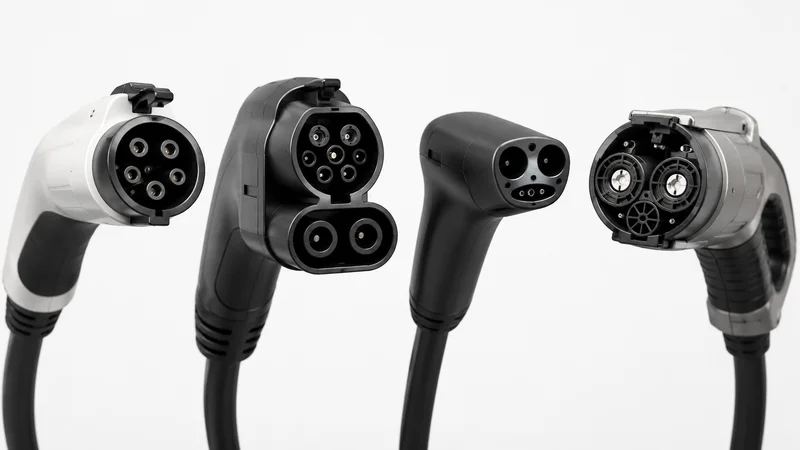
EV Charging Connector Types for AC, CCS, Tesla/NACS, and CHAdeMO Systems
Key Takeaways
AC vs. DC Architectural Split – EV charging connector types are best understood by separating AC charging from DC fast charging. AC feeds the vehicle onboard charger, while DC fast charging bypasses it.
Type 1 Standard – Type 1, or SAE J1772, is the main single-phase AC connector for North America and Japan. It is also commonly called the J-plug.
Type 2 Standard – Type 2, often called Mennekes, is the dominant European AC connector and uniquely supports both single-phase and three-phase AC power configurations.
Combined Charging System (CCS) – CCS adds two high-current DC pins below an AC connector: CCS1 extends Type 1, while CCS2 extends Type 2.
CHAdeMO Legacy Ecosystem – CHAdeMO is a DC-only Japanese fast-charging standard, now mostly important for Japan and legacy vehicles such as older Nissan Leaf configurations.
NACS Consolidation – NACS, standardized as SAE J3400 and derived from the Tesla connector, is the major North American transition standard for both AC charging and DC fast charging.
Introduction
The connector is the visible part of an EV charging system, but it is also a compact expression of the electrical architecture behind it. Beyond plug shape, each connector reflects regional standards, current type, communication protocol, voltage capability, cable design, and compatibility with the vehicle inlet. For engineers, fleet operators, and technical buyers, understanding EV charging connector types is essential for selecting reliable charging equipment and planning future-ready infrastructure.
The main EV charging plug types for light-duty vehicles are SAE J1772 / Type 1, Type 2 / Mennekes, CCS1, CCS2, CHAdeMO, GB/T AC, GB/T DC, and NACS / SAE J3400. Tesla is a special case because its connector strategy differs by region: NACS in North America, Type 2 and CCS2 in Europe, and local-market standards elsewhere.
This article explains EV charging connector types by separating AC and DC charging, then comparing regional standards and practical use cases. By understanding EV charging connector types, readers can better evaluate vehicle compatibility, charger deployment, and long-term infrastructure decisions.
AC Charging Connectors: Type 1, Type 2, GB/T AC, and NACS
AC charging means the charging station supplies alternating current to the vehicle. The onboard charger of the vehicle converts that AC into DC for the battery. This is why two cars connected to the same Level 2 charging station may charge at different rates: the EVSE and circuit set the upper boundary, but the onboard charger often determines the actual power.
Type 1 / SAE J1772, the North American and Japanese J-Plug
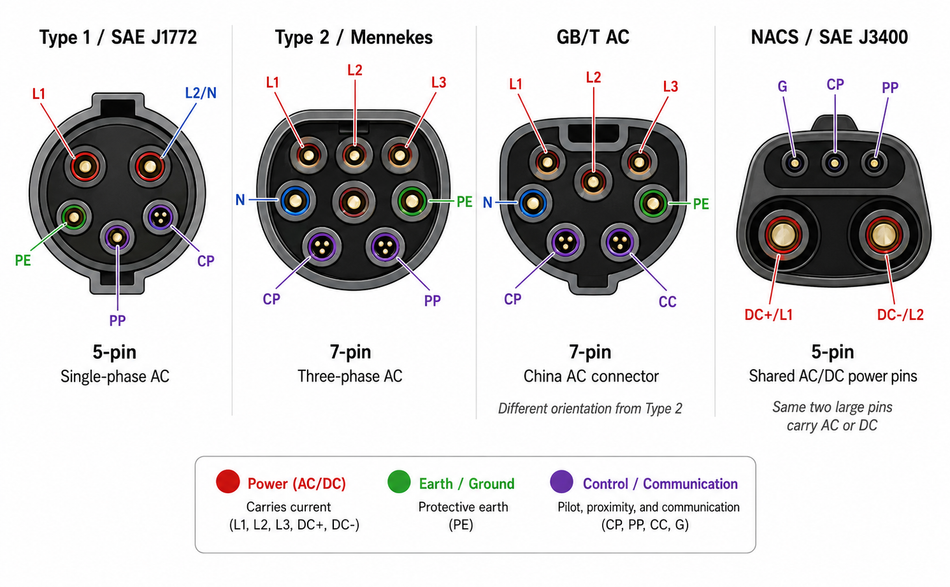
Type 1 is the IEC 62196 name for the five-pin SAE J1772 connector. In North America, it is used for Level 1 charging from 120 V supplies and Level 2 charging from 208 V or 240 V supplies. It is an AC-only, single-phase connector. Common residential installations are often 32 A to 48 A, roughly 7.7 kW to 11.5 kW at 240 V, while the broader J1772 AC Level 2 envelope is commonly cited up to 19.2 kW at 80 A. [1]
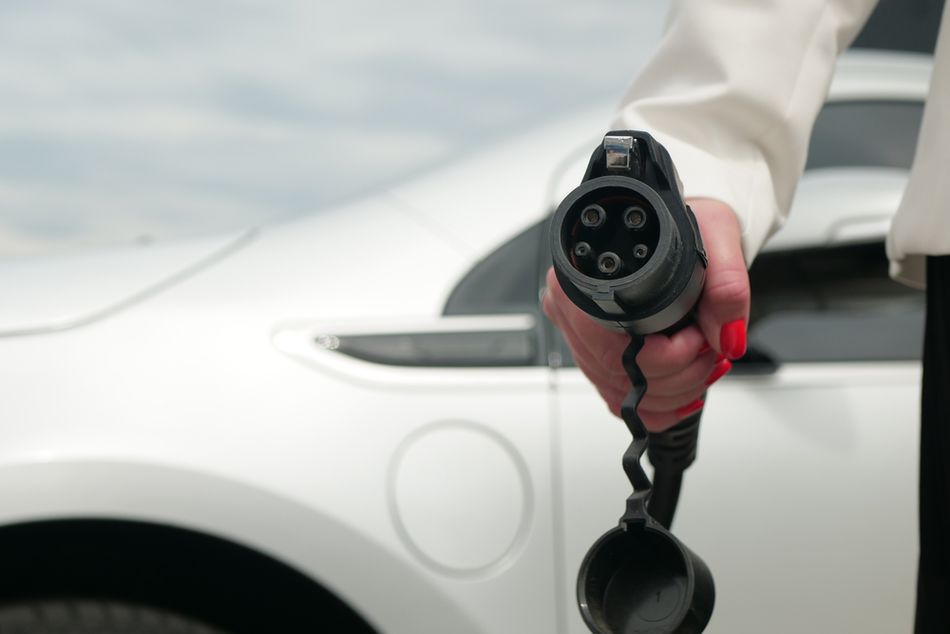
The Type 1 pin set includes two AC conductors, protective earth, control pilot, and proximity pilot. The control pilot handles basic charge-state and current signaling. The proximity circuit supports plug detection and latch behavior. Type 1 cannot provide DC fast charging on its own. To add DC, the vehicle inlet must become CCS Type 1, with two additional high-current DC contacts below the J1772 section.
Type 2 / Mennekes, the European AC Standard
Type 2, standardized under IEC 62196-2 and commonly called Mennekes, is the dominant AC connector in Europe and many other markets outside North America. It has seven contacts: L1, L2, L3, neutral, protective earth, control pilot, and proximity pilot. Its main advantage over Type 1 is three-phase capability. IEC 62196-2:2022 specifies that the accessory envelope must not exceed 480 V AC, with rated current not exceeding 63 A three-phase or 70 A single-phase.
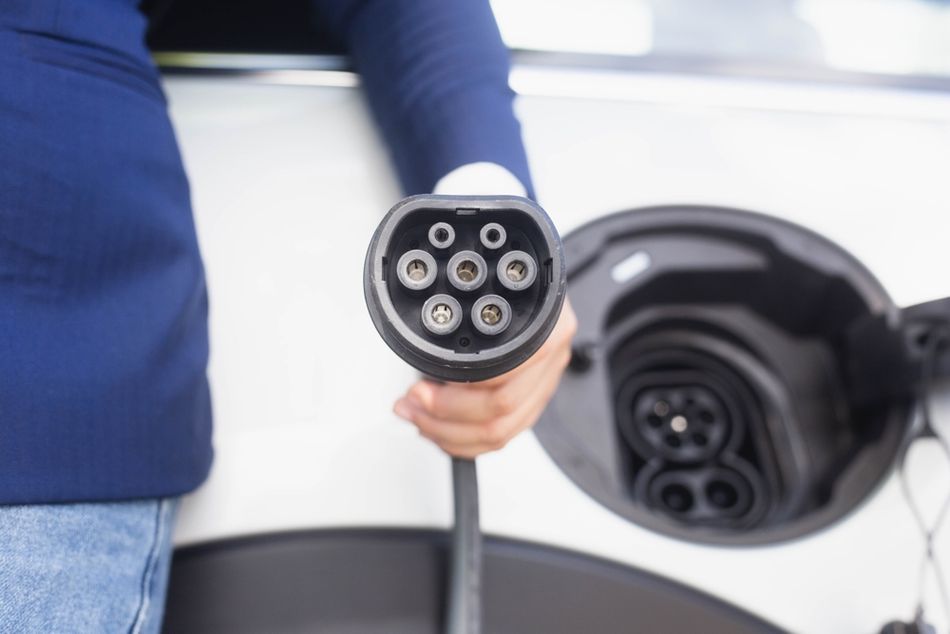
In practice, common Type 2 AC charging values are 7.4 kW single-phase, 11 kW three-phase, and 22 kW three-phase. Higher AC ratings exist in the standard ecosystem, but they are not the default for passenger cars because the onboard charger must be sized for the power. Many European public AC charging stations are socketed rather than tethered, so drivers carry a Type 2 charging cable. This reduces cable maintenance for the station operator but makes cable current rating part of the user or fleet specification.
GB/T AC, Chinese AC Connector
GB/T AC refers to the AC charging interface in the GB/T 20234 series in China. It is visually related to Type 2 but mechanically different, so it is not a Type 2 connector and should not be treated as interchangeable. China generally uses separate AC and DC vehicle interfaces rather than the CCS approach of adding DC pins below an AC inlet.
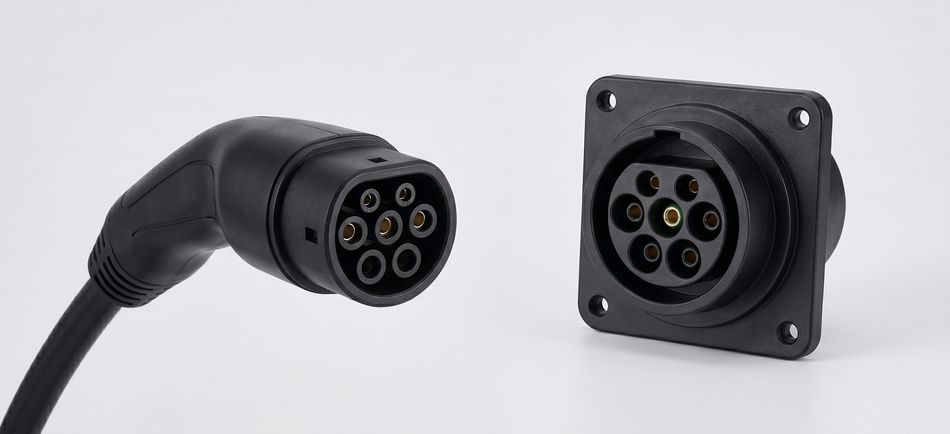
For passenger vehicles, common AC charging is often in the 7 kW class, although actual power depends on vehicle onboard charger capacity, grid connection, and station design. The important engineering point is architectural: GB/T AC is a regional AC connector, while GB/T DC is a separate high-power DC connector.
NACS / SAE J3400 for AC
NACS uses a compact five-pin connector. Under SAE J3400, the same two large power contacts can be used for AC or DC, accompanied by ground, control pilot, and proximity pilot contacts. [2] Tesla opened the connector design to other manufacturers in 2022, and the Joint Office states that SAE published the J3400 Technical Information Report in December 2023 for a standard based on the North American Charging Standard connector.
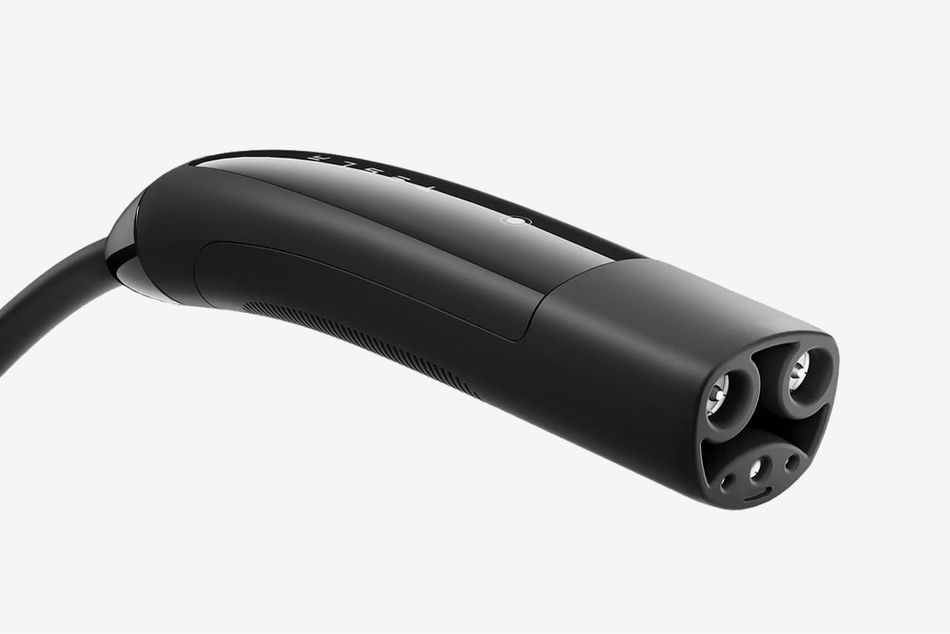
In North America, this gives one compact inlet the ability to support Level 1, Level 2 AC charging, and DC fast charging when the vehicle and charger implement the required electrical and communication behavior. SAE now commonly refers to NACS as the North American Charging System, although the market term North American Charging Standard remains widely used.
Recommended Reading: Soothing Range Anxiety - The Role of Connectors in EV Charging Stations
DC Fast Charging Connectors: CCS, CHAdeMO, GB/T DC, and NACS
DC fast charging uses an off-board power converter inside the charging station. The station rectifies grid power and supplies regulated DC to the vehicle battery system under limits set by the vehicle battery management system. The onboard charger is bypassed. This is why the same vehicle may accept 11 kW on AC but 150 kW, 250 kW, or more on DC.
Combined Charging System: CCS1 and CCS2
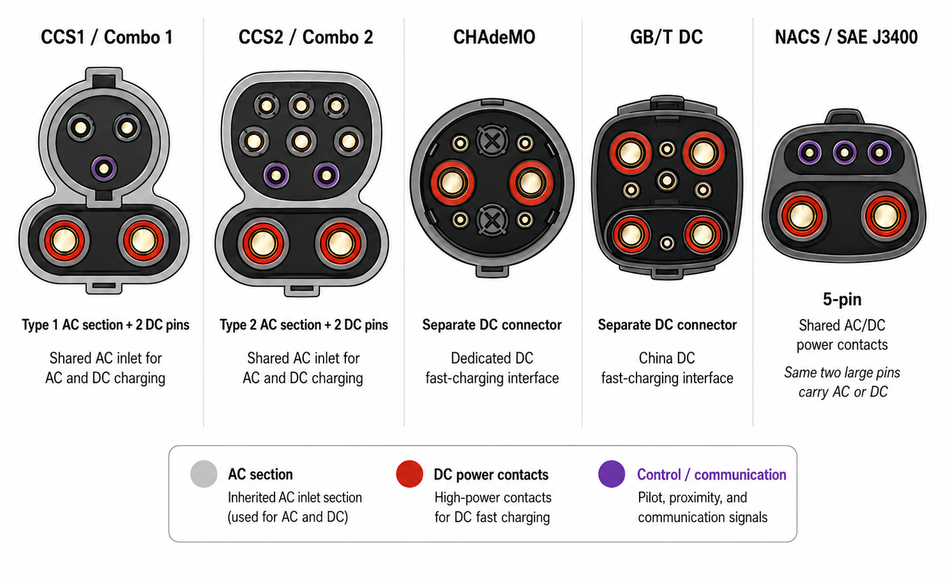
The combined charging system was designed to package AC and DC charging into one vehicle inlet. CCS is not one physical connector. CCS Type 1, also called CCS1 or Combo 1, adds two large DC contacts below the SAE J1772 / Type 1 interface. CCS Type 2, also called CCS2 or Combo 2, adds two large DC contacts below the Type 2 interface.
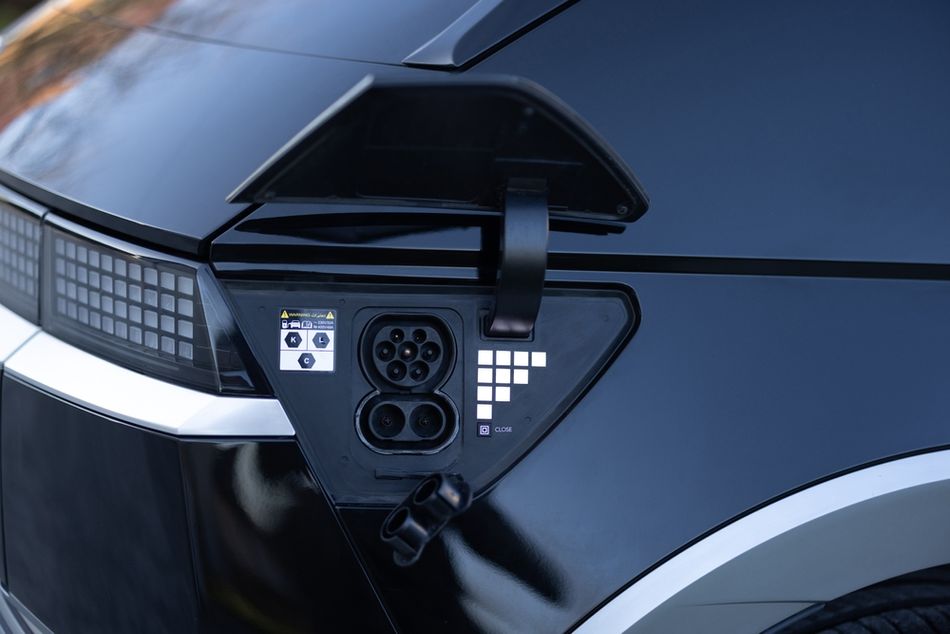
During AC charging, the vehicle uses the upper Type 1 or Type 2 section. During DC fast charging, the connector uses the lower DC pins plus shared safety and signaling contacts. The U.S. AFDC describes CCS as a J1772 combo connector that can use the same charge port for AC Level 1, Level 2, and DC fast charging, with the DC connector adding two bottom pins.
CCS has a clear packaging advantage over separate-port systems: one vehicle inlet supports local AC charging and road-trip DC fast charging. Its tradeoff is physical size. CCS1 and CCS2 plugs are larger than the AC-only connectors, and high-power charging cables can become heavy unless liquid cooling is used.
CHAdeMO, the Japanese DC Legacy Standard
CHAdeMO is DC-only. It does not provide AC charging, so vehicles that use CHAdeMO also need a separate AC connector, such as Type 1. The Nissan Leaf is the best-known example in North America: many older Leaf model years use SAE J1772 for Level 1 and Level 2 AC charging and CHAdeMO for DC fast charging.

CHAdeMO matters historically because it was among the first widely deployed DC fast-charging systems. It also supported bidirectional power use cases earlier than many competing public charging ecosystems. The legacy CHAdeMO connector is physically large and is commonly associated with 50 kW-class chargers, although later specifications and the ChaoJi collaboration target much higher power levels. CHAdeMO states that its latest Protocol 3.0, through the CHAdeMO/CEC collaboration, allows up to 900 kW, with ChaoJi demonstrations at up to 600 A and 1.5 kV.
Outside Japan, CHAdeMO is usually a legacy-support consideration rather than the default for new public DC fast charging stations.
GB/T DC, Chinese DC Connector
GB/T DC is a separate DC charging interface in China, specified under GB/T 20234.3. It is neither CCS nor CHAdeMO. The official Chinese national-standard entry identifies GB/T 20234.3-2023 as "Connection set for conductive charging of electric vehicles, Part 3: DC charging coupler."
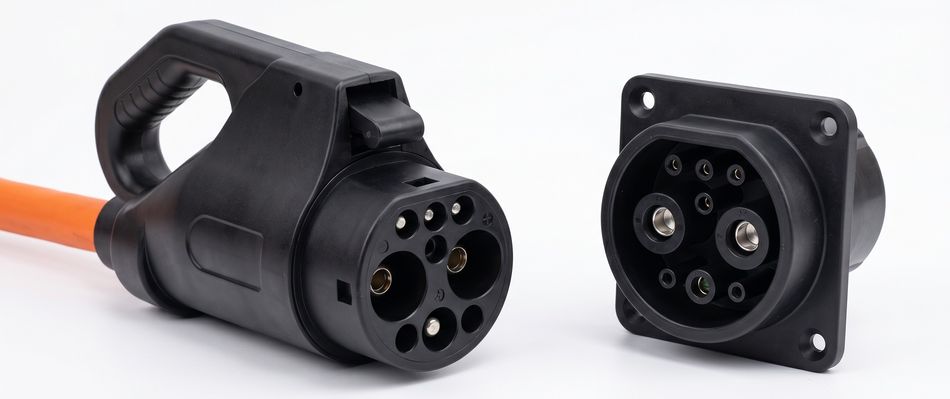
Chinese approach differs from CCS in that the vehicle typically has separate AC and DC ports. This can simplify connector specialization but does not provide the single-inlet convenience of CCS or NACS. As with all DC systems, practical charging speed depends on station power, vehicle voltage, current limits, thermal limits, battery temperature, and state of charge.
NACS / SAE J3400 for DC and Tesla Supercharger Access
For DC, NACS uses the same compact connector as AC, but the two main power pins carry DC rather than AC. This shared-pin design is the major physical difference from CCS, which enlarges the inlet by adding a separate pair of DC contacts.
The 2023 to 2025 North American shift is not only about the plug. It also involves access to the Tesla Supercharger network, automaker agreements, vehicle software, charger generation, approved adapters, and payment or plug-and-charge workflows. Several manufacturers announced adoption of the J3400 connector beginning as early as 2025, according to AFDC.
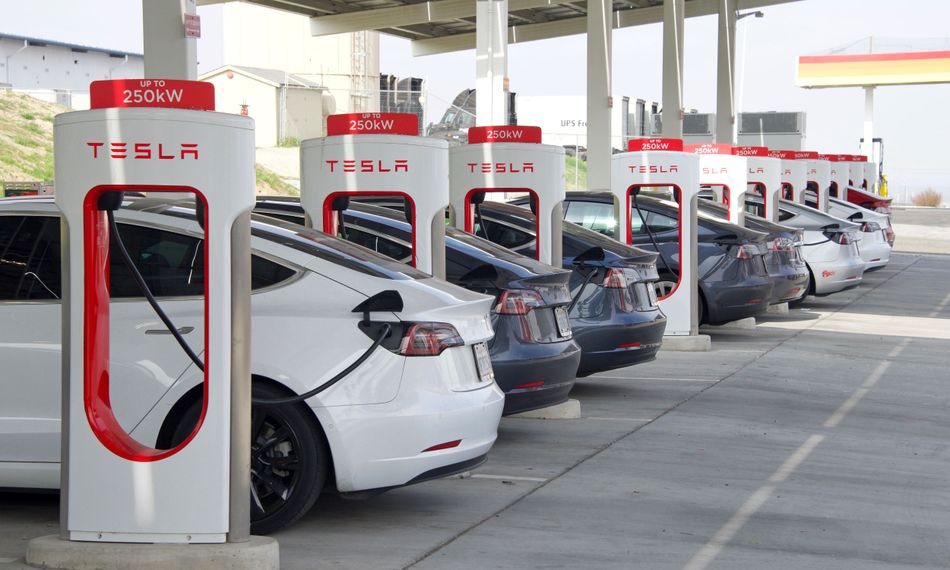
For the installed base, adapters will remain important. The CCS1 vehicle may need an approved adapter to use a compatible NACS cable. On the other hand, a NACS vehicle may need an adapter to use an older CCS1 DC fast charging station. Procurement documents should specify the cable-side and vehicle-inlet-side, because "CCS-to-NACS adapter" can be interpreted in either direction.
Recommended Reading: High Voltage Protection in DC Fast Charging
Regional Differences: What Fits Where?
Connector compatibility is regional. The same EV model name can have different inlet hardware depending on market, and imported vehicles may require specialized equipment.
| Region / Market | Dominant AC Connector | Dominant DC Connector | Practical Notes |
| North America | SAE J1772 / Type 1; NACS / SAE J3400 growing | CCS1 historically; NACS / SAE J3400 expanding | Mixed CCS1 and NACS fleets during transition. |
| Europe and UK | Type 2 / Mennekes | CCS2 / Combo 2 | Public charging interoperability is built around Type 2 AC and Combo 2 DC. |
| China | GB/T AC | GB/T DC | Separate AC and DC charging interfaces are common. |
| Japan | Type 1 AC on many vehicles | CHAdeMO legacy and domestic use | CHAdeMO remains more relevant in Japan than in North America or Europe. |
| Tesla North America | NACS / SAE J3400 | NACS / SAE J3400 | Formerly proprietary Tesla hardware, now standardized through SAE. |
| Tesla Europe | Type 2 AC | CCS2 | Europe did not standardize on North American NACS. |
European public charging policy is especially clear. EU Materials identify Type 2 for AC recharging and Combo 2 for DC recharging, with current delegated regulation text updating references to EN IEC 62196-2:2022 and EN IEC 62196-3:2022 for relevant newly installed or renovated recharging points. [3]
The key practical point is that "Tesla Connector" is not a global standard. The North American Tesla uses NACS. A modern European Tesla uses Type 2 for AC and CCS2 for DC. A U.S.-market Tesla imported into Europe is therefore not automatically compatible with European public DC infrastructure.
Connector Comparison Table
The numbers below are planning values, not universal guarantees. Maximum power output is constrained by the lowest-rated part of the system: charger, vehicle inlet, cable, connector contacts, grid connection, battery voltage, pack temperature, and software charge curve.
| Connector | AC / DC | Standard Name | Main Region | Typical Light-Duty Power Context |
| Type 1 | AC | SAE J1772; IEC 62196 Type 1 | North America, Japan | Level 1: about 1.4–1.9 kW; Level 2: up to 19.2 kW |
| Type 2 | AC | IEC 62196-2 Type 2; Mennekes | Europe, UK, many other markets | 7.4 kW single-phase; 11 or 22 kW three-phase common |
| GB/T AC | AC | GB/T 20234.2 | China | About 7 kW common for passenger-car AC use |
| CCS1 | DC + shared AC inlet | Combined Charging System Type 1; Combo 1 | North America, some other markets | 50–350 kW common public DC range |
| CCS2 | DC + shared AC inlet | Combined Charging System Type 2; Combo 2 | Europe, UK, Australia, many other markets | 50–350 kW common public DC range |
| CHAdeMO | DC | CHAdeMO | Japan, legacy global deployments | 50 kW common legacy; later CHAdeMO / ChaoJi work targets much higher |
| GB/T DC | DC | GB/T 20234.3 | China | Site and vehicle dependent |
| NACS | AC and DC | SAE J3400; North American Charging System / Standard | North America | AC Level 2 comparable to J1772 systems; DC depends on charger and vehicle |
Practical Tradeoffs for Engineering and Fleet Planning
Single-Phase Versus Three-Phase AC
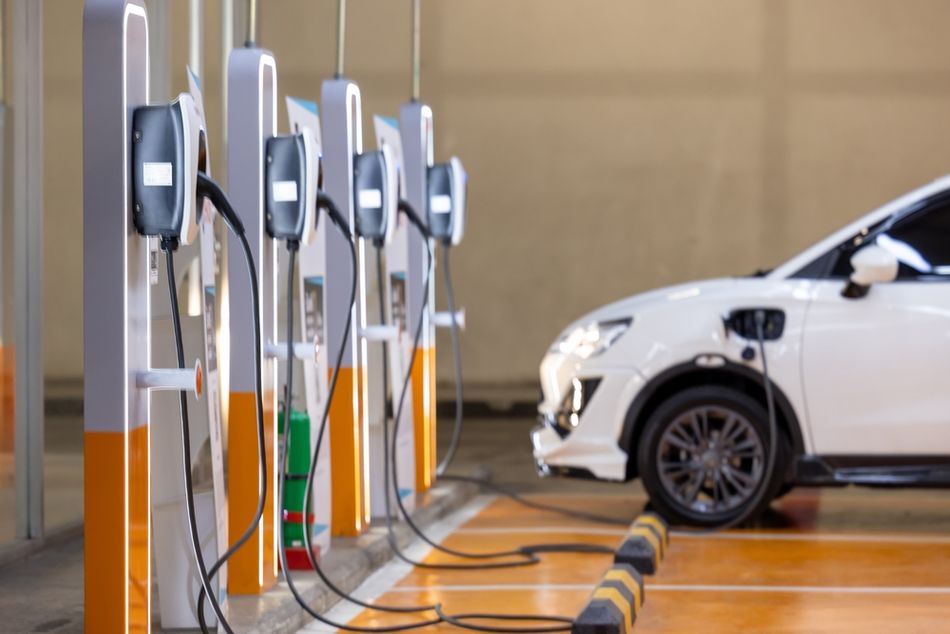
Single-phase AC is simple and maps well to North American homes. Type 1 and NACS AC both fit that environment. The limitation is current. To increase power on a single-phase AC system, the system needs higher current, larger conductors, greater panel capacity, and more thermal margin.
Three-phase AC is the main advantage of Type 2 in Europe. At 400 V three-phase, 16 A can provide about 11 kW and 32 A can provide about 22 kW, assuming the vehicle onboard charger can use all three phases. For fleets, three-phase Type 2 charging can reduce dwell time without requiring DC fast charging stations at every parking bay.
Cable Weight and High-Power Charging
High-power charging is not only a voltage problem. It is a heat problem. Current through contacts and conductors produces losses, and those losses rise with current. Larger copper conductors reduce resistance but make the charging cable heavier. Liquid-cooled DC cables improve handling at high current but add cost, maintenance, coolant monitoring, and failure modes.
NACS has an ergonomic advantage due to its compact connector body. CCS has a deployment advantage because it is widely standardized across many vehicle and charger vendors. CHAdeMO and GB/T have regional installed bases, but they do not provide cross-region interoperability without adapters or separate inlets.
Locking, Interlocks, and Safe Disconnect
The automatic locking mechanism is part of the safety architecture. A connector should not be removable under load, especially during DC fast charging. Type 2 systems typically use a vehicle-side or station-side lock. CCS and NACS DC sessions require secure latching and software-controlled contactor sequencing. SAE J1772 includes a mechanical latch and proximity signaling, and many vehicles add a charge-port lock pin to prevent unauthorized unplugging.
Locking is not only anti-theft. It protects contacts from arcing, confirms connector seating, preserves pilot-signal integrity, and helps the vehicle and charging station sequence power safely.
Adapter Strategy During the NACS Transition
Adapters are useful, but they are not universal compatibility devices. The passive AC adapter can be straightforward when signaling and current limits align. A DC fast charging adapter is more demanding because it must handle high current, temperature rise, mechanical retention, proximity signaling, and communication expectations.
During the North American NACS transition, use automaker-approved adapters and verify software authorization. Physical fit does not guarantee access to a Tesla Supercharger site or to any other DC fast-charging network. For fleet procurement, specify adapters by direction: NACS cable to CCS1 vehicle inlet, or CCS1 cable to NACS vehicle inlet.
Home Charger Setup
For a home charger, connector choice is usually simpler than circuit design. In North America, a legacy non-Tesla EV often uses J1772, while Tesla and many new vehicles use NACS/SAE J3400. In Europe, the normal answer is Type 2. In China, it is GB/T AC.
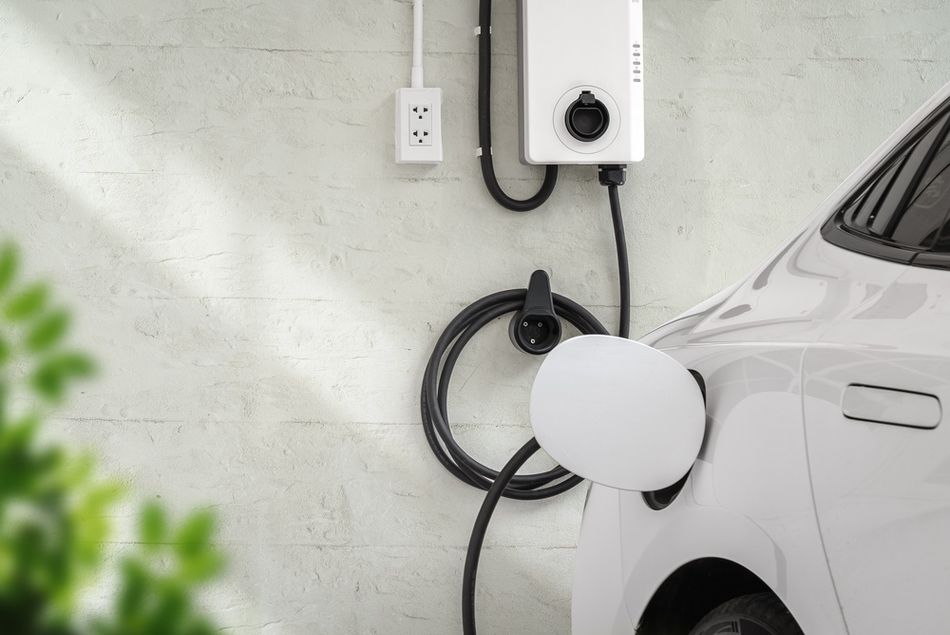
The typical 240 V, 40 A circuit supplying a 32 A EVSE may be sufficient for overnight use. Higher-power Level 2 AC charging can be useful, but only if the vehicle onboard charger can use it. For many drivers, charging consistency matters more than peak charging speed.
Recommended Reading: EV Charging Levels: Level 1, Level 2, DC Fast Charging
Real Examples: Tesla, Nissan Leaf, and Plug-In Hybrids
North American Tesla is the clearest example of NACS. The same inlet can support home AC charging, Tesla Destination Charging, and DC fast charging on the Tesla Supercharger network. As SAE J3400 adoption expands, non-Tesla vehicles in North America will increasingly use the same connector natively, although access to specific stations still depends on vehicle support, network authorization, and charger hardware.
The European Tesla is different. Modern Tesla vehicles in Europe use Type 2 for AC and CCS2 for DC fast charging. That allows them to use the same public connector ecosystem as other European EVs For engineers supporting imported vehicles, this distinction is critical: a North American NACS vehicle is not automatically compatible with European CCS2 infrastructure. [4]
The Nissan Leaf illustrates legacy split-port design. Many Leaf model years use the J-plug for AC and CHAdeMO for DC. That can work well where CHAdeMO infrastructure exists, but it becomes a planning constraint in markets where new DC fast charging stations prioritize CCS or NACS. A used Leaf may be a sound local vehicle, but fleets should verify DC coverage before assigning it to routes that require frequent fast charging.
Plug-in hybrid vehicles usually have smaller batteries and often do not need DC fast charging. Many plug-in hybrid models are AC-only, using Type 1, Type 2, or a regional equivalent. For PHEV operations, connector availability at home, work, and depots often matters more than high-power public DC charging.
Recommended Reading: Electric Vehicle Charging Station from Public Electricity and Solar Panels
What Changes Next?
The connector map is consolidating, but it is not becoming global. Europe is anchored on Type 2 and CCS2. China is anchored on GB/T. Japan retains CHAdeMO relevance while participating in ChaoJi development. [5] North America is moving from a split CCS1 and Tesla ecosystem toward NACS / SAE J3400, with adapters bridging the installed base.
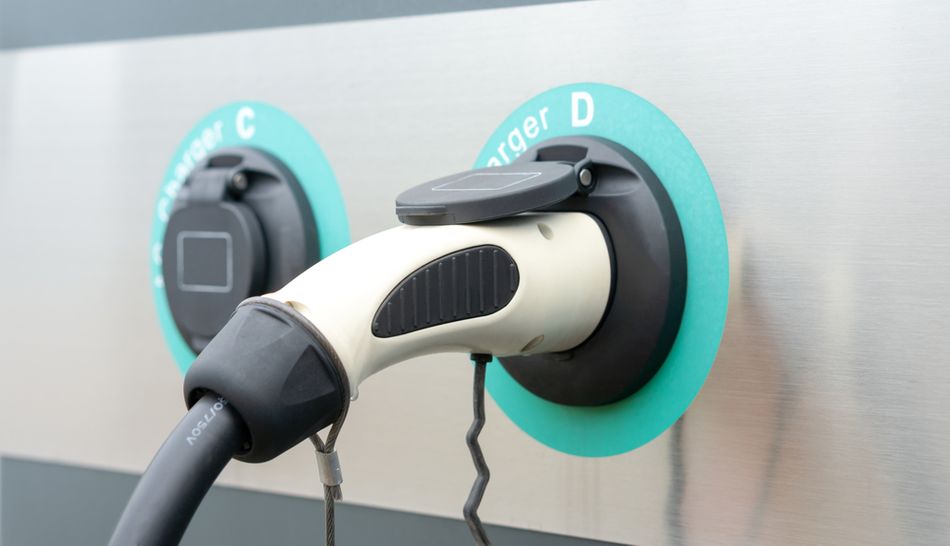
The engineering frontier is shifting from plug shape to system reliability: thermal management, contact wear, cable reach, charger uptime, automated authentication, ISO 15118 plug-and-charge behavior, and site power. Heavy-duty vehicles will also push beyond light-duty assumptions through megawatt-class charging systems.
For light-duty EVs, the practical forecast is clear. AC charging remains the everyday energy source. DC fast charging remains the road-trip and high-utilization tool. CCS2 will remain central in Europe, GB/T will remain central in China, CHAdeMO will become increasingly legacy outside Japan, and NACS / SAE J3400 will dominate new North American connector planning.
Recommended Reading: The Future of EV Charging
Conclusion
EV charging connector types are best understood as a matrix of current type and region. AC charging connectors such as SAE J1772 Type 1, Type 2 / Mennekes, GB/T AC, and NACS supply the vehicle onboard charger. DC fast-charging connectors such as CCS, CHAdeMO, GB/T DC, and NACS deliver regulated DC from off-board equipment to the vehicle battery system. The combined charging system packages AC compatibility and DC fast charging into one enlarged inlet, while Tesla-derived NACS uses a smaller shared-pin architecture standardized as SAE J3400.
The regional picture is just as important. CCS2 and Type 2 define the mainstream European experience. GB/T defines China. CHAdeMO remains important for Japan and legacy vehicles such as older Nissan Leaf configurations. North America is undergoing a major migration from CCS1 and proprietary Tesla hardware to NACS/SAE J3400. In the near term, adapters and mixed-infrastructure support will be as important as native ports. In the long term, connector decisions will be judged by interoperability, uptime, thermal margin, cable ergonomics, and whether the charging network can deliver the power the vehicle can actually accept.
Frequently Asked Questions
Q. What are the main EV charging connector types?
A. The main EV charging connector types include Type 1 / SAE J1772, Type 2 / Mennekes, CCS1, CCS2, CHAdeMO, GB/T AC, GB/T DC, and NACS / SAE J3400. They differ by region, current type, power capability, and vehicle compatibility.
Q. Is CCS AC or DC?
A. CCS supports both AC and DC through a combined inlet architecture. The upper section handles AC charging through Type 1 or Type 2 contacts, while the larger lower pins deliver DC fast charging from compatible public charging stations.
Q. What is the difference between CCS1 and CCS2?
A. CCS1 combines the North American Type 1 / SAE J1772 connector with two DC pins, while CCS2 combines the European Type 2 connector with two DC pins. CCS1 is mainly North American; CCS2 dominates Europe and many other markets.
Q. Is NACS the same as the Tesla connector?
A. NACS is derived from the Tesla connector used in North America, but it is now standardized through SAE J3400. While many people still call it the Tesla connector, NACS is becoming a broader North American charging interface for multiple automakers.
Q. Can adapters solve every connector mismatch?
A. No. Adapters can solve some physical connector mismatches, but they cannot guarantee electrical compatibility, thermal safety, communication support, or network access. For DC fast charging, users should rely on approved adapters and verify compatibility between the vehicle and the charger.
Q. Why does Europe use Type 2 and CCS2 instead of NACS?
A. Europe standardized around Type 2 for AC charging and CCS2 for DC fast charging before the North American NACS transition. Type 2 also supports three-phase AC charging, which aligns well with European electrical distribution and public charging infrastructure.
Q. Which connector is best for a home charger?
A. The best home-charging connector is the one that matches the vehicle inlet and regional standard. North America uses J1772 (NACS); Europe uses Type 2; and China uses GB/T AC. Circuit capacity and onboard charger rating also matter.
References
[1] U.S. Department of Energy Alternative Fuels Data Center. Electric Vehicle Charging Stations [Cited 2026 June 20]; Available at: Link
[2] Joint Office of Energy and Transportation. SAE J3400 Charging Connector [Cited 2026 June 20]; Available at: Link
[3] International Electrotechnical Commission. IEC 62196-2:2022 [Cited 2026 June 20]; Available at: Link
[4] EUR-LEX. Commission Delegated Regulation (EU) 2025/656 [Cited 2026 June 20]; Available at: Link
[5] CHAdeMO Association. Protocol Development [Cited 2026 June 20]; Available at: Link
in this article
1. Key Takeaways2. Introduction3. AC Charging Connectors: Type 1, Type 2, GB/T AC, and NACS4. DC Fast Charging Connectors: CCS, CHAdeMO, GB/T DC, and NACS5. Regional Differences: What Fits Where?6. Connector Comparison Table7. Practical Tradeoffs for Engineering and Fleet Planning8. Real Examples: Tesla, Nissan Leaf, and Plug-In Hybrids9. What Changes Next?10. Conclusion11. Frequently Asked Questions12. References