LiFePO4 vs Lithium-Ion Batteries: Engineering Guide
Understanding the key differences between the two high-in-demand battery types. This article focuses on Energy density, lifespan, safety, and cost trade-offs for the technical selection of Li-Ion and LiFePO4 batteries.

16 Jun, 2026. 12 minutes read
Key Takeaways
LiFePO4 batteries are lithium-ion batteries. The accurate comparison is between lithium iron phosphate (LFP) and other lithium-ion cathode chemistries such as NMC, NCA, LCO, and LMO.
LFP trades lower energy density for longer cycle life, better thermal and chemical stability, lower cobalt and nickel exposure, and strong fit in energy storage systems.
Conventional layered-oxide lithium-ion batteries, especially NMC and NCA, remain preferred where mass and volume are the dominant constraints, such as in long-range electric vehicles and compact consumer electronics.
Pack voltage architecture changes materially: a typical LiFePO4 cell is about 3.2 V nominal and charges around 3.5 to 3.65 V, while many other Li-ion cells are about 3.6 V nominal and charge around 3.9 to 4.2 V.
Safety is not binary. LiFePO4 batteries reduce the risk of thermal runaway, but all rechargeable batteries still require proper BMS design, short-circuit protection, thermal validation, transport qualification, and compliance with application-specific standards.
Total cost of ownership often favors LFP in stationary solar storage, off-grid systems, marine applications, and backup power, while NMC or NCA can justify higher cost when range, weight, or volume are critical.
Introduction: Why Compare the Batteries
Engineers rarely choose a battery chemistry in isolation. The real design problem is balancing energy density, lifespan, safety, voltage window, thermal envelope, sourcing risk, certification burden, and cost per delivered kilowatt-hour. That is why the phrase LiFePO4 vs lithium-ion batteries needs careful framing.
LiFePO4 batteries are not outside the lithium-ion family. They are lithium-ion batteries that use a lithium iron phosphate cathode. The comparison is LFP versus other lithium-ion batteries, usually nickel manganese cobalt oxide, nickel cobalt aluminum oxide, lithium cobalt oxide, or lithium manganese oxide.
This distinction matters in electric vehicles, solar storage, grid energy storage, marine systems, industrial backup power, robotics, medical equipment, and consumer electronics. LFP uses iron and phosphate rather than cobalt and nickel in the cathode, which changes cell voltage, pack layout, thermal runaway behavior, cost exposure, and environmental impact.
Chemistry of LiFePO4- The Li-ion Cathode
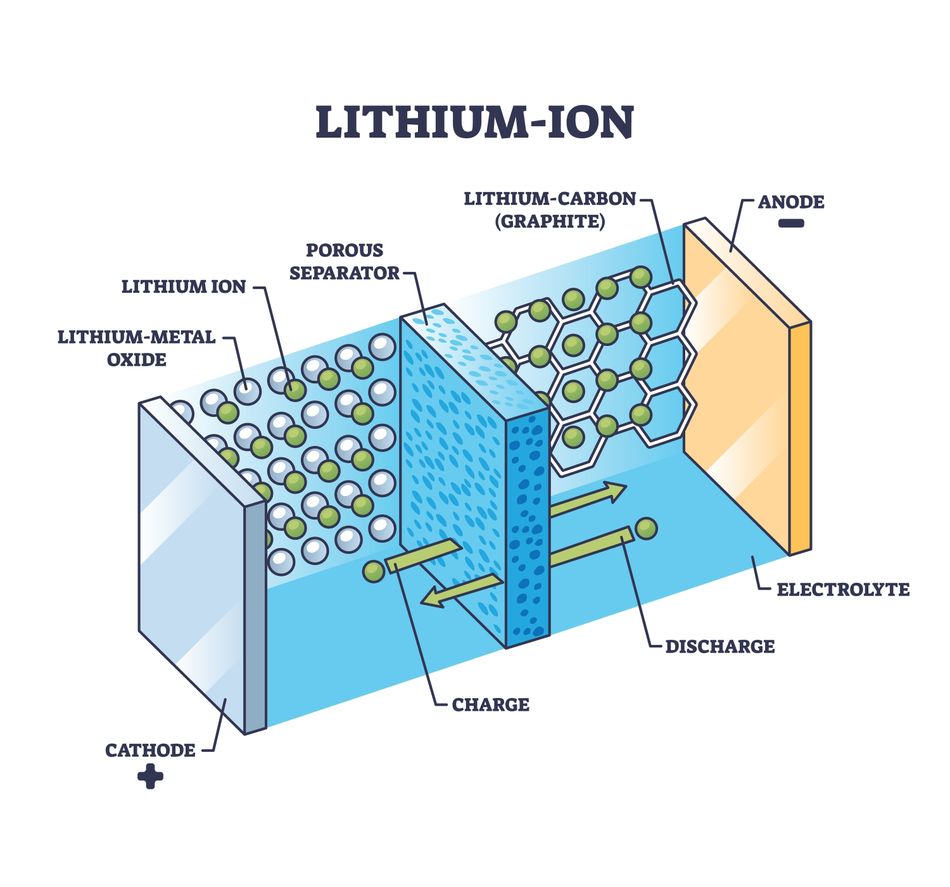
Lithium-ion batteries operate by reversible lithium-ion intercalation. During charge, lithium ions move from the positive electrode to the negative electrode, typically a graphite anode. During discharge, they move back through the electrolyte and separator to the positive electrode, which is commonly called the cathode in battery engineering.
The chemical composition of the cathode is the main differentiator:
Abbreviation | Full cathode material | Typical engineering identity | Common applications |
LFP | Lithium iron phosphate | Olivine phosphate cathode, no cobalt or nickel in the cathode | Solar storage, stationary energy storage, buses, entry and mid-range EVs, marine, UPS |
NMC | Lithium nickel manganese cobalt oxide, also called nickel manganese cobalt oxide | Layered oxide cathode balancing energy, power, and lifespan | Electric vehicles, power tools, some energy storage |
NCA | Lithium nickel cobalt aluminum oxide, also called nickel cobalt aluminum | High specific energy layered oxide | Long-range electric cars and weight-sensitive packs |
LCO | Lithium cobalt oxide | High energy density, cobalt-rich cathode | Phones, tablets, laptops, compact consumer electronics |
LMO | Lithium manganese oxide, LiMn2O4 | Spinel cathode with good power behavior, often blended | Power tools, medical devices, some hybridized pack designs |
The practical result is that LiFePO4 batteries behave differently, even though they remain lithium-ion batteries. Also, LFP has lower cell voltage than many layered oxide cells, a flatter state-of-charge versus open-circuit-voltage curve, better abuse tolerance, and lower raw-material exposure to cobalt and nickel. In contrast, NMC, NCA, and LCO usually achieve higher energy densities but need tighter control of voltage, temperature, and fault conditions.
A useful mental model is this: LFP is the conservative structural-engineering choice, while NMC and NCA are the high-performance packaging choices.
Suggested Reading: What Is LiFePO4? Engineering Guide to Lithium Iron Phosphate Batteries
LiFePO4 vs Other Lithium-Ion Batteries
The table below summarizes the major selection dimensions. The values are representative, not procurement specifications. Final design must use the selected cell datasheet, validated production lot data, and pack-level test results.
Dimension | LiFePO4 batteries, LFP batteries | Other lithium-ion batteries, mainly NMC, NCA, LCO, LMO | Engineering implication |
Family | Lithium-ion | Lithium-ion | The comparison is LFP vs other lithium-ion cathode materials, not lithium vs non-lithium. |
Cathode | Lithium iron phosphate | Nickel manganese cobalt, nickel cobalt aluminum, lithium cobalt oxide, lithium manganese oxide | Cathode materials drive voltage, energy density, cost, safety, and sourcing exposure. |
Nominal cell voltage | About 3.2 V | About 3.6 V for many Li-ion cells in TI's comparison table | Same pack voltage usually requires more LFP cells in series. |
Charge regulation voltage | About 3.5 to 3.65 V | About 3.9 to 4.2 V in many conventional Li-ion designs | Charger IC, BMS thresholds, and safety validation are chemistry-specific. |
Energy density | Lower by mass and volume than NMC at pack level | Higher, especially NMC and NCA | NMC and NCA favor long range and compact packaging. |
Cycle life | Often the stronger chemistry for high-throughput cycling | Highly dependent on SOC window, temperature, and chemistry | LFP often wins in solar storage, UPS, and daily-cycling systems. |
Thermal runaway behavior | Lower risk and higher thermal stability, but not immune | Requires tighter fault containment, especially high-energy cells | Both require validation, spacing, fusing, vent paths, thermal sensing, and protection. |
Cobalt and nickel | No cobalt or nickel in LFP cathode | NMC and NCA use nickel and cobalt | LFP reduces exposure to volatility in critical minerals. |
BMS complexity | Still required in engineered packs | Required | LFP has a flatter voltage curve, so SOC estimation may need coulomb counting and calibration. |
Best fit | Stationary energy storage, solar storage, marine applications, off-grid systems, buses, cost-sensitive EVs | Long-range EVs, electric cars with tight packaging, laptops, phones, drones | Match chemistry to duty cycle and design constraint. |
Manufacturers like Texas Instruments suggest that:
Conventional Li-ion is rated at 150-180 Wh/kg, offering a nominal voltage of 3.6V
LiFePO4 is rated at 90-120 Wh/kg with a nominal voltage of 3.2V
Li-ion has a charge window of 3.9-4.2 V
LiFePO4 has a charge window of 3.5 to 6.5V
Energy Density, Cycle Life, and Lifespan
Energy density is usually the first reason engineers choose NMC, NCA, or LCO over LiFePO4 batteries. In system terms, there are two relevant metrics:
Gravimetric specific energy: Wh/kg
Volumetric energy density: Wh/L
Both quantities are critical for electric vehicles. Wh/kg affects mass, acceleration energy, suspension load, and range. On the other hand, Wh/L affects underfloor packaging, crash structure, cabin space, and thermal system layout.
The IEA reports that NMC batteries retain an energy density advantage, with LFP battery packs about one-fifth lower by mass and about one-third lower by volume than NMC packs, although the gap has narrowed.
For stationary energy storage, volume and mass usually matter less than delivered lifetime energy. A 300 kg cabinet that lasts longer, has lower fire-protection complexity, and costs less per delivered kWh can be preferable to a smaller cabinet with shorter service life.
Cell manufacturerC-rate
Depth of discharge
Calendar aging
Charge voltage accuracy
Temperature
Compression
Pack balance
End-of-life criterion.
For example, A cell rated to 80 percent remaining capacity after 2,000 charge cycles under laboratory conditions can perform differently in a hot enclosure, a marine engine room, or a fast-charge vehicle pack.
A practical design formula is:
Usable lifetime energy = nominal pack energy x usable depth of discharge x effective cycle life x round-trip efficiency
For total cost analysis:
Approximate cost per delivered kWh = installed system cost / usable lifetime energy
This is the reason LFP can win even when its nameplate energy density is lower. If a solar storage pack cycles daily for 10 years, higher usable throughput may matter more than a smaller footprint.
For portable electronics, the answer is different. In phones, tablets, and laptops, enclosure volume is scarce and the duty cycle may not justify the extra space. This is why lithium cobalt oxide and NMC-derived cells have historically been common in consumer electronics, while LiFePO4 batteries are more common where packaging is less constrained and safety or lifespan matters more.
Suggested Reading: Energy Storage Materials: Lithium from Hot Deep Water
Safety Aspects in Li-Ion and LiFePO4 Batteries
Safety comparisons between LiFePO4 vs lithium-ion batteries are often oversimplified. LFP is safer at the cell-chemistry level, but safe products are created by engineering controls, not chemistry alone.
Thermal Runaway
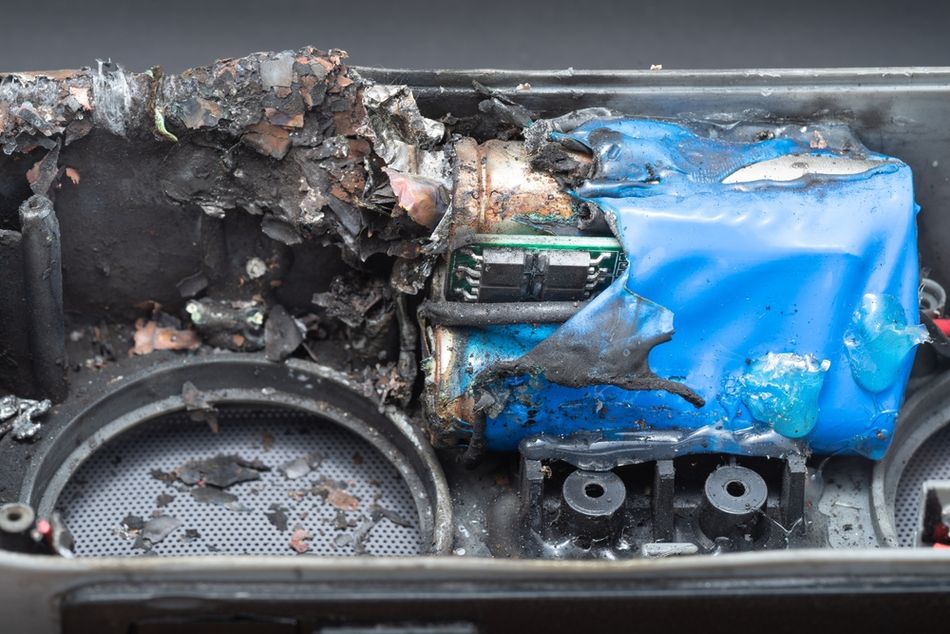
Thermal runaway is a self-heating failure mode in which internal reactions accelerate faster than heat can be removed. It can be initiated by overcharging, overcurrent, internal short circuit, external short circuit, cell penetration, crush, manufacturing defects, or excessive thermal abuse. Thermal runaway is a catastrophic battery failure mode. LiFePO4 batteries are less prone to it because of their stable chemical composition.
Experimental literature supports the same direction, with important nuance. A 2023 Automotive Innovation paper on LFP power cells found that thermal runaway severity increases with SOC and reported a critical temperature region around 220-230 °C for the tested LFP cells under its adiabatic test conditions.
In implementation, both Li-ion and LiFePO4 chemistries need safety features:
Cell-level voltage monitoring and cutoff
Pack current sensing and short-circuit protection
Charge and discharge temperature limits
Cell balancing, especially in series strings
Contactor, fuse, or pyrofuse architecture where energy is high
Vent path, flame path, and gas management
Thermal interface design and propagation barriers
Fault logging, state-of-health estimation, and service diagnostics
The BMS is not optional in engineered lithium-ion battery packs. For LFP, the flatter SOC-OCV curve makes voltage-only SOC estimation less reliable over the middle region of the discharge curve.
Safety Standards
Standards and test programs depend on market and product class. IEC 62619:2022 specifies safety requirements and tests for secondary lithium cells and batteries used in industrial applications, including stationary applications, UPS, telecom, utility switching, forklifts, railway vehicles, and marine vehicles, while road-vehicle cells are addressed by the IEC 62660 series when applicable.
For stationary energy storage systems, UL 9540A is the primary test method for evaluating thermal-runaway fire propagation in battery energy storage systems. UL notes that the method is used to assess safety-related behavior when ESS design or installation conditions exceed limits in NFPA 855, the International Fire Code, or related codes.
For transport, lithium batteries must undergo design tests in accordance with subsection 38.3 of the UN Manual of Tests and Criteria.
Suggested Reading: Whats The Difference Between UL And IEC Standards?
Temperature Performance and Charging Limits
Temperature performance depends on chemistry, cell format, electrolyte, electrode loading, SOC, and manufacturer-specific design. Still, several practical patterns are consistent enough to guide early engineering trade studies.
Cold Charging
Cold charging is a major design concern. Many lithium-ion cells should not be charged below 0 °C unless the cell datasheet explicitly permits it or the pack includes controlled heating. Charging too cold can increase lithium plating risk on the graphite anode, which reduces capacity and can create internal short risk.
In outdoor solar storage, marine applications, telecom cabinets, and off-grid systems, this leads to practical design requirements: low-temperature charge inhibition, heater pads, insulated enclosures, or a charge-current derating curve.
Impact of High Temperature on Batteries
High temperature accelerates aging. LFP can tolerate heat better than many alternatives, but it still ages faster at elevated temperature. A good design treats chemistry as one layer of defense and thermal engineering as another. Enclosure ventilation, thermal interface materials, conductor sizing, cell spacing, and pack-level heat rejection still matter.
For electric vehicles, cold-weather range and fast-charge acceptance can shift the choice toward NMC or NCA, especially in long-range platforms. For solar storage paired with solar panels, the same cold-weather issue is often easier to handle because charge windows can be controlled and the pack can be heated from available PV or grid energy.
Recommended Reading: How to Charge a Lithium-Ion Battery Safely and Efficiently?
Nominal Voltage and Pack Design
Nominal voltage is one of the most overlooked differences between LiFePO4 and lithium-ion battery designs. It affects charger selection, inverter compatibility, DC-link design, MOSFET voltage rating, contactor selection, wire gauge, fusing, isolation monitoring, and SOC estimation.
The basic formulas are:
Pack nominal voltage = number of series cells x nominal cell voltage
Nominal energy in Wh = pack nominal voltage x pack capacity in Ah
Using TI's nominal cell values:
4s LiFePO4: 4 x 3.2 V = 12.8 V nominal
16s LiFePO4: 16 x 3.2 V = 51.2 V nominal
14s conventional Li-ion at 3.6 V: 14 x 3.6 V = 50.4 V nominal
15s conventional Li-ion at 3.6 V: 15 x 3.6 V = 54.0 V nominal
Full-charge voltage changes the design again:
16s LiFePO4 at 3.65 V per cell = 58.4 V
14s Li-ion at 4.2 V per cell = 58.8 V
This is why 16s LFP and 14s NMC/NCA can appear in similar nominal-voltage platforms even though the cell count differs. A 48 V-class inverter, for example, may support both architectures if its voltage limits and BMS communications are compatible. It is not safe to assume compatibility from nameplate voltage alone.
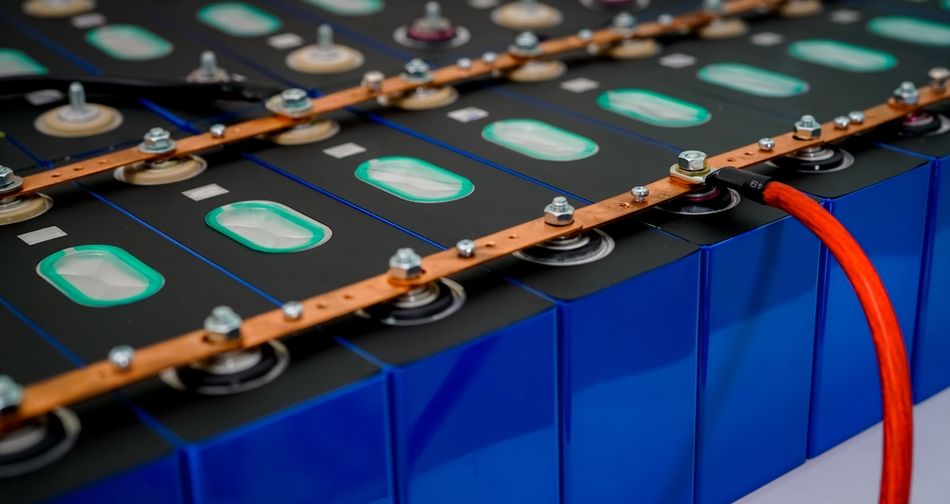
The 12 V replacement market shows the same principle. A 4s LiFePO4 battery has a 12.8 V nominal voltage, which makes it attractive as a replacement for some lead-acid batteries in RV, marine, telecom, and backup applications.
Applications of Li-Ion and LiFePO4 Batteries
Electric Vehicles
In electric vehicles, chemistry selection depends on range target, segment, climate, charge rate, pack envelope, and cost target. NMC and NCA remain strong when long range is the headline requirement.
LFP is increasingly attractive in standard-range EVs, buses, commercial fleets, and cost-sensitive platforms because it reduces material cost and can tolerate frequent cycling.
A practical EV rule is:
Choose LFP when cost, cycle life, safety margin, and everyday range dominate.
Choose NMC or NCA when high energy density, cold-climate range, and packaging efficiency dominate.
Solar Storage and off-grid systems
LiFePO4 batteries are usually the first choice for residential solar storage, commercial ESS, microgrids, and off-grid systems. The reasons are straightforward: daily cycling, long calendar service, high usable throughput, lower thermal runaway risk, and reduced cobalt/nickel exposure.
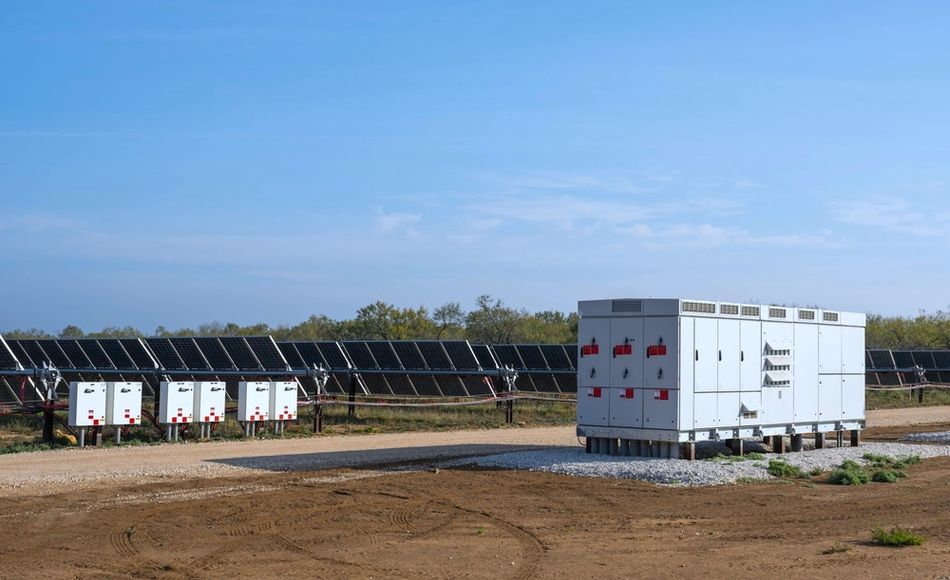
When paired with solar panels, the battery does not need to be phone-grade compact. It needs predictable behavior over thousands of cycles.
Marine Applications
Marine applications favor LiFePO4 batteries because vibration, enclosed compartments, alternator charging, high inverter loads, and human proximity create a premium on safety and lifespan.
A 12.8 V 4s LFP battery can be attractive for house loads, trolling motors, instrumentation, and auxiliary systems. However, alternator regulation, isolation, ignition protection, salt corrosion, and BMS disconnect behavior must be engineered rather than assumed.
Recommended Reading: Optimizing Battery Performance: Advanced Management Systems for Enhanced Safety, Efficiency, and Utilization
Conclusion
LiFePO4 vs lithium-ion batteries is best understood as lithium iron phosphate versus other lithium-ion batteries, not as lithium versus non-lithium. LFP is part of the lithium-ion family, with a phosphate cathode that changes energy density, voltage, lifespan, safety behavior, cobalt and nickel exposure, and energy storage economics.
For engineers, the decision is application-driven. Choose LiFePO4 batteries when cycle life, safety margin, total cost of ownership, and high-throughput energy storage dominate. Choose NMC, NCA, LCO, or LMO-based lithium-ion batteries when compactness, high energy density, long EV range, or consumer electronics packaging dominates. Both routes require disciplined BMS design, thermal validation, charger accuracy, standards compliance, and supplier qualification.
FAQs
1. Are LiFePO4 batteries the same as lithium-ion batteries?
Yes. LiFePO4 batteries are a subtype of lithium-ion batteries. The difference is the cathode material. LiFePO4 uses lithium iron phosphate, while other lithium-ion batteries may use NMC, NCA, LCO, or LMO cathode materials. Because LFP shares the same general lithium-ion operating principle, engineers should frame the comparison as LFP vs other lithium-ion chemistries, not LiFePO4 vs lithium as a whole.
2. Why do LiFePO4 batteries have lower energy density?
LFP has a lower nominal cell voltage and lower specific energy than many layered oxide chemistries. TI's comparison table lists LiFePO4 at 3.2 V nominal and 90-120 Wh/kg, compared with a typical Li-ion entry of 3.6 V nominal and 150-180 Wh/kg. Pack design can narrow or widen the difference depending on enclosure, cooling, module overhead, and usable SOC window.
3. Which battery has the longer lifespan, LFP or NMC?
LiFePO4 batteries usually have the longer practical lifespan in high-cycle applications, especially when operated within proper voltage and temperature limits. However, lifespan is not a chemistry-only property. It depends on depth of discharge, C-rate, temperature, charge voltage, calendar aging, and BMS control. A conservative NMC pack can outlast a poorly designed LFP pack, but for daily cycling, LFP is commonly the safer long-life choice.
4. Is LiFePO4 safer than other lithium-ion batteries?
At the cell-chemistry level, generally yes. LiFePO4 batteries have better thermal and chemical stability and lower thermal runaway risk than many high-energy layered oxide lithium-ion batteries. However, LFP is not fireproof. Abuse, overcharging, external shorts, poor assembly, or damaged cells can still create hazardous conditions. Pack safety still depends on BMS design, mechanical protection, thermal management, fusing, spacing, and standards-based testing.
5. Why are LFP batteries popular in solar storage?
Solar storage rewards long cycle life, safety, and low cost per delivered kWh more than maximum Wh/kg. A home or commercial battery cabinet can usually tolerate more volume and mass than a phone or long-range EV. LiFePO4 batteries also avoid cobalt and nickel in the cathode, which helps reduce material cost exposure. That makes LFP batteries a strong fit for solar panels, backup power, and off-grid systems.
6. Can I replace lead-acid batteries with LiFePO4 batteries?
Sometimes, but not by voltage label alone. A 4s LiFePO4 battery is about 12.8 V nominal, which is close enough for many 12 V systems. The charging behavior, low-temperature limits, BMS disconnect behavior, alternator compatibility, and fault handling are different from lead-acid batteries. For marine, RV, telecom, and backup systems, verify charger voltage, maximum current, low-temperature charge cutoff, and load behavior during BMS protection events.
References
U.S. Department of Energy, Lithium-ion Batteries Technology Strategy Assessment (2023).
Texas Instruments, LiFePO4 Design Considerations (SLUAAR1) (2023).
International Energy Agency, Electric Vehicle Batteries, Global EV Outlook 2025.
UL Solutions, UL 9540A Test Method for Battery Energy Storage Systems.
Nature Communications, Carbon Footprint Distributions of Lithium-ion Batteries and Their Materials (2024).
PNAS Nexus, Estimating the Environmental Impacts of the Global Lithium-ion Battery Supply Chain (2023).
Automotive Innovation, Thermal Runaway Characteristics and Modeling of LiFePO4 Power Battery for Electric Vehicles (2023).
Frontiers in Chemistry, Influence of Cathode Materials on Thermal Characteristics of Lithium-ion Batteries (2024).
in this article
1. Key Takeaways2. Introduction: Why Compare the Batteries3. Chemistry of LiFePO4- The Li-ion Cathode4. LiFePO4 vs Other Lithium-Ion Batteries5. Energy Density, Cycle Life, and Lifespan6. Safety Aspects in Li-Ion and LiFePO4 Batteries7. Temperature Performance and Charging Limits8. Nominal Voltage and Pack Design9. Applications of Li-Ion and LiFePO4 Batteries10. Conclusion11. FAQs12. References