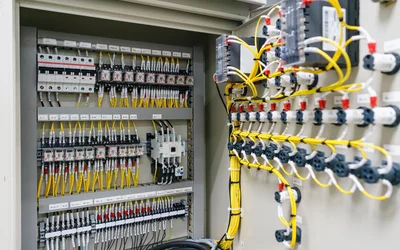
NFPA 79 governs the electrical equipment inside industrial machines, picking up where the National Electrical Code stops. This guide covers its scope, how it splits responsibility with the NEC and UL 508A, what the 2024 edition requires, and the 2027 revision in progress.
Generics
Latest Posts
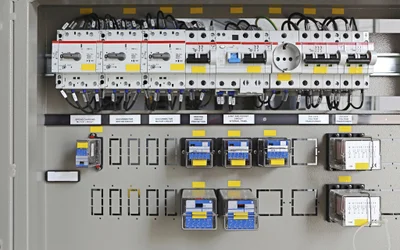
This guide covers what it applies to, how it differs from UL 508, how Supplement SB establishes the short-circuit current rating for a panel, and what it actually takes to label a panel under the UL 508A panel shop program.
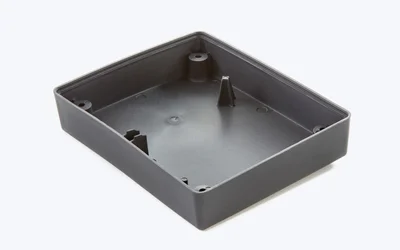
We sometimes get questions about how thermoplastic elastomers (TPEs) differ from thermoset elastomers and which of the various TPEs would work best for a given part.

4 minutes read
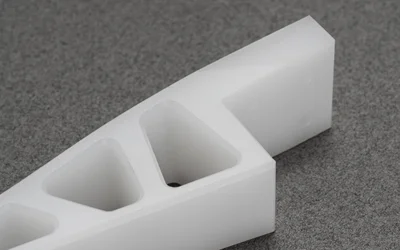
We've all heard of nylon, and most of us touch it daily. First synthesised in 1935 by chemist Wallace Carothers of DuPont, this well-known polymer was first used to replace silk in women's stockings.
5 minutes read




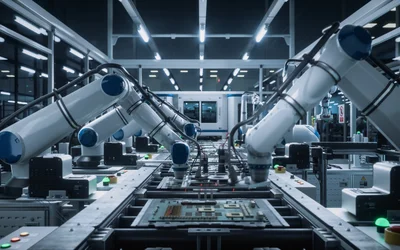


Controlled impedance is the control of PCB trace impedance within specified tolerances. This article covers microstrip and stripline designs, IPC-2141A formulas, stackup selection, impedance tolerances, routing practices, and TDR testing for signal integrity.

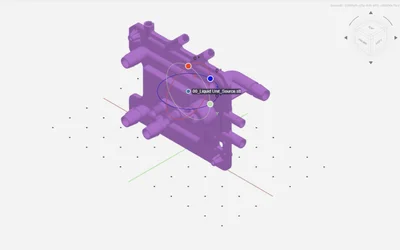
Designing custom fixtures is usually time-consuming and CAD-heavy. Fixturemate tool is a parametric online configurator available exclusively for Xometry users.

5 minutes read

For a racing team competing at the Nürburgring Nordschleife, vehicle preparation is a continuous engineering process. Components need to be checked, repairs need to be verified, and the car needs to be set up with a high level of consistency before it returns to the track.

3 minutes read

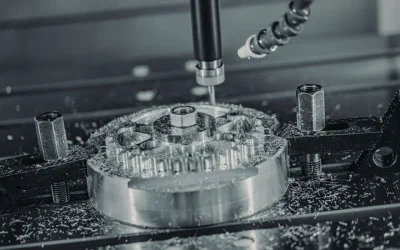
Scientific instruments are unforgiving systems. A housing that shifts slightly, a mount that loses alignment, a bracket that flexes under load, or a surface that does not seal properly can all affect how an instrument performs.

4 minutes read
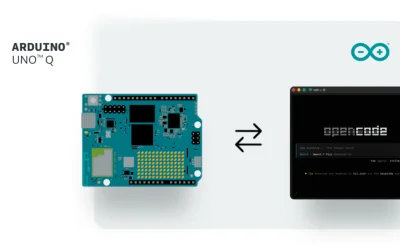
A recent article revealed that OpenAI is purchasing tens of thousands of Mac minis and Mac Studios to give AI agents dedicated environments to run, make mistakes, and learn.

3 minutes read

You step into a fitting room carrying two jackets and a pair of trousers. You like each piece, but you are not sure they work together – and which jacket is better.
6 minutes read

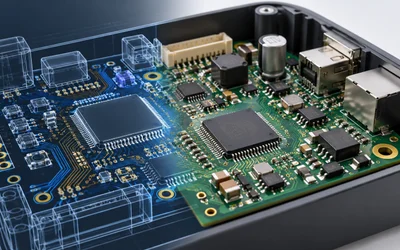
A PCB design can be electrically correct, pass every design rule check and perform exactly as expected on an engineer's screen - and still cause significant problems when it reaches manufacturing.