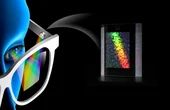

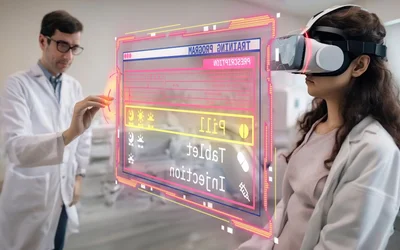
The DFKI-technology collects countless impressions, interprets them and can suggest an appropriate action using MLLM.
Be the first to know.
Get our augmented reality (ar) weekly email digest.
Tagged with
Augmented Reality (AR)
ORGANIZATIONS. SHAPING THE INDUSTRY.




Latest Posts

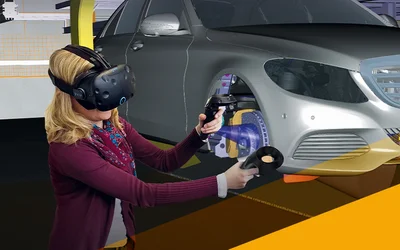
Virtual prototyping is essential for efficient, flexible EV development, complementing physical testing to overcome time and cost constraints.

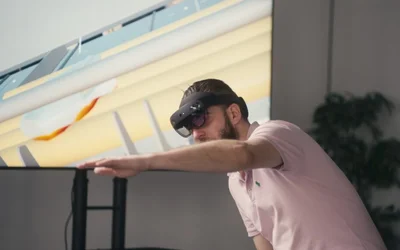
LNS Group, is using immersive technologies throughout its product development cycles. The company is reducing time-to-market by 3 months and saving $5,000 to $10,000 per prototype while improving product quality.

ENGIE Refrigeration, a global specialist in products, solutions and services for economic and energy efficient refrigeration and heat generation, uses Hololight Space to create efficient workflows and facilitate machine design.

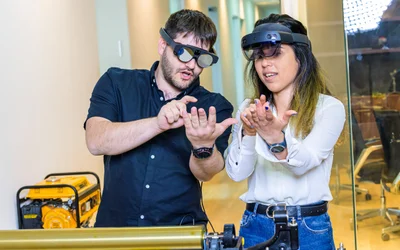
Bilfinger Engineering & Maintenance has been effectively utilizing Augmented Reality (AR) in industrial plant engineering since 2019. AR enables seamless integration of customers and stakeholders into the design process, preventing costly errors in the early stages.

In this episode, we discuss how BMW is leveraging augmented reality to design, manufacture, and service cars faster using Microsoft’s HoloLens glasses and a cloud based computer design solution called Hololight.

17 minutes read
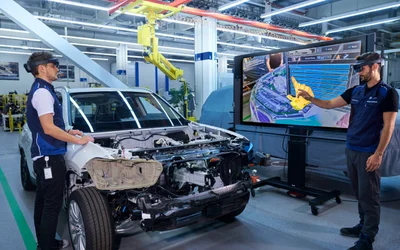
BMW Group has embraced augmented reality (AR) technology at its Munich headquarters to redefine automotive prototyping and concept evaluation

4 minutes read

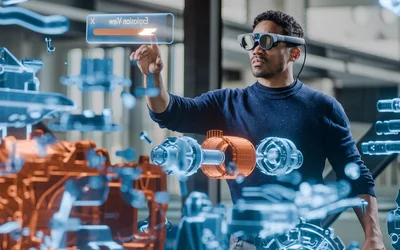
New whitepaper: How Augmented Reality is redefining product development.

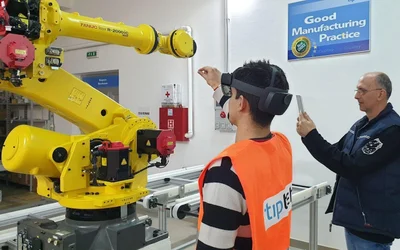
From avoiding costly mistakes to faster design decisions and stronger customer relationships: How Hololight Space plays a big role in the product development process for global engineering company Tipteh.
4 minutes read

Extend Robotics leveraged Photoneo’s MotionCam-3D Color for its exceptional 3D vision technology, enabling precise remote operations in challenging environments like space. This innovative solution enhances robotic capabilities, allowing for high-resolution scans under extreme conditions.

2 minutes read
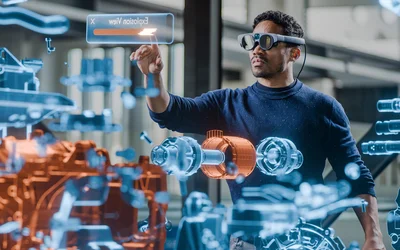
Imagine a world where engineers can collaborate together on 3D holographic prototypes, manipulating them with ease, and where workers see real-time data superimposed on physical objects. This isn't science fiction; it's the transformative power of Augmented Reality (AR).
6 minutes read

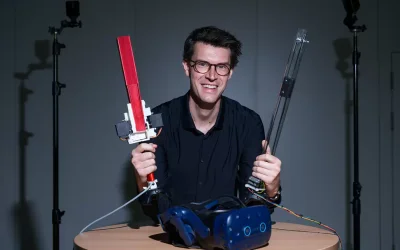
How can virtual reality (VR) be experienced haptically, i.e., through the sense of touch? This is one of the fundamental questions that modern VR research is investigating.

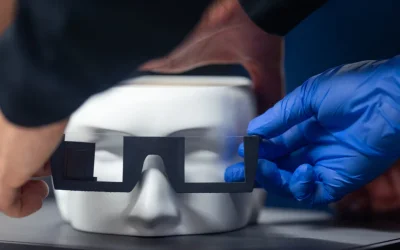
Combining advances in display technologies, holographic imaging, and artificial intelligence, engineers at Stanford say they have produced a leap forward for augmented reality.

4 minutes read
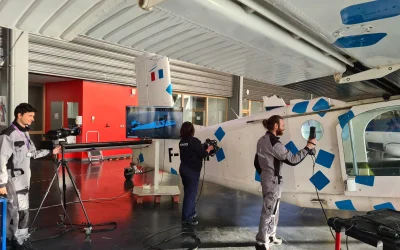
The aeronautics industry is without question a dynamic sector of activity where progress takes place at breakneck pace and where the players in the field have to deal with remarkable technological advances that follow each other at increasingly shorter intervals.

3 minutes read
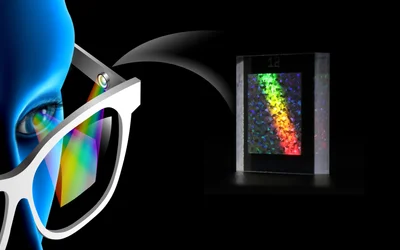
Setting the stage for a new era of immersive displays, researchers are one step closer to mixing the real and virtual worlds in an ordinary pair of eyeglasses using high-definition 3D holographic images, according to a study led by Princeton University researchers.

3 minutes read