STMicroelectronics STM32C5 Arm® Cortex® - M33 Core Mainstream MCUs
Embedded Microcontrollers with Cortex-M33 Processing and Security
General
| Product Type | Semiconductors & ICs |
| Applications | Embedded Systems, IoT & Smart Systems, Consumer Electronics |
| Key Features | Arm Cortex-M33 with FPU and DSP, <80 µA/MHz, 1 MB Flash, 256 KB RAM |
Technical Specifications
| CPU Core | Arm Cortex-M33 with FPU and DSP |
| Maximum Frequency | 144 MHz (593 CoreMark) |
| Flash Memory | Up to 1 MB (dual-bank layout) |
| SRAM | Up to 256 KB |
| Communication Interfaces | Ethernet, USB, FDCAN, OCTOSPI |
| Analog Features | Up to three ADCs, two Comparators, one Op-Amp, and one 12-bit DAC |
| Operating Consumption | 80 µA/MHz |
| Oscillator Accuracy | 1% Calibrated RCI Oscillator |
| Security Features | SAES, SPKA, HUK, SESIP3, PSA Level 3 Target |
| Applications | 2.7V to 3.6V, up to 125°C ambient |
Overview
The STM32C5 Arm Cortex-M33 Core Mainstream MCUs are general-purpose, cost-optimized, entry-level microcontrollers designed for embedded applications that require balanced processing, connectivity, and security integration. The devices are based on an Arm Cortex-M33 core operating at up to 144 MHz (delivering a 593 CoreMark score) and include DSP instructions and floating-point support. Memory configurations provide up to 1 MB Flash and 256 KB RAM, supporting complex firmware and data-handling tasks.
The MCU family integrates communication peripherals, including Ethernet 10/100, USB, OCTOSPI, and up to two FDCAN interfaces. Security functions include hardware cryptography support for SAES, SPKA, and hardware unique key (HUK) features, with support for security certification targets. Analog resources include multiple ADCs, comparators, operational amplifiers, and a 12-bit DAC. The devices operate with low dynamic power consumption and feature advanced sleep modes with I/O state retention. The MCUs are available in package options ranging from 20 to 144 pins, enabling deployment across compact and feature-rich embedded system designs capable of withstanding extreme temperatures up to 125°C.
Features of STM32C5 Arm Cortex-M33 Core Mainstream MCUs
The STM32C5 MCU family integrates Cortex-M33 processing, connectivity, and hardware security features. It supports embedded applications requiring communication interfaces, analog peripherals, and low-power operation. Let’s go through its features in detail:
Cortex-M33 Processing and Memory Architecture
The STM32C5 family is built around an Arm Cortex-M33 core operating at up to 144 MHz with floating-point and DSP instruction support, providing roughly three times the performance of older M0+ chips. The devices provide up to 1 MB Flash memory and 256 KB RAM, enabling the implementation of communication stacks, signal-processing functions, and embedded control applications. A dedicated Flash area supports EEPROM software emulation, using a dual-bank flash setup with a dedicated 64 KB area, featuring smaller 2 KB sectors for easier data management.
Communication and Connectivity Interfaces
The MCU integrates multiple communication peripherals, including Ethernet 10/100, USB, OCTOSPI, and up to two FDCAN interfaces. These interfaces support industrial networking, external memory expansion, and high-speed data transfer. Flexible DMA functionality enables efficient movement of data between peripherals and memory without continuous CPU intervention.
Analog Integration and Peripheral Support
Analog resources include up to three ADCs, two comparators, one operational amplifier, and a 12-bit DAC, supporting sensing and measurement functions. The MCU family also integrates timers and other mixed-signal peripherals required for embedded monitoring and control applications. The wide package range from 20 to 144 pins enables scalable I/O configurations.
Security and Reliability Features
Hardware-based security functions include secure AES acceleration (SAES), secure public key accelerator (SPKA), and hardware unique key (HUK) support. The devices target SESIP3 and PSA Level 3 security certifications. These features support secure boot, encrypted data storage, and protected communication in connected embedded systems.
Power Efficiency and Development Ecosystem
The MCUs operate with dynamic power consumption below 80 µA/MHz at an operating voltage range of 2.7 V to 3.6 V. They include specific sleep, stop, and standby modes with I/O state retention, keeping pins active even in deep sleep. They also include a 1% calibrated RCI oscillator that operates over a wide temperature range, handling ambient temperatures up to 125°C. Compatibility with the STM32Cube ecosystem and NUCLEO development boards supports firmware development, peripheral configuration, and rapid prototyping workflows.
Applications
The STM32C5 MCU family is used in industrial systems for control, communication, and monitoring applications requiring Ethernet and fieldbus connectivity in harsh, high-temperature environments. In smart homes and smart city infrastructure, the devices support connected sensing, automation, and secure communication functions at a cost-optimized price point. Personal electronics applications use the MCUs for low-power processing and peripheral integration. In medical and healthcare systems, the integrated analog peripherals and hardware security features support sensing, data handling, and secure device operation. The MCU family is also suitable for embedded systems requiring flexible connectivity, mixed-signal processing, and scalable memory resources across distributed and networked applications.
Where to find it

Mouser Electronics
Mouser Electronics is a worldwide leading authorized distributor of semiconductors and electronic components.
References
Recommended Specs



Continue Reading
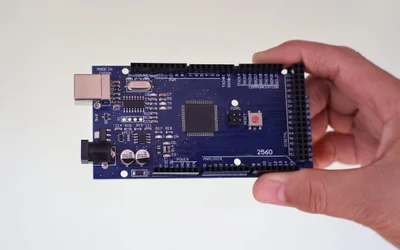
Arduino Mega 2560 pinout guide: 54 digital pins, 16 analog inputs, 4 UARTs, the PWM timer map, ATmega2560 port mapping, and current limits.
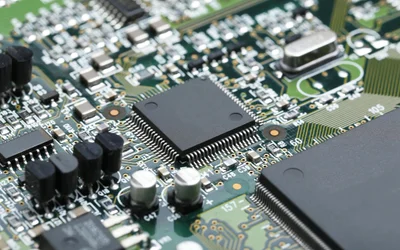
PCB mounting is critical for ensuring the lifetime and dependability of electronic products, including careful component selection and location, adherence to industry standards, and the use of high-quality materials and assembly procedures. This post will go over PCB mounting techniques, tips, and best practices and expand on crucial aspects of printed circuit board mounting.

A definitive guide to Verilog HDL — syntax, modeling styles, and its role in the FPGA/ASIC design flow, explained for engineers.