Featured
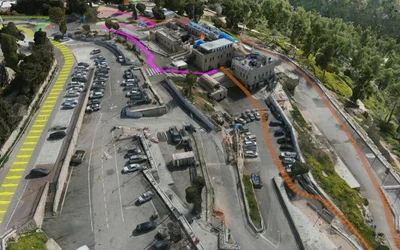
Since its inception augmented and virtual reality has vastly evolved, in part thanks to advancements like Immersal's innovation in visual positioning to enhance AR by outpacing GPS limitations.
Since its inception augmented and virtual reality has vastly evolved, in part thanks to advancements like Immersal's innovation in visual positioning to enhance AR by outpacing GPS limitations.
Since its inception augmented and virtual reality has vastly evolved, in part thanks to advancements like Immersal's innovation in visual positioning to enhance AR by outpacing GPS limitations.
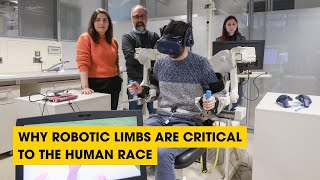
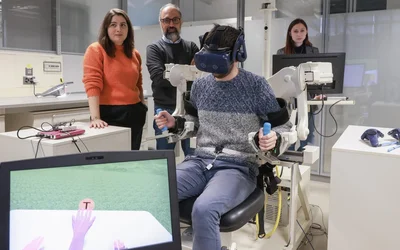
In this episode, we delve into the cognitive strategies employed by researchers at EPFL to augment the human body with an additional robotic arm and learn about the profound impact of cognitive enhancements on the integration of advanced robotic limbs
EPFL scientists show that breathing may be used to control a wearable extra robotic arm in healthy individuals, without hindering control of other parts of the body.
Smart city IoT enhances urban life by boosting efficiency, sustainability, and living standards. It addresses challenges like data privacy and scalability, while offering significant benefits despite these hurdles.




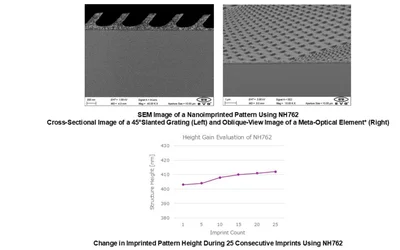
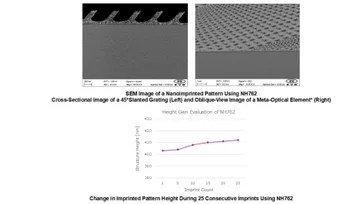
The NH762 grade from NTT-AT reached 65 nm meta-optical features on EV Group's SmartNIL imprint process, with pattern height moving about 2.2% across 25 consecutive imprints.
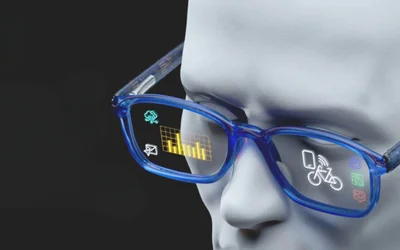
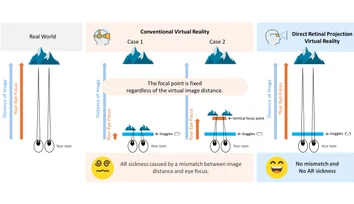
Direct Retinal Projection (DRP) technology enables practical AR experiences, with zero focal strain and an all-day wearable system.
Learn how photonic integrated circuits are reshaping the future of imaging, and why PhotonDelta is inviting engineers to rethink how PICs can tackle imaging challenges of today and power the next generation of innovation.
The Photonics & Intelligence Behind TDK's Innovative AR Stack
Direct Retinal Projection (DRP) technology enables practical AR experiences, with zero focal strain and an all-day wearable system.
The Photonics & Intelligence Behind TDK's Innovative AR Stack
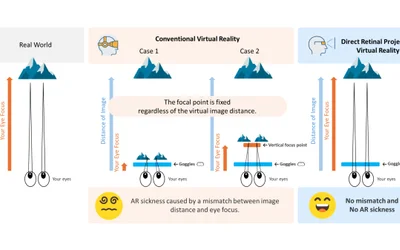
Direct Retinal Projection (DRP) technology eliminates vergence-accommodation conflict, delivering focus-free, high-resolution AR and VR experiences with unmatched comfort, clarity, and optical efficiency.
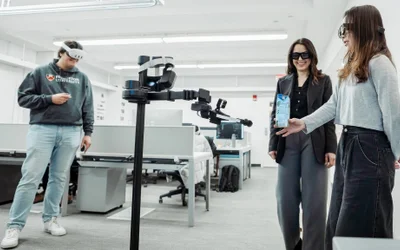
Computer scientists at Princeton are working to bring virtual reality into the physical world, with the potential to enhance a variety of experiences, including remote collaboration, education, entertainment and gaming.
Since its inception augmented and virtual reality has vastly evolved, in part thanks to advancements like Immersal's innovation in visual positioning to enhance AR by outpacing GPS limitations.
In this episode, we delve into the cognitive strategies employed by researchers at EPFL to augment the human body with an additional robotic arm and learn about the profound impact of cognitive enhancements on the integration of advanced robotic limbs

18 minutes read
EPFL scientists show that breathing may be used to control a wearable extra robotic arm in healthy individuals, without hindering control of other parts of the body.

4 minutes read
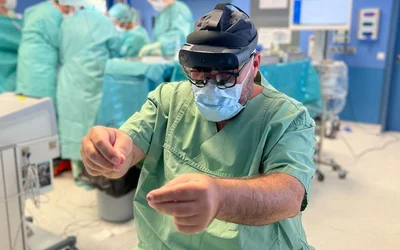
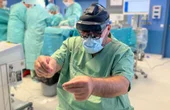
A team from the Embedded Intelligence research department at DFKI is working with doctors at Klinikum Saarbrücken to to develop new methods for AR-based assistance systems to support operations on the pancreas.
The article discusses the Wi-Fi 7– with improved speed, low latency, and better reliability for your wireless connections.
Here, we explain the movement called “retailtech,” which develops and uses the latest information technologies and has become widely used in the retail industry.

6 minutes read
StructCode, developed by MIT CSAIL researchers, encodes machine-readable data in laser-cut objects by modifying their fabrication features.
For millennia, physicians have been the first and last line of defence against illness and disease. But now through the development of digital therapeutics (DTx), technology pioneers are joining them in the battle to save lives and improve health outcomes for countless millions.
Learn more about the cutting-edge technology that VR hardware demands to provide immersive experiences.
By bringing computing power closer to the data source and reducing latency, edge computing enables real-time monitoring and analysis of critical data, which is already revolutionizing various applications, including smart cities and buildings maintenance applications.
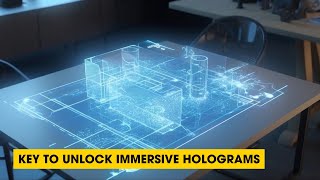
In this episode, we discuss research from Harvard that tackles the blurriness and lack of disruption recovery with most holograms which prevents users from having an immersive experience.
15 minutes read
Immersive experiences that enhance the understanding of unfamiliar environments, facilitate more effective collaboration, enable better decision-making in high-pressure situations and create a common language between different organizations.

4 minutes read
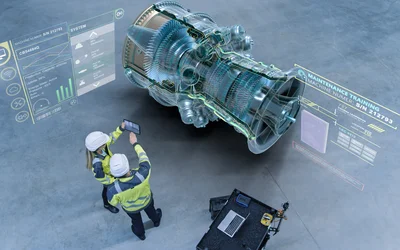
Article #5 of Transforming Industrial Manufacturing with Industry 4.0 Series: The next evolution of AR in manufacturing comes by pairing it with AI, allowing for seamless information access and tracking of specific surfaces/points of interest in real-time.
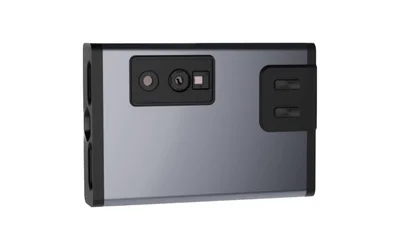
The winner of the OKdo Engineering Challenge is Eric Schleicher from the company Constructive Realities, who are working on powerful, compact Time of Flight cameras.
The Metaverse, meaning an online 3D virtual space, has the potential to significantly change economic activities, consumer behavior, and the way we work. People buying products in virtual shops and working in virtual offices—we may still be some way off such a vision becoming a reality, but the entertainment industry is forging ahead with the adoption of the Metaverse before other sectors.
3 minutes read