Featured
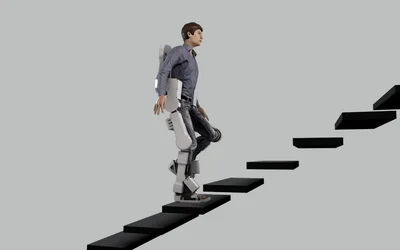
Somanity aims to revolutionize mobility for individuals with motor disabilities by developing an affordable 3D-printed exoskeleton.
This Report shows how tools like artificial intelligence, digital twins, and on-demand manufacturing are no longer emerging concepts, but are already delivering measurable impact across the product lifecycle.
Glossary of 3D Printing Terms
Somanity aims to revolutionize mobility for individuals with motor disabilities by developing an affordable 3D-printed exoskeleton.
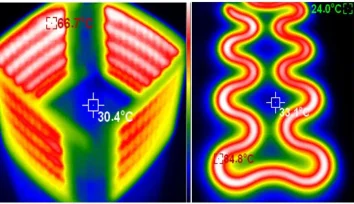
E2IP Technologies manufactures Flexible Heaters using Screen Printing Technology. This is one of the most important segments of printed and additive electronics with applications in cars, homes, and industrial settings.
What you need to know about G-code, the programming language essential to translating a digital 3D design into a physical object.
What is 3D printing? This article goes over the basics of 3D printing, otherwise known as additive manufacturing, covering its engineering principles and applications.
15 minutes read.
22 minutes read.
11 minutes read.
18 minutes read.
12 minutes read.
16 minutes read.


Entertainment
The Next Byte Podcast is hosted by two young engineers - Daniel and Farbod - who select the most interesting tech/engineering cont...
165 Posts
E2IP Technologies manufactures Flexible Heaters using Screen Printing Technology. This is one of the most important segments of printed and additive electronics with applications in cars, homes, and industrial settings.
Here’s what to do if you notice clicking noises, under-extrusion, or other print quality issues caused by extruder skipping on the Ender 3 by Creality.
Unwanted lines in 3D prints can show up for many reasons and take different forms. Here we look at the most common types of lines in 3D prints and how to eliminate them.
KIT researchers are developing a process with which, for the first time, mirrors with a reflection of more than 99 percent can be printed in variable sizes
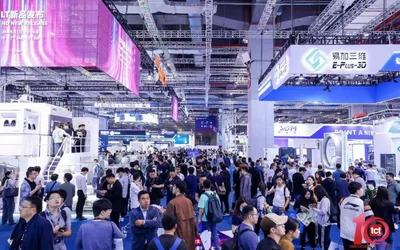
With just one month before the South Asian 3D printing trade show, we look at the events and showcases visitors will be able to take part in.
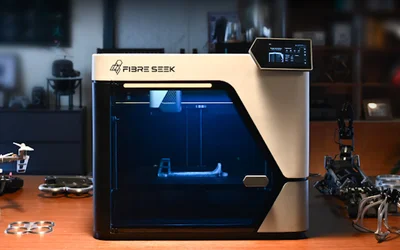
Following a successful crowdfunding campaign, the FibreSeeker 3 from FibreSeek is bringing continuous carbon fiber printing to a new audience.
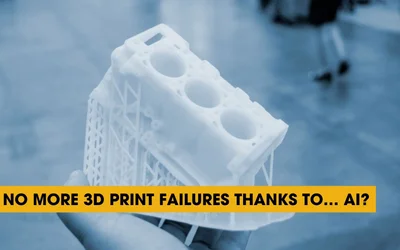
In this episode, we explore how researchers have developed an AI system that can watch a 3D print as it's being made, detect mistakes, and automatically correct them before the print fails
In this episode, we explore a new 3D printable material that can quickly transform into a strong, bone-like scaffold capable of supporting new bone growth. Learn how this breakthrough could lead to faster recovery times and improve treatments for patients with serious bone injuries.
Somanity aims to revolutionize mobility for individuals with motor disabilities by developing an affordable 3D-printed exoskeleton.
E2IP Technologies manufactures Flexible Heaters using Screen Printing Technology. This is one of the most important segments of printed and additive electronics with applications in cars, homes, and industrial settings.

3 minutes read
What you need to know about G-code, the programming language essential to translating a digital 3D design into a physical object.
Bioengineered advancement may have implications for more natural-looking reconstructive surgery outcomes, according to international research team

4 minutes read
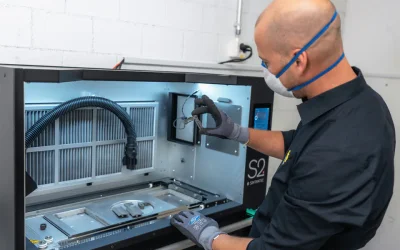
At a Polish branch of TI Fluid Systems, functional prototypes and spare parts for the automotive industry are selectively laser sintered. Using a Sintratec S2, Paweł Pułtorak’s team prints precise and complex parts to validate their designs.

3 minutes read
Researchers use AI and high-speed in-situ imaging to optimize process parameters for 3D printing metal alloys.

4 minutes read
In this episode, we talk about the initiative from PolySpectra to generate 3D CAD models from text using AI.

19 minutes read
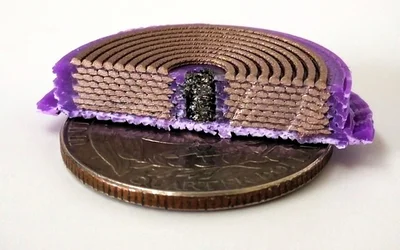
The printed solenoids could enable electronics that cost less and are easier to manufacture — on Earth or in space.
Nexa3D’s patented Lubricant Sublayer Photo-curing (LSPc) technology can print at up to 24 vertical centimeters per hour. That means more prototypes in less time.
An In-depth Exploration of CNC Milling's Precision, Repeatability, and Versatility
Turnkey design and part manufacturer uses 3D printed tooling to provide injection molding service in as fast as 10 days

3 minutes read
To enhance the applicability of thermoplastics across various industries, reinforcing additives are added to improve properties such as mechanical strength, UV resistance, and conductivity, contributing to the material's overall performance.
At Eschbal, a Swiss manufacturer of window systems, prototypes, small series and production tools are additively manufactured. To this end, the technical department around Michael Ebnöther successfully uses a Sintratec S2.
4 minutes read
Article #6 of The Engineer’s Guide to 3D Printing with Wear-Resistant Plastic Materials.
The majority of ERIKS 3D printers are dedicated to prototyping, customized jigs, fixtures, and tooling for production or maintenance purposes.

5 minutes read