


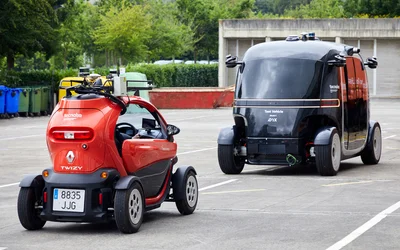
Spotlighting Innovation: Celebrating the Connect for Good Challenge Winners
Be the first to know.
Get our iot weekly email digest.
Tagged with
IoT
ORGANIZATIONS. SHAPING THE INDUSTRY.

Latest Posts

Exploring LwM2M IoT Device Management Features: A Comprehensive Guide

5 minutes read

Accelerating Urban Efficiency through Technology. Explore How AI & IoT Drive the Future of Sustainable Urban Living

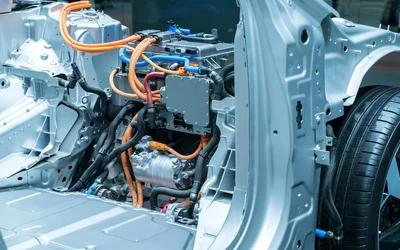
Born in the ‘80s, the CAN bus helps in carrying reliable electronic communication within your vehicles. This article delves into the basic principles, architecture, protocols, applications, and limitations of the CAN bus.

Here, we explain the movement called “retailtech,” which develops and uses the latest information technologies and has become widely used in the retail industry.

6 minutes read

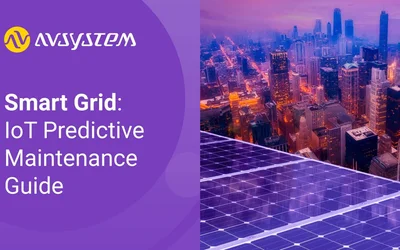
In the rapidly evolving energy sector, smart grid IoT applications are driving a profound transformation towards a greener and more sustainable future. With advanced technologies integrating renewable energy sources, the approach to energy distribution is undergoing a revolutionary shift.
3 minutes read

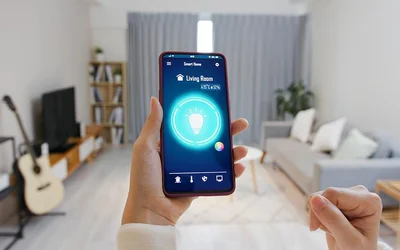
Lighting illuminates indoor and outdoor spaces. The use of IoT is also advancing in lighting, which is indispensable for our daily lives.
3 minutes read


Wireless technology saves lives every day, sometimes in extraordinary ways. After spotting flames rising from a residence in Scotts Valley, California, a passing jogger rang the doorbell in an effort to notify the homeowners. The owner wasn’t home, but the wireless doorbell was connected to a smart home hub that alerted her to the jogger’s attempt to make contact.

5 minutes read


Dive into our comprehensive guide on defense in depth layers, unravelling the complexities of multi-tiered security strategies for robust protection.

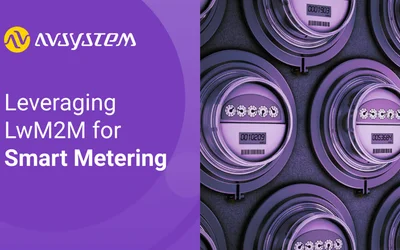
In an economy on the ropes, smart meters are no longer a luxury but a necessity.
3 minutes read

Cellular connectivity is the perfect choice of wireless technology to connect your Internet of Things (IoT) devices,

5 minutes read
challenge | APR 26 - MAR 25, 2024

Create sustainable and thriving communities that are well-equipped to face future challenges. Win up to $7,000+ in prizes!


Without the coders, engineers, entrepreneurs, and innovators of tomorrow emerging from the classrooms—and soon—it will become increasingly difficult to advance society and tackle diverse global challenges. As things stand now, a global technology talent shortage threatens to stifle progress across all tech sectors.
4 minutes read


Smart lighting is a key component of smart commercial buildings and the connected home. Based on LEDs—which use at least 75 percent less energy, and last up to 25 times longer than traditional incandescent lighting, according to the U.S. Department of Energy (DoE)—combined with Bluetooth LE SoCs like Nordic’s nRF52, nRF53, and the forthcoming nRF54 Series, smart lighting brings illumination into the modern age.
4 minutes read


As the IoT market is slowly maturing, IoT systems are becoming increasingly complex and versatile. As a result, embedded devices are composed of distinct firmware components made by different parties working together, often running on multiple MCUs simultaneously.
5 minutes read